9:30in productionCh. 1 · No quid pro quo/ 9:30 · ceiling 15 min
Ideas · Society
Gift economy
The gift economy isn’t generous—it’s binding.
The gift economy is an anthropological concept describing non-market exchange governed by social norms—not generosity. It originated in Malinowski’s study of the Kula ring in the Trobriand Islands during World War I. It correctly reveals how exchange is embedded in kinship and ritual. But it wrongly universalises Western ideas of the ‘gift’, projecting market logic onto non-market societies. Today, it matters because its misuse obscures how platforms, open-source projects and mutual aid operate under different logics—not ‘gifts’, but obligations, reputations or reciprocities. It is worth your time only if you treat it as a diagnostic tool, not a model.
Gifts are not free—they are governed by norms, not contracts.
1:55
Born in the Trobriands
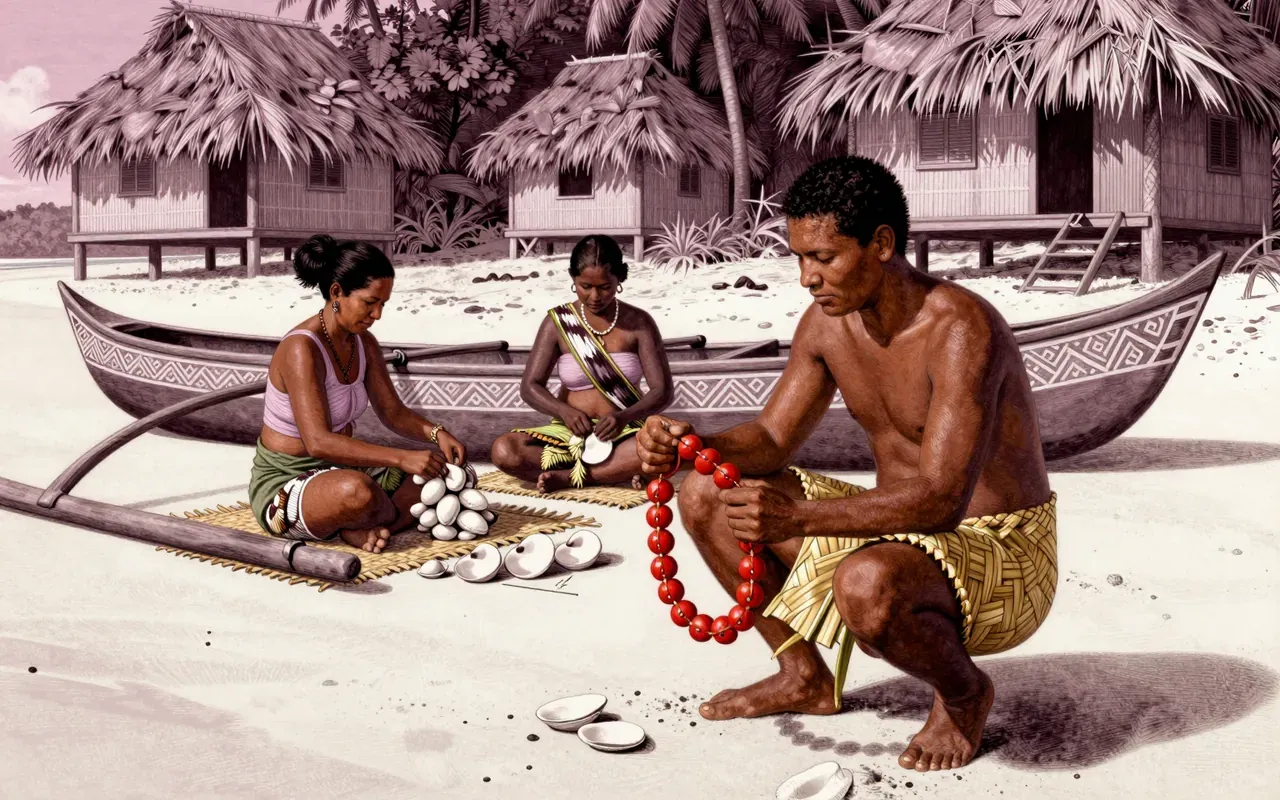
The idea began with Malinowski’s Kula ring in the Trobriand Islands during World War I.
3:43
A debate, not a doctrine
It sparked a foundational anthropological debate—not a consensus.
5:24
Ethnocentric framing
Its biggest problem is mistaking Western market logic for universal human behaviour.
Worth your time?
Yes. Study the whole thing.
4/ 5
What works
as a corrective to market-centrism
as a lens on colonial ethnography
as a warning against conceptual export
What does not
define a modern economic alternative
describe digital sharing cultures accurately
explain contemporary philanthropy
Study it if
anthropology students
critics of market fundamentalism
scholars of colonial knowledge production
Skip it if
entrepreneurs seeking alternative business models
policy makers designing welfare systems
activists building mutual-aid networks
The written brief1 min read
What the thing is
A gift economy is a system where valuables are given without explicit agreement for reward.
Where it came from
It emerged from Malinowski’s fieldwork on the Kula ring in the Trobriand Islands during World War I.
What it gets right
It shows that exchange is never purely transactional. Gifts embed value in kinship, ritual and politics.
What it gets wrong
It treats ‘the gift’ as a universal category, importing Western market logic to define what counts as a gift.
Why it matters now
Because debates about platform labour, open-source software and mutual aid still misapply the term ‘gift’ as if it meant ‘free’ rather than ‘socially bound’.
Is it worth your time
Yes—if you want to understand how economic categories flatten cultural reality.