culturebriefs
10:04in productionCh. 1 · Wet plaster only/ 10:04 · ceiling 15 min
Art

Fresco

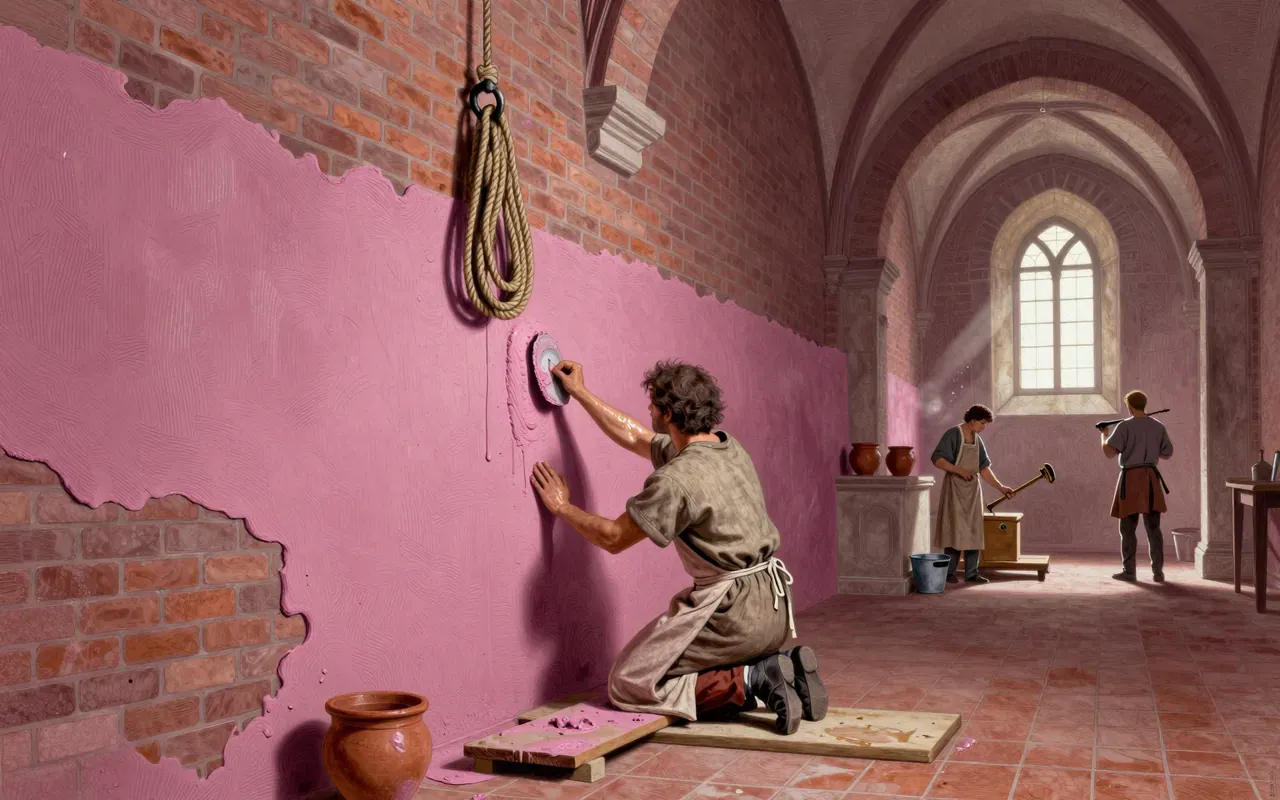
Fresco isn’t wall decoration—it’s pigment fused with architecture by chemistry.

Fresco is a method, not a style. It demands wet plaster, water-based pigment, and no binder. Its permanence comes from chemistry—not skill or fame. It began in Bronze Age Aegean and predates classical Greece. Today, its misuse blurs technical precision into vague ‘wall art’. It matters because it shows how material limits define what survives—and what gets remembered.

Chapters & takeaways6
  1. 0:56
    Wet plaster only

    Fresco only works on wet plaster—not dry walls, not canvas, not panels.

  2. 1:52
    Chemical bonding

    No binder is needed because the plaster itself holds the pigment through carbonatation.

  3. 3:05
    Layered construction

    Artists built frescoes in layers: rough arriccio first, then sinopia sketches, then intonaco.

  4. 4:25
    Prick-and-dust transfer

    Spolvero transferred drawings using pricked paper and soot—no tracing, no erasing.

  5. 5:40
    Image as integral structure

    Water carries pigment into plaster; as the wall dries, the image becomes part of the building.

  6. 6:36
    Misnamed everywhere

    ‘Fresco’ is often misused for any wall painting—erasing its precise technical meaning.

Worth your time?

Yes. Study the whole thing.

4.5/ 5
What works
  • anyone who handles walls, pigments, or time
What does not
  • culture/arts
  • culture/cities
  • culture/generations
  • culture/ideas
Study it if
  • conservators
  • architects
  • art historians
Skip it if
  • digital artists
  • graphic designers
  • curators of contemporary installation
The written brief1 min read

What the thing is

Fresco is a mural painting technique applied exclusively to freshly laid wet lime plaster.

Where it came from

It emerged in the Aegean during the Bronze Age (c. 1640–1600 BC), with earlier examples in Egypt (c. 3500–3200 BC).

What it gets right

It fixes colour permanently into stone and lime. The chemical bond between pigment and carbonating plaster makes the image inseparable from the wall.

What it gets wrong

It is routinely misapplied in English to all wall painting—ignoring the strict technical requirement of wet intonaco and no binder.

Why it matters now

It reveals how material constraints shape cultural endurance: a method built on timing, chemistry, and irreversible integration resists digital replication and aesthetic trend.

Is it worth your time

Yes—if you need to understand how pigment becomes architecture, or why some wall paintings survive millennia while others vanish in decades.
Same beat · Art4 of 101
9:42
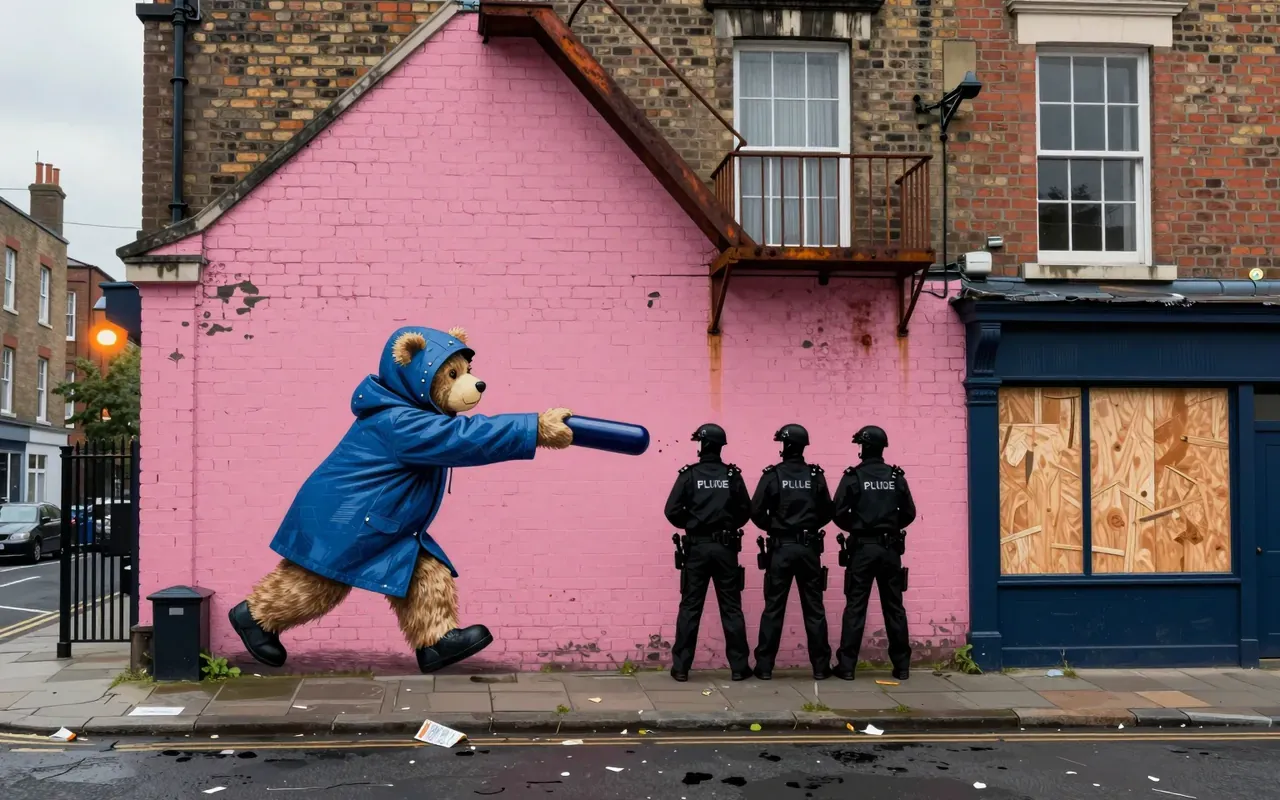
BanksyBanksy is a pseudonymous England-based street artist whose practice centres on stencilled, satirical interventions placed on publicly visible surfaces. He emerged from the Bristol underground scene in the 1990s. His first known large-scale mural was The Mild Mild West in 1997 on Stokes Croft. Banksy makes satire legible on city walls. His stencils deliver punchlines fast. They occupy surfaces people pass daily. They force confrontation without requiring attention. The method relies on evasion—but that evasion obscures authorship, dilutes accountability, and turns political gesture into branded ambiguity. His work established a template for art that operates outside institutions but trades on their validation—exposing the friction between subversion and market absorption.
10:31
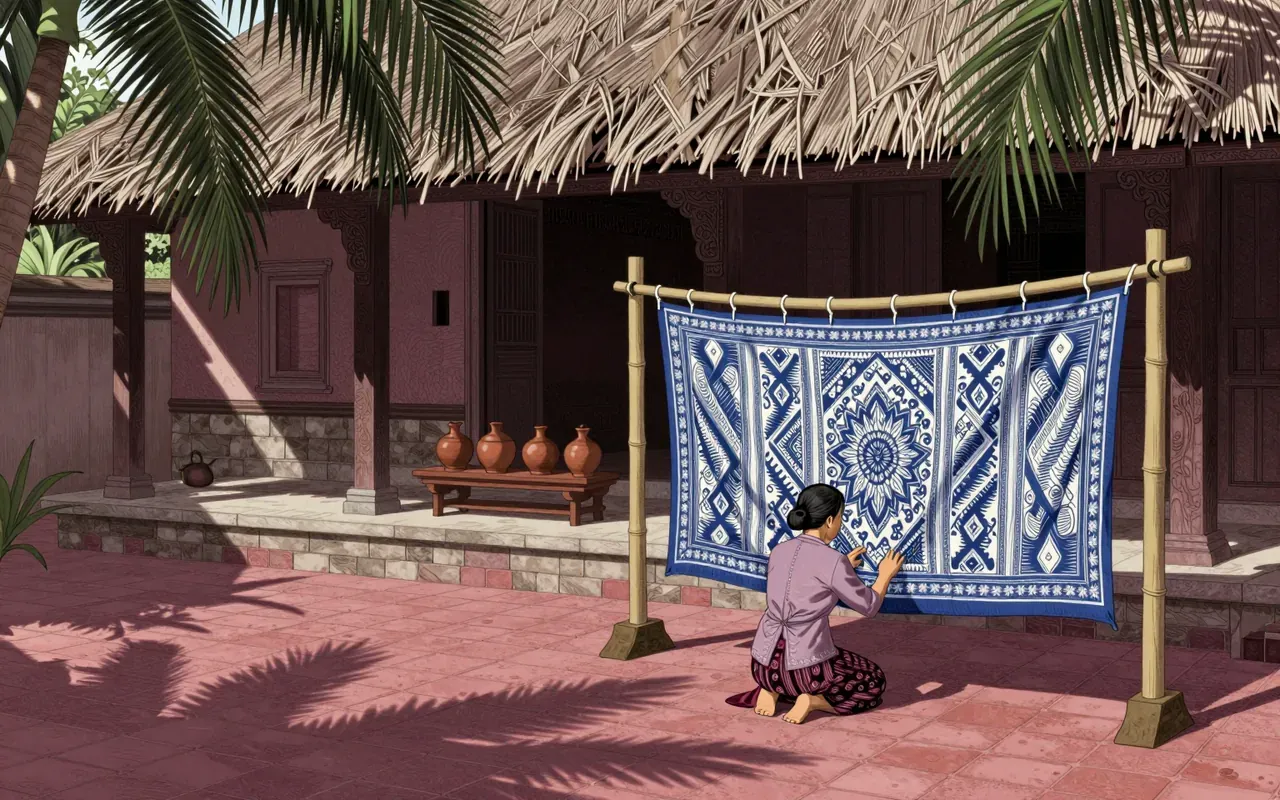
Batik in IndonesiaBatik is a wax resist-dyeing textile tradition from Indonesia. It is most highly developed in Java, where the technique has been used for centuries. The oldest surviving physical example is a 700-year-old blue-white valance. Raffles described it in his 1817 History of Java — the first European scholarly account. In 2009, UNESCO inscribed batik tulis, batik cap, and their associated education as Masterpieces of Oral and Intangible Heritage — prompting annual Batik Day and institutional preservation.
10:17
Cante flamencoCante flamenco is the vocal art at flamenco’s core—not its decoration. It formed in Andalusia through overlapping traditions. Its Golden Age codified it. Its 1922 ‘rescue’ privileged one strain over others. It matters because it shows how preservation can erase as much as it saves.
10:25
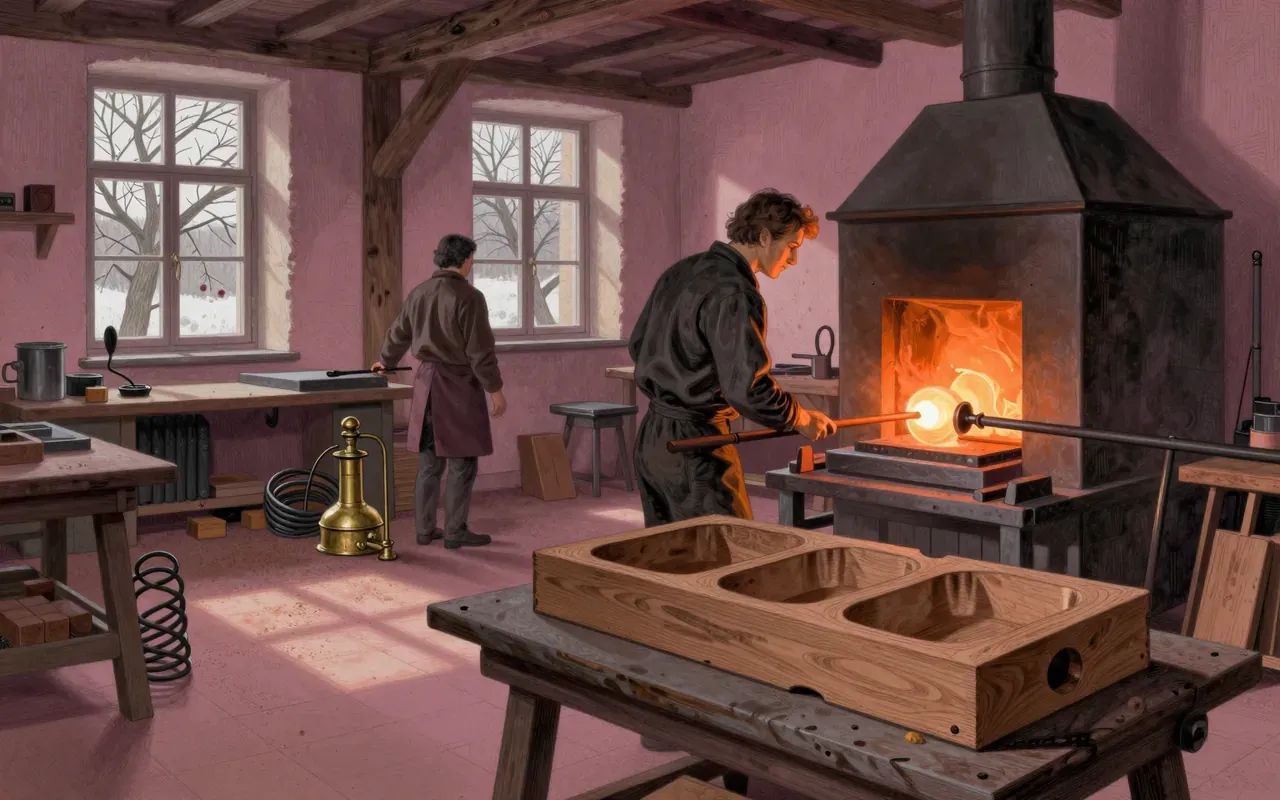
GlassblowingGlassblowing is a technique—not an art form, not a tradition, but a precise physical method. It turns glass’s disordered atomic structure into a controllable medium. It was invented once, in one place, at one time: the middle of the 1st century BC, by Phoenician and Syrian craftsmen. It spread rapidly because it worked: it enabled uniform thickness, prevented blow-through, and scaled from luxury vessels to everyday wares. It persists because nothing else does what it does.
Up next in Culture

Glassblowing

· 10:25

Glassblowing didn’t just make glass cheaper—it rewrote what glass could be, and who could hold it.

10:25