What the thing is
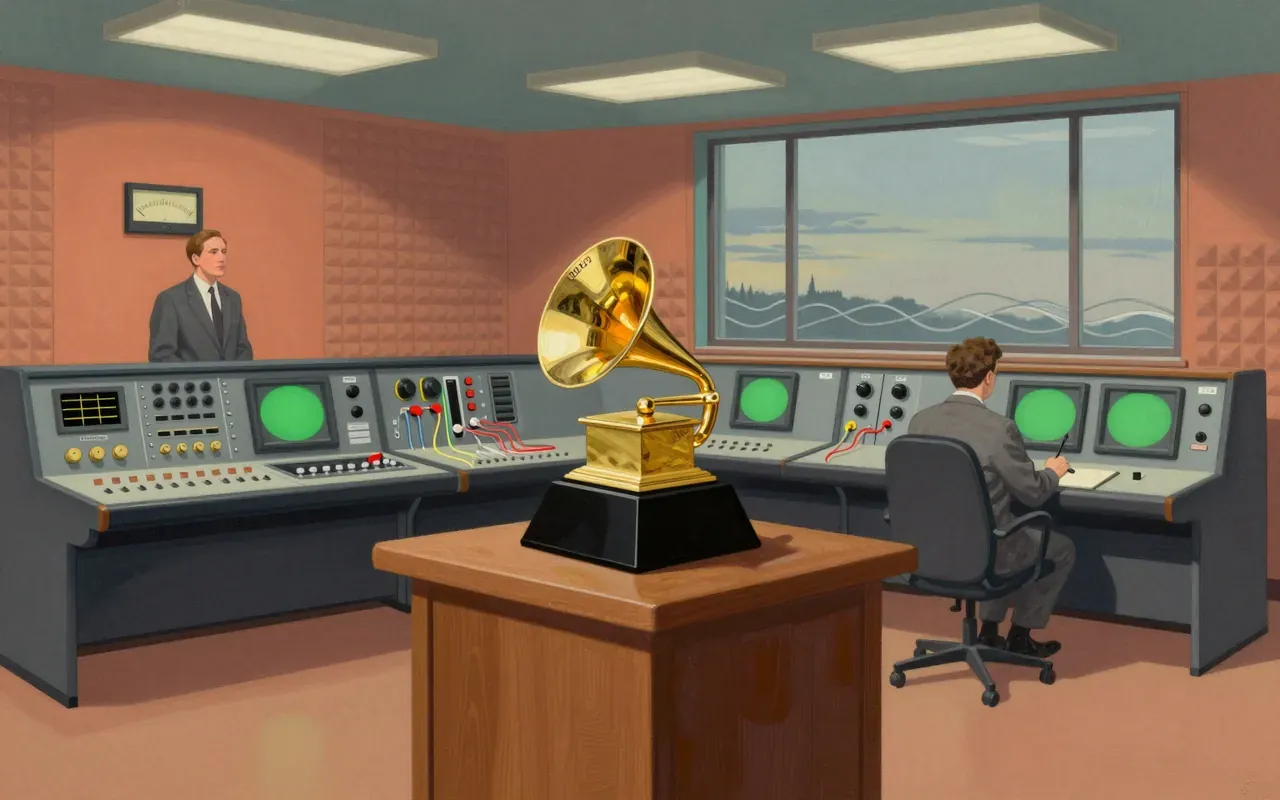
A recording-industry award launched in 1959 to honour musical accomplishments of 1958.
Where it came from
It emerged from the Hollywood Walk of Fame project in the 1950s—not from artistic movements, civil society, or government.
What it gets right
It established a recording-industry-led award for commercial music achievement. It named itself through public contest. It honoured work from 1958 immediately, anchoring legitimacy in recent output. The first ceremony used a dual-city format across Beverly Hills and New York City.
What it gets wrong
It claimed national parity with a dual-city ceremony but held no regional juries, no genre equity, and no artist input. It deferred live broadcast for twelve years—prioritising control over immediacy. The second ceremony was the first to be televised, and the 13th Annual Grammy Awards was the first live telecast.
Why it matters now
Its 2024 broadcast shift to ABC/Disney+/Hulu—and 2027 ABC return after 55 years—reveals how its institutional continuity depends on platform deals, not cultural consensus.
Is it worth your time
Yes—if you care how industry self-legitimation begins. No—if you expect cultural authority or artistic representation.