9:40in productionCh. 1 · Theme as infrastructure/ 9:40 · ceiling 15 min
Society · Movements & scenes
Madonna
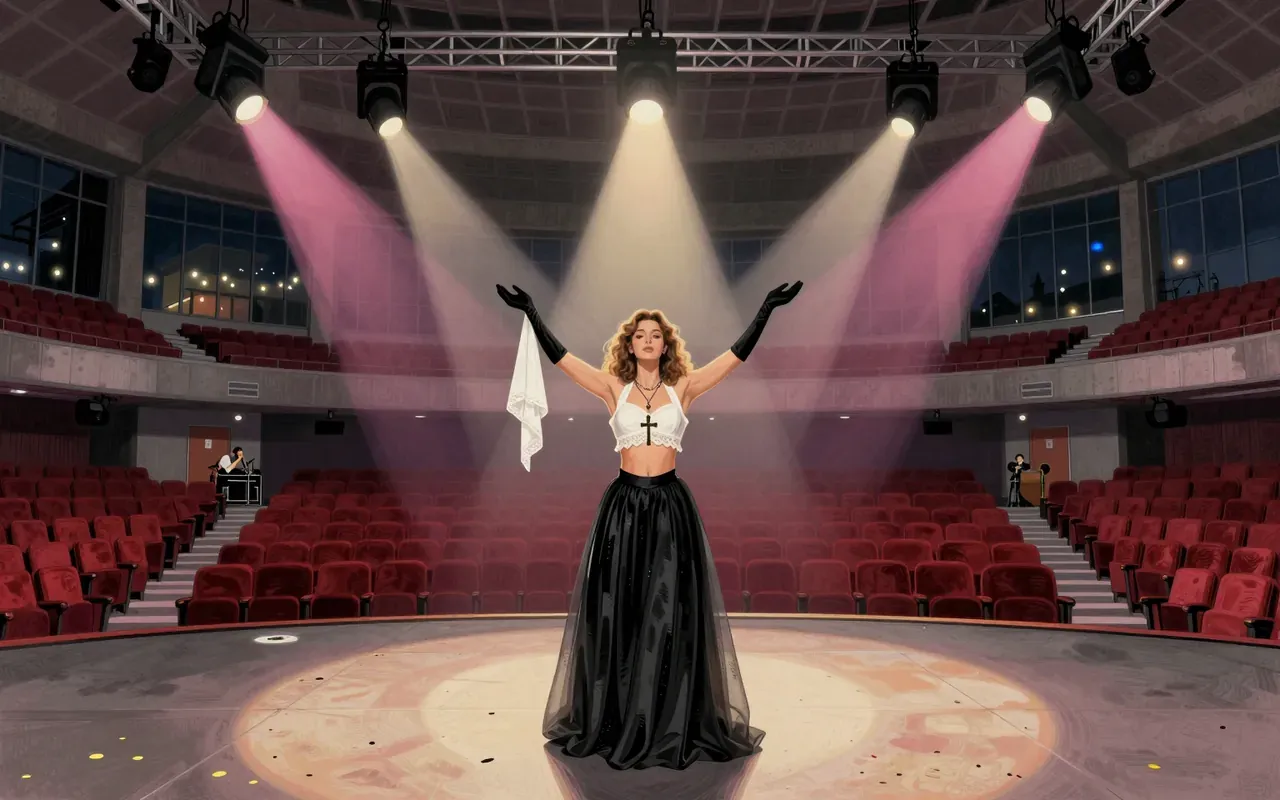
Madonna didn’t break rules—she treated them as stage props.
Madonna is a pop strategist who used controversy, not charisma alone, to sustain relevance across decades. Her influence lies not in invention but in escalation: she took existing tensions—faith versus desire, control versus liberation—and staged them at scale. She reached young women in suburbs and cities alike, displacing softer, less confrontational female pop voices of the early 1980s. She did not found a movement, but she redefined what a pop star could be paid to say.
Madonna is a singer-songwriter who built her entire output around social, political, sexual, and religious themes.
2:06
No origin myth, just a move
She launched from Michigan to New York City in 1978—not as a pop star, but as a dancer with no record deal.
3:30
Scale with selective weight
Eighteen multi-platinum albums include three ranked among Rolling Stone’s greatest—proof of scale and select critical endurance.
5:36
Beyond the mic: film and firm
She starred in films across four decades and founded Maverick in 1992—the most successful artist-run label of its era.
Worth your time?
Yes. Study the whole thing.
4.5/ 5
What works
as a case study in thematic consistency
as evidence of pop’s capacity for sustained provocation
as a benchmark for artist-led enterprise in music
What does not
invented pop stardom
defined the 1980s
influenced specific artists named in source material
created a new musical genre
Study it if
readers tracking how ideology enters mass culture
students of post-1970s American media
critics assessing pop’s capacity for argument
Skip it if
those seeking definitive biographical narrative
fans wanting nostalgic celebration
scholars requiring claims about global reception or regional impact beyond what is verified
The written brief1 min read
What the thing is
Madonna is an American singer, songwriter, record producer, and actress whose work engages social, political, sexual, and religious themes.
Where it came from
She was born and raised in Michigan, then moved to New York City in 1978 to pursue dance—and pivoted into music, launching her professional career there.
What it gets right
Madonna made mainstream pop a vehicle for explicit social and religious critique. She fused performance, image, and theme to force conversation on sexuality, feminism, and Catholic iconography.
What it gets wrong
Her business ventures—like Maverick—were commercially successful but did not redefine artist autonomy in the industry. The label folded in 2009 without altering structural power in record deals.
Why it matters now
Her use of controversy as deliberate strategy—testing taboos around gender, faith, and desire—prefigures today’s algorithm-driven culture wars, where attention is weaponised through moral provocation.
Is it worth your time
Yes—if you want to understand how pop music became a platform for ideological provocation, not just entertainment.