culturebriefs
9:55in productionCh. 1 · Not a culture. A metric./ 9:55 · ceiling 15 min
Society · Ideas

Celebrity culture

Celebrity culture isn’t about stars—it’s about what we agree to watch, and how much of ourselves we give up to do it.

Celebrity culture is a socially constructed, consumer-driven phenomenon rooted in collective desire—not celebrity cohesion—emerging in the US in the late 19th century and formalised between 1895 and 1920; it functions as entertainment, relies on citizen participation through media engagement, and is externally defined before being augmented by celebrities themselves.

Chapters & takeaways4
  1. 0:56
    Not a culture. A metric.

    Celebrity culture is not a community—it’s a measurable volume of attention, sustained by individual desire.

  2. 3:00
    No cohort. No control.

    Celebrities are scattered across fields—not a class, not a bloc—and only enter the culture after it’s already defined without them.

  3. 4:27
    Common knowledge, altered lives.

    It becomes real when society shares knowledge of its own interest—and changes behaviour to feed it.

  4. 6:00
    You’re not watching. You’re running it.

    Citizens don’t consume celebrity culture—they operate it, minute by minute, via media monitoring.

Worth your time?

Yes. Study the whole thing.

4/ 5
What works
  • as a diagnostic tool for attention allocation
  • as a lens on voluntary self-surveillance
  • as proof that culture can be non-cohesive and still dominant
What does not
  • define a generation
  • influence artists
  • displace other cultures
Study it if
  • media consumers
  • advertising professionals
  • policy makers tracking attention economies
Skip it if
  • celebrities
  • fans seeking validation
  • historians of fame without documentary evidence
The written brief1 min read

What the thing is

Celebrity culture is high-volume global exposure to celebrities’ personal lives. It is not a group, movement, or shared identity. It is a distributed pattern of desire.

Where it came from

It emerged in the US in the late 19th century and formalised between 1895 and 1920. It was externally defined first—by media, markets, and public interest—then augmented by celebrities’ participation.

What it gets right

It correctly identifies celebrity culture as a consumer-driven feedback loop. Citizens monitor celebrities. Media delivers that monitoring. The culture is sustained by willingness to alter one’s own life to participate.

What it gets wrong

It wrongly implies celebrity culture is neutral entertainment. It displaces civic attention, reshapes time use, and normalises surveillance—all without naming those costs.

Why it matters now

Because it is no longer peripheral. It functions as everyday entertainment. Citizens perpetuate it daily by checking whereabouts, friends, trends, and lives—via media.

Is it worth your time

Yes—if you want to understand how entertainment colonises daily life through collective desire, not celebrity agency.


Same beat · Society4 of 236
8:56
Grammy Awards1958The Grammy Awards began in 1959 as a recording-industry initiative spun off from the Hollywood Walk of Fame project. They honoured achievements from 1958, used a dual-city format (Beverly Hills and New York), and were televised from year two—but not live until 1971. Their 2024 move to ABC/Disney+/Hulu marks a structural shift: legitimacy now flows from platform contracts, not cultural weight.
9:54
Notting Hill Carnival1965The Notting Hill Carnival is a British Caribbean-led street festival in London, rooted in responses to racial violence and shaped by incremental community stewardship — not mythic origin stories.
8:36
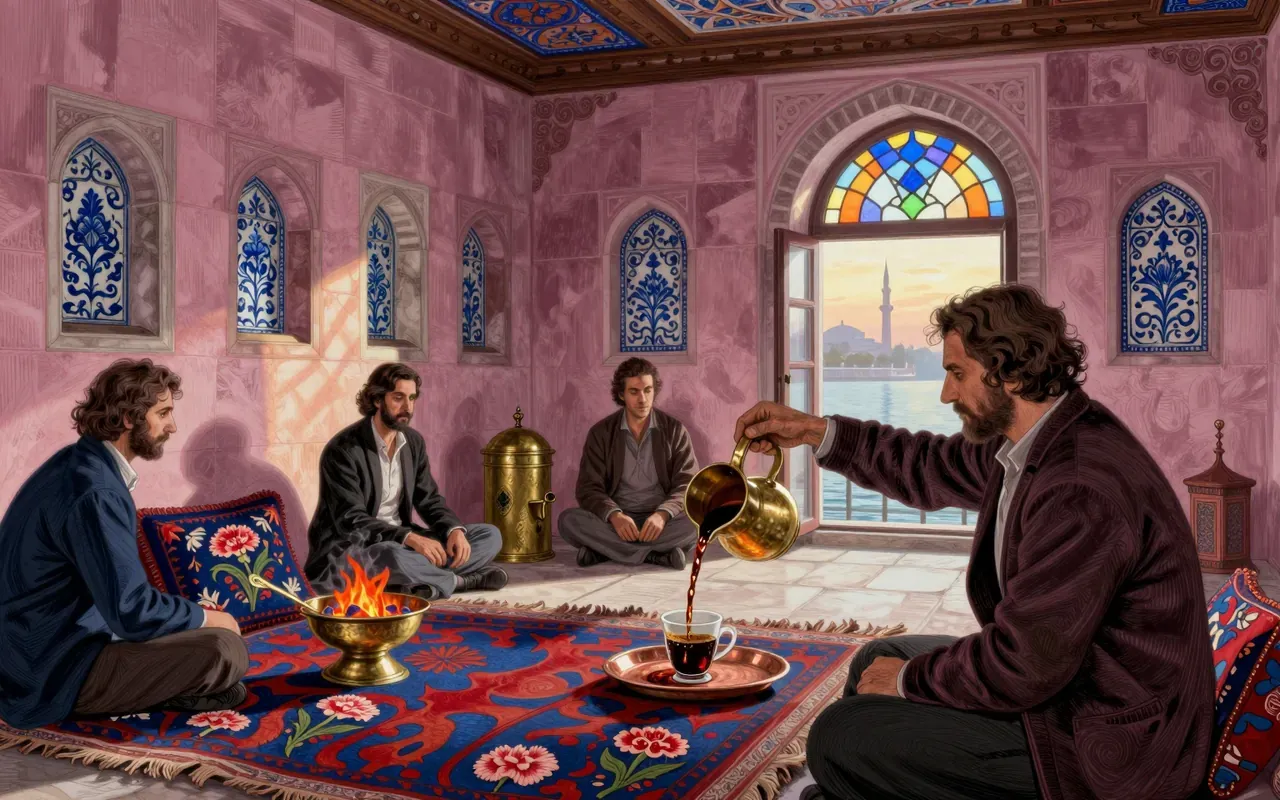
Turkish coffeeTurkish coffee is a precise, unfiltered brewing ritual rooted in 16th-century Istanbul. It demands medium-roast beans, ultra-fine grind, and strict thermal control in a cezve. Its rigidity—no filtering, no roast flexibility, rapid staling—defines its limits. Its endurance lies in its resistance to standardisation.
10:04
Afrika BambaataaAfrika Bambaataa originated breakbeat DJing. He co-opted the Black Spades into the Universal Zulu Nation in the Bronx in 1977. He released 'Planet Rock' in 1982—a breakthrough electro-funk track that fused drum machines, synthesizers, and Kraftwerk samples to define a new genre. He played the first commercially released American single made on a computer: EBN-OZN’s 'AEIOU Sometimes Y' in 1982. He shifted live performance away from bands to exclusive reliance on technology. His leadership of the Universal Zulu Nation ended in 2016 following child sexual abuse allegations.
Up next in Culture

Ceviche

· 9:38

Ceviche isn’t cooked—it’s chemically tricked. And that deception has lasted 5,500 years.

9:38