culturebriefs
9:05in productionCh. 1 · What it is/ 9:05 · ceiling 15 min
Subcultures

Sneaker collecting

Sneaker collecting is not about footwear. It is a ritual economy disguised as a hobby.

Sneaker collecting is acquisition and trading—not admiration or study. It emerged among urban Black youth and white skateboarders in the 1970s. It gained prominence in 1980s New York through Michael Jordan’s Air Jordan line and hip-hop culture. Adidas Superstar and Puma Suede were popularised by b-boys. A strict rule against combining rival brands has existed since the 1970s. Sneaker culture became global by the end of the 1990s. A $10 billion secondary market existed in 2021.

Chapters & takeaways5
  1. 0:52
    What it is

    It is defined by acquisition and trading—not appreciation, history or design.

  2. 2:02
    Where it came from

    It began in the 1970s among urban Black youth and white skateboarders, then exploded in 1980s New York via Jordan and hip-hop.

  3. 3:18
    Ritual before resale

    Its earliest rules—'stepsies', brand exclusivity—were social contracts, not consumer habits.

  4. 4:22
    How it spread

    Global reach came with cultural export: b-boys wore Superstars; Jordan sold Airs. Neither was accidental.

  5. 5:51
    Why it scaled

    A $10 billion secondary market in 2021 is the endpoint of a logic that started on Bronx pavements.

Worth your time?

Yes. Study the whole thing.

3.5/ 5
What works
  • as a status economy
  • as a bridge between street ritual and platform capitalism
What does not
  • fashion
  • sport
  • design
Study it if
  • urban youth
  • resellers
  • digital natives
Skip it if
  • shoemakers
  • archivists
  • historians
The written brief1 min read

What the thing is

Sneaker collecting is the acquisition and trading of sneakers as a hobby.

Where it came from

It originated among urban Black youth and white skateboarders in the 1970s. It came to prominence in 1980s New York City through Michael Jordan’s Air Jordan line and hip-hop culture. Adidas Superstar and Puma Suede were popularised by b-boys. Sneaker culture became global by the end of the 1990s.

What it gets right

It treats sneakers as social objects. The ‘stepsies’ ritual in the Bronx made footwear a site of competition and respect. Brand loyalty enforced since the 1970s created durable tribal lines. Resale and customization turned consumption into curation.

What it gets wrong

It conflates acquisition with connoisseurship. There is no evidence it rewards knowledge of design, materials or manufacturing—only access, timing and resale logic. Nostalgia is leveraged, not interrogated.

Why it matters now

It reveals how digital scarcity (raffles, authentication platforms) formalised what began as street-based ritual. A $10 billion secondary market in 2021 shows how informal status economies can scale—without changing their core grammar of exclusion.

Is it worth your time

Yes—if you care how status, scarcity and ritual operate in youth culture. It is not a hobby about shoes. It is a system of value-making built on exclusion, memory and display.

Same beat · Subcultures4 of 96
8:48
Image macroImage macros are a digital interface—not an art form. They standardised how millions expressed irony, frustration and affiliation before platforms automated tone and stripped away authorship. Their rigidity enabled scale. Their simplicity enabled theft. Their legacy isn’t humour—it’s the template as infrastructure.
10:01
BreakdancingBreakdancing is a street dance style developed by African Americans and Puerto Ricans in the Bronx during the 1970s and early 1980s. It consists of four core movement types — toprock, footwork, power moves, and freezes — performed to music featuring drum breaks. Its Olympic debut in Paris 2024 formalised a global practice that began as an act of cultural assertion in marginalised communities.
9:42
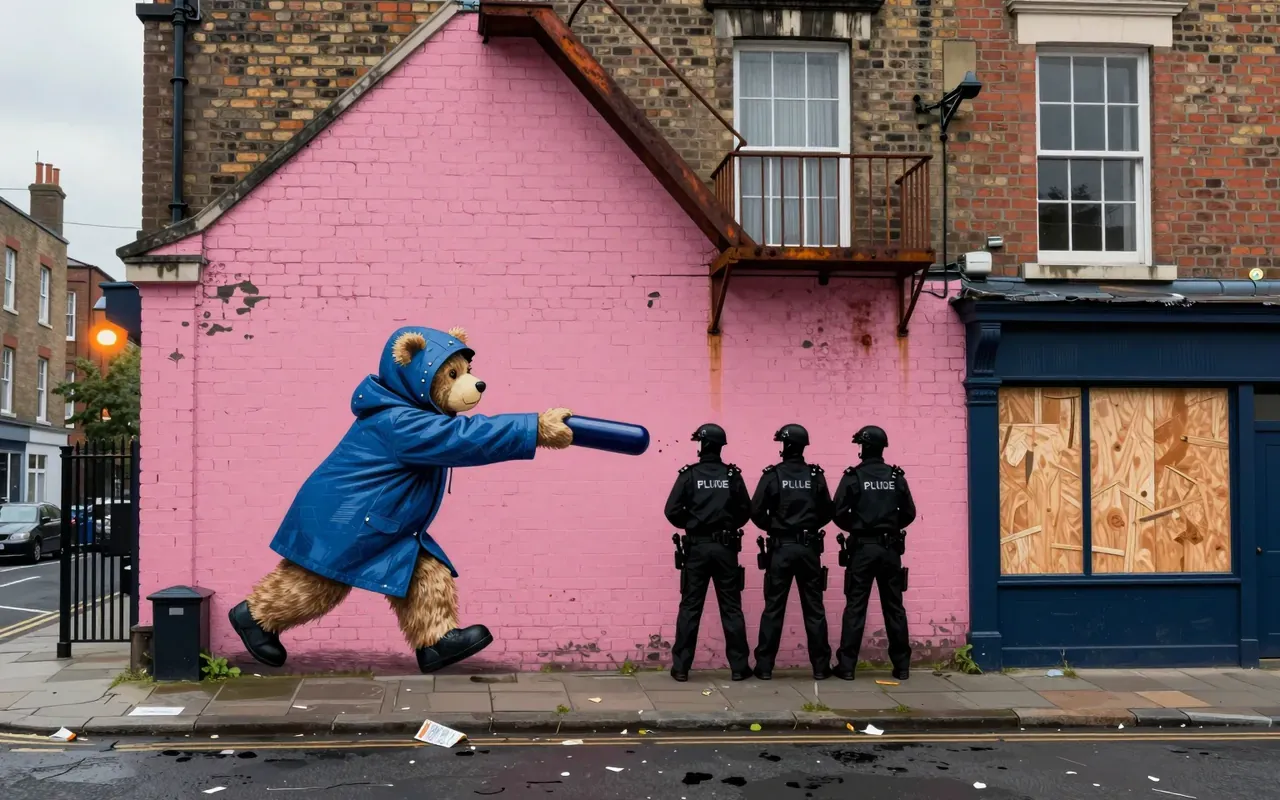
BanksyBanksy is a pseudonymous England-based street artist whose practice centres on stencilled, satirical interventions placed on publicly visible surfaces. He emerged from the Bristol underground scene in the 1990s. His first known large-scale mural was The Mild Mild West in 1997 on Stokes Croft. Banksy makes satire legible on city walls. His stencils deliver punchlines fast. They occupy surfaces people pass daily. They force confrontation without requiring attention. The method relies on evasion—but that evasion obscures authorship, dilutes accountability, and turns political gesture into branded ambiguity. His work established a template for art that operates outside institutions but trades on their validation—exposing the friction between subversion and market absorption.
9:46
BeatnikBeatnik was a media slur—not a self-chosen identity. It erased Kerouac’s spiritually grounded 'beat' in favour of a consumable caricature. Its legacy is not influence, but warning: how fast serious ideas become costumes.
Up next in Culture

SOAS University of London

1916 · 9:42

A colonial instrument repurposed—not redeemed—into a rare centre for non-Western scholarship.

9:42