culturebriefs
8:29in productionCh. 1 · What it measures/ 8:29 · ceiling 15 min
Society

Keeping up with the Joneses

The Joneses were never real. That’s why they’re still winning.

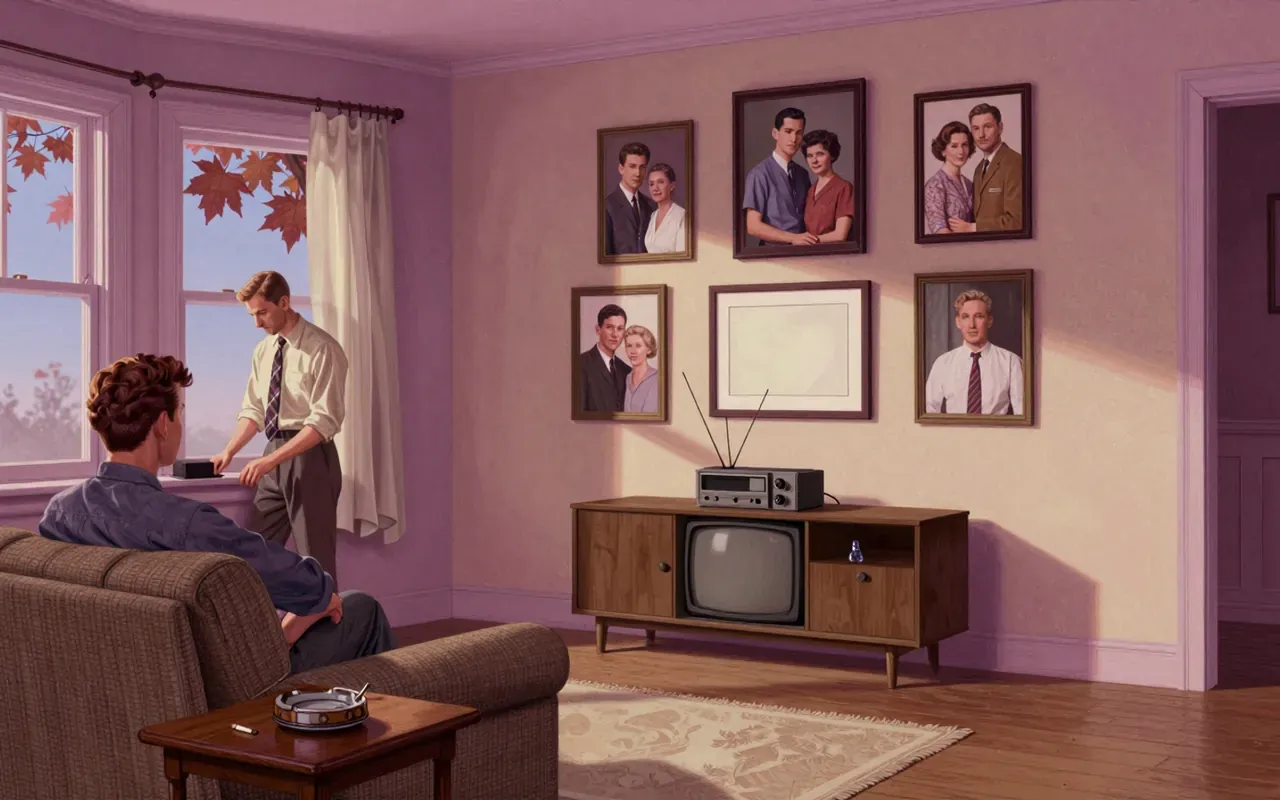
The phrase 'Keeping up with the Joneses' is an idiom rooted in a 1913–1940 comic strip by Pop Momand, depicting social comparison via an unseen, aspirational neighbor named 'the Joneses'; it describes how the phrase reflects socio-economic anxiety, conspicuous consumption, and status-driven behavior, with the name 'Jones' historically serving as a generic stand-in for hypothetical peers in English-speaking social discourse.

Chapters & takeaways4
  1. 0:43
    What it measures

    It codifies social comparison as a test of worth—not wealth.

  2. 1:49
    Who the Joneses were

    It was built on absence: the Joneses never appeared, only haunted the frame.

  3. 2:51
    Why they worked

    Their invisibility made them infinitely scalable—anyone can be the Joneses.

  4. 4:18
    Why 'Jones'

    Jones wasn’t chosen for irony. It was already the default name for the neighbour you imagined.

Worth your time?

Yes. Study the whole thing.

4/ 5
What works
  • names a mechanism
  • endures because it is hollow enough to fill
  • exposes how comparison depends on absence
What does not
  • explain motivation
  • describe material conditions
  • account for race or gender in aspiration
Study it if
  • readers who need language for ambient pressure
  • critics tracing the grammar of envy
Skip it if
  • those seeking historical analysis of consumer culture
  • students needing causal models of inequality
The written brief1 min read

What the thing is

An idiom meaning social comparison with a hypothetical peer, used as a benchmark for class or possessions.

Where it came from

A comic strip by Pop Momand, running from 1913 to 1940, depicting the McGinis family straining to match unseen neighbours named the Joneses.

What it gets right

It names the core mechanism of status anxiety: comparison with an unseen, generic peer. It isolates the performative gap between appearance and reality.

What it gets wrong

It implies the Joneses are external. They are not rivals. They are a projection—internalised pressure dressed as neighbourly competition.

Why it matters now

It remains the shortest available phrase for the self-inflicted strain of measuring worth against arbitrary, invisible standards—especially online.

Is it worth your time

Yes—if you want a precise, durable tool for naming social mimicry. No—if you expect it to explain why people copy, or how inequality shapes aspiration.
Same beat · Society4 of 277
8:48
Image macroImage macros are a digital interface—not an art form. They standardised how millions expressed irony, frustration and affiliation before platforms automated tone and stripped away authorship. Their rigidity enabled scale. Their simplicity enabled theft. Their legacy isn’t humour—it’s the template as infrastructure.
9:10
Self-managed social centerSelf-managed social centers are anti-authoritarian, volunteer-run spaces that operate as infoshops, free schools, bicycle workshops and concert venues. They began in Italy in the 1980s and spread to the US and UK in the 1990s. They oppose gentrification and megaprojects. They create and practice the commons. They are transient, precarious, and politically active—but do not survive long enough to institutionalise what they prefigure.
10:00
Home recordingHome recording is sound captured in private homes—not studios. It began with isolated pioneers in the US, UK, Australia, and Jamaica in the 1950s–1970s. The 1979 Portastudio enabled consumer multitrack recording. Digital recorders and DAWs replaced analog in the 1990s. Lockdowns in 2020 caused a global surge in home-based artists and microgenres. Untreated rooms produce misleading acoustics that compromise mixing. Professional studios have been heavily impacted over the last two decades.
10:02
Burning Man1986Burning Man is a participant-built desert gathering named for the ceremonial burning of a wooden effigy—the Man—on the Saturday before Labor Day. It began on Baker Beach in 1986, moved to the Black Rock Desert in 1990, and operates on radical self-reliance, communal effort, and theme-driven art made solely by attendees. Its ten principles were codified in 2004—not at origin—and its model has since been replicated, commercialised, and contested. It is neither pure counterculture nor corporate spectacle, but a documented instance of how ritual, place, and principle diverge over time.
Up next in Culture

Kitsch

· 7:02

Kitsch isn’t bad art—it’s the market’s first branded insult.

7:02