culturebriefs
9:26in productionCh. 1 · Origin in Mumbai, pivot to sound/ 9:26 · ceiling 15 min
The arts

Hindi cinema

Hindi cinema isn’t Bollywood: it’s a Mumbai-based industry built on sound, song, and strategic linguistic elasticity.

Hindi cinema is India’s Hindi-language film industry, based in Mumbai. It began with Raja Harishchandra (1913) and consolidated with Alam Ara (1931). Its dominant mode is the masala film — mixing action, comedy, romance, drama, melodrama and musical numbers — while parallel cinema offers realist, non-musical alternatives. In 2017, it produced 364 of India’s 1,986 feature films. In 2022, it earned 33% of national box office revenue — more than any other Indian language industry. Its global reach relies on Hindustani linguistic roots, Hinglish evolution, song-and-dance integration, studio-based sound production and diaspora markets.

Chapters & takeaways4
  1. 1:04
    Origin in Mumbai, pivot to sound

    Hindi cinema began in Mumbai with silent film (1913) and pivoted decisively to sound (1931).

  2. 2:18
    Two modes: masala and parallel

    Masala films mix six genres and song; parallel cinema rejects both music and commercial formula.

  3. 3:47
    Output and revenue dominance

    Hindi cinema produced the most Indian features in 2017 and earned the highest share of box office revenue in 2022.

  4. 5:45
    Alam Ara catalysed the sound transition

    Alam Ara’s commercial success forced the entire industry to adopt sound within months.

Worth your time?

Yes. Study the whole thing.

4.5/ 5
What works
  • as a model of hybrid genre logic
  • as infrastructure for transnational audience building
  • as evidence that linguistic elasticity can drive market dominance
What does not
  • bollywood
  • a movement
  • a genre
  • a style
Study it if
  • audiences who expect narrative density and formal flexibility
  • scholars of linguistic adaptation in mass media
  • producers studying studio-based sound economies
Skip it if
  • those seeking minimalism or narrative austerity
  • viewers who treat musical interruption as digression
The written brief1 min read

What the thing is

Hindi cinema is India’s Hindi-language film industry, headquartered in Mumbai.

Where it came from

It began with Raja Harishchandra (1913), the first Indian feature-length film, and consolidated with Alam Ara (1931), the first Indian talkie.

What it gets right

It delivers emotional density through musical integration and genre hybridity. The masala film’s mix of action, comedy, romance, drama, melodrama and song works as functional syntax — not ornament.

What it gets wrong

It displaces regional language cinemas despite producing fewer films than India’s total output. In 2017, Hindi cinema made 364 of 1,986 Indian feature films — yet dominates revenue and attention.

Why it matters now

It remains the largest revenue contributor among Indian language cinemas — 33% of box office in 2022 — and sustains global markets via Hindustani roots, Hinglish evolution and diaspora distribution.

Is it worth your time

Yes, if you want to understand how linguistic pragmatism, studio craft and diaspora demand shape mass entertainment — not as an exception, but as a system.
Same beat · The arts4 of 7
10:25
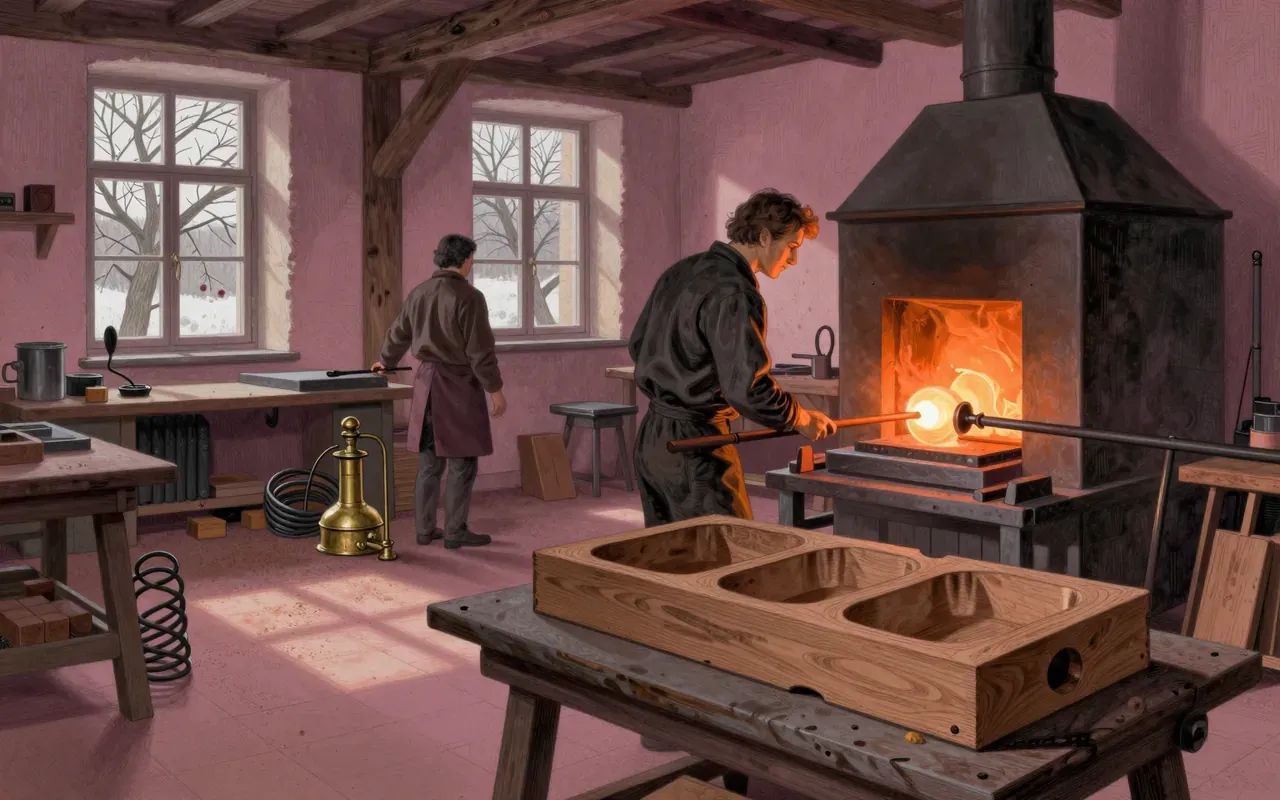
GlassblowingGlassblowing is a technique—not an art form, not a tradition, but a precise physical method. It turns glass’s disordered atomic structure into a controllable medium. It was invented once, in one place, at one time: the middle of the 1st century BC, by Phoenician and Syrian craftsmen. It spread rapidly because it worked: it enabled uniform thickness, prevented blow-through, and scaled from luxury vessels to everyday wares. It persists because nothing else does what it does.
9:08
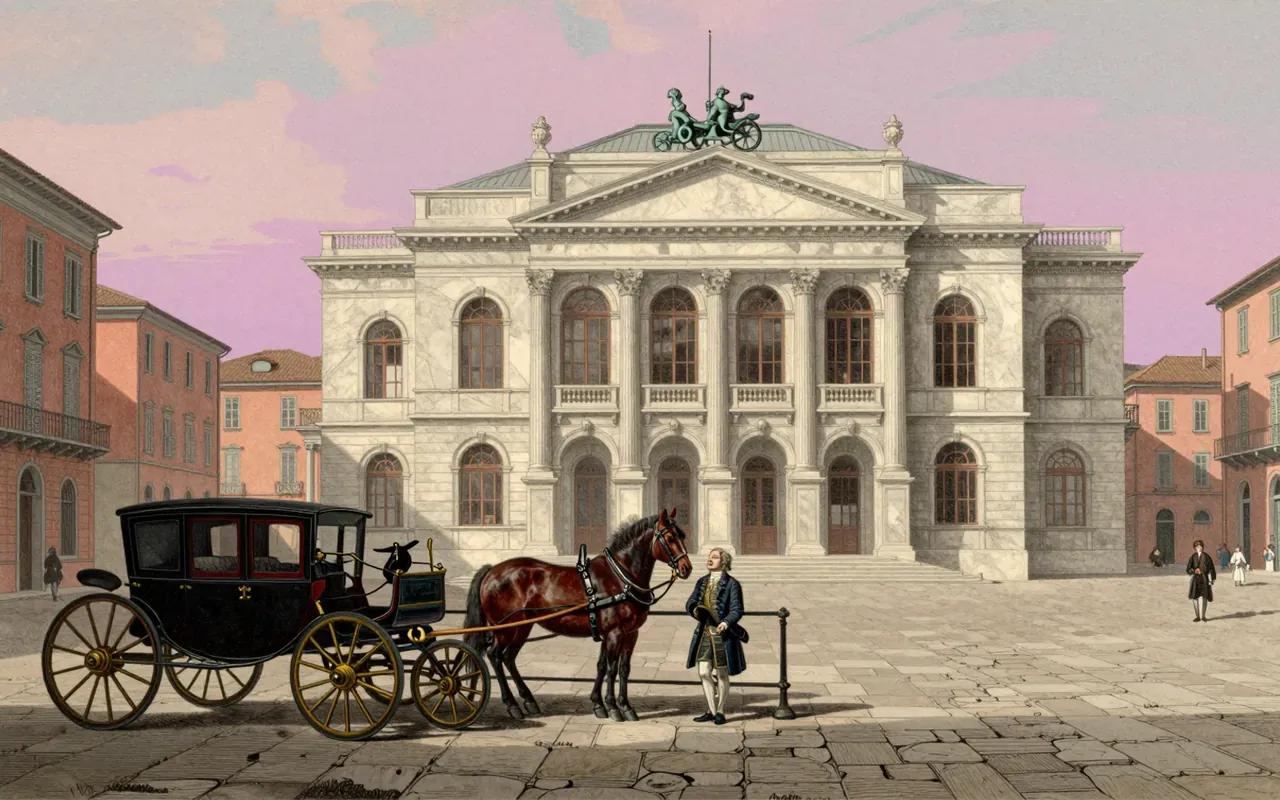
La Scala1778La Scala is an opera house in Milan, Italy, inaugurated on 3 August 1778 on the site of the deconsecrated church of Santa Maria della Scala, following the 1776 fire that destroyed its predecessor, the Teatro Regio Ducale. Built over two years by Pietro Marliani, Pietro Nosetti, and Antonio and Giuseppe Fe, it originally held ~3,000 seats and was illuminated by oil lamps—later replaced by gas and then electric lights in 1883. Renovated in 1907 (to 1,987 seats), damaged in WWII (1943) and rebuilt by 1946, and extensively modernized from 2002–2004, La Scala remains a leading global institution for opera and ballet, housing resident ensembles and an academy, and maintaining traditions such as opening its season on 7 December, Saint Ambrose’s Day.
8:13
NohNoh is Japan's oldest major theatre art still regularly performed. It originated from sarugaku in the mid-14th century. It is highly codified and regulated by the iemoto system. Emotions are conveyed through conventional gestures while iconic masks represent archetypal roles. It integrates masks, costumes and stylised props in a dance-based performance. Its stories often feature a supernatural being transformed into a human hero who narrates the tale. The kanji for Noh means 'skill', 'craft' or 'talent' in performing arts.
12:13
National Museum of India1949The National Museum, founded in 1949 on Janpath under the Ministry of Culture, showcases 200,000 works of Indian art. It preserves a vast collection, offers a museology university, yet displays only 6‑7 % of its holdings. The museum remains a central repository for Indian heritage but struggles with limited space and regional representation.
Up next in Culture

Burning Man

1986 · 10:02

A beach bonfire became a desert city—but its rules were written a decade and a half too late.

10:02