9:47in productionCh. 1 · No company. No server. Just stamps./ 9:47 · ceiling 15 min
Subcultures · Movements & scenes
Tape trading
Tape trading wasn’t nostalgia—it was the last time fans ran the distribution network.
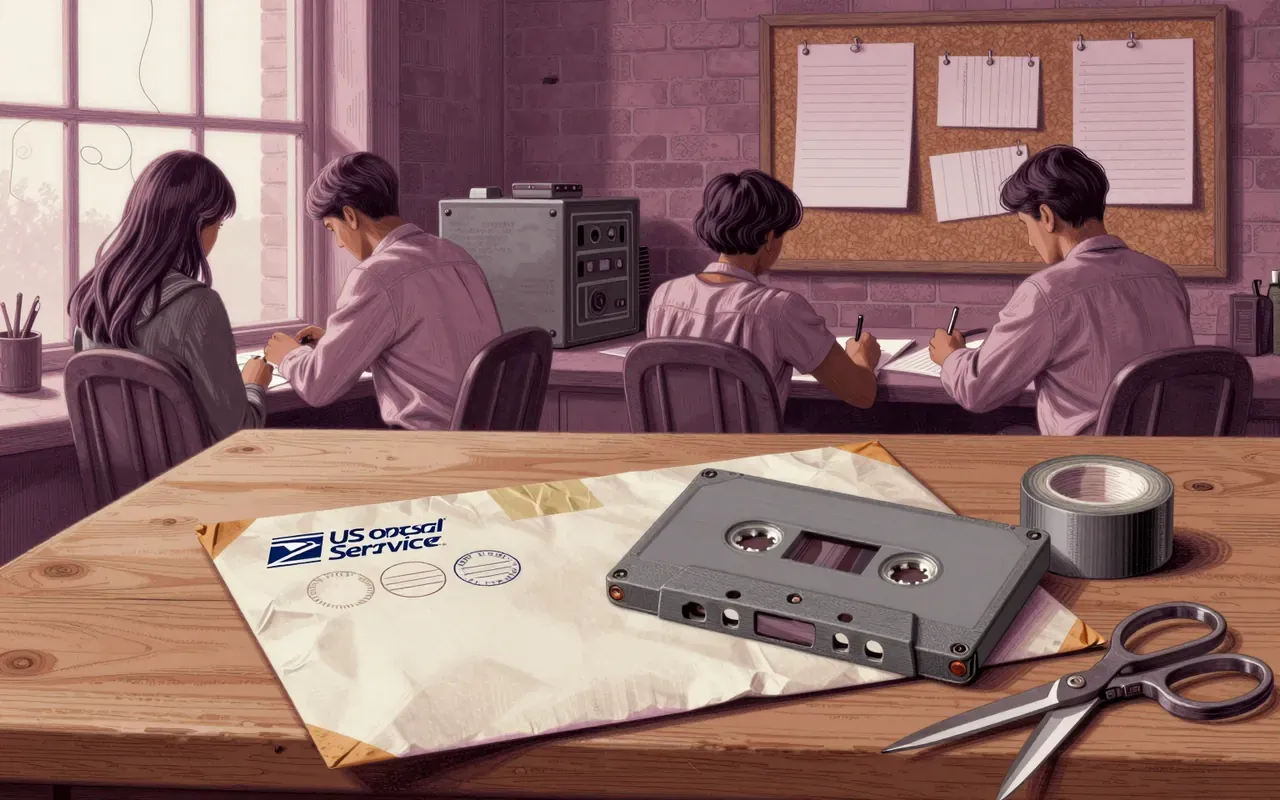
Tape trading was a decentralised, trust-based postal exchange system for music and video content, prominent from the 1980s to 1990s and fading in the 2000s. It enabled cross-genre and cross-regional musical exchange, degraded audio fidelity over successive copies, and functioned as an analog precursor to podcasting and digital file sharing — particularly for censored, niche, or otherwise inaccessible media.
Tape trading was an unofficial, fan-run postal network—not a label, not a platform, not a service.
2:21
Honour system, not terms of service
Reciprocity was enforced socially: rip-off traders were shamed, not banned.
3:22
Lossy, but alive
Each copy degraded the sound—but also turned radio shows and demos into portable, shareable artefacts.
4:44
The only archive for erased TV
Videotape trading preserved wrestling, game shows, and cult films that broadcasters erased.
5:42
Uncommissioned curation
Traders inserted local bands into unused tape space—no permission, no pitch, no playlist algorithm.
6:58
Analog podcasting, killed by speed
It prefigured podcasting—but collapsed when streaming made postal latency unbearable.
Worth your time?
Yes. Study the whole thing.
4/ 5
What works
cross-regional exchange
non-commercial redistribution
preservation of erased media
What does not
influence
define
start
launch
Study it if
underground musicians
radio fans
wrestling enthusiasts
Skip it if
mainstream listeners
broadcasters
record labels
The written brief1 min read
What the thing is
Tape trading was an unofficial postal system for swapping music and video cassettes. It operated via trust, reciprocity, and penfriend-style networks.
Where it came from
It emerged in the 1980s as a grassroots response to geographic isolation, commercial gatekeeping, and broadcast limitations—especially for underground, foreign, cult, or banned media.
What it gets right
It built cross-regional, cross-genre musical exchange outside commercial channels. It redistributed censored, niche or inaccessible content. It relied on voluntary copyright waiver and fan cooperation—not corporate infrastructure.
What it gets wrong
It degraded audio fidelity with every generation—sometimes to near-unlistenable levels. It had no quality control, no metadata, no searchability, and no permanence beyond the physical tape.
Why it matters now
It reveals what was lost when digital distribution prioritised convenience over communal obligation—and why algorithmic discovery cannot replicate the curatorial intent of a trader filling blank tape space with a local band.
Is it worth your time
Yes—if you care about how media distribution shaped underground communities before algorithms flattened exchange into consumption.