culturebriefs
10:01in productionCh. 1 · Where it began/ 10:01 · ceiling 15 min
Subcultures

Breakdancing

Breakdancing is not a spectacle — it’s a language of resistance, rhythm, and precision, now sanctioned by the IOC.

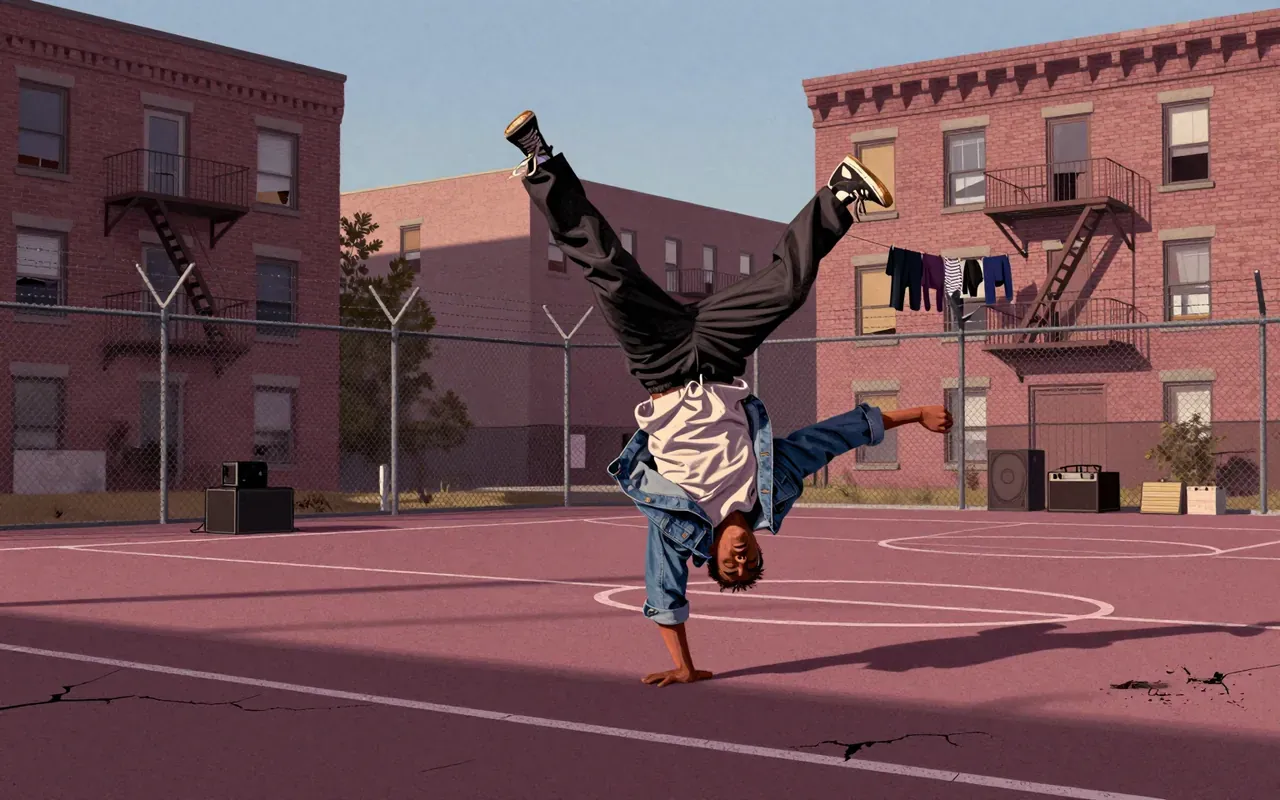
Breakdancing is a street dance style developed by African Americans and Puerto Ricans in the Bronx during the 1970s and early 1980s. It consists of four core movement types — toprock, footwork, power moves, and freezes — performed to music featuring drum breaks. Its Olympic debut in Paris 2024 formalised a global practice that began as an act of cultural assertion in marginalised communities.

Chapters & takeaways4
  1. 0:56
    Where it began

    Breakdancing was born in the Bronx among African American and Puerto Rican youth facing poverty and disinvestment.

  2. 2:39
    How it works

    Its four elements — toprock, footwork, power moves, and freezes — are inseparable from drum breaks and hip-hop DJing.

  3. 4:02
    What the name hides

    The term 'breakdancing' erases b-boying and b-girling — names that anchor the practice to its creators and culture.

  4. 5:57
    When it entered the mainstream

    Olympic recognition in Paris 2024 did not invent legitimacy — it absorbed a decades-old global practice into institutional sport.

Worth your time?

Yes. Study the whole thing.

4.5/ 5
What works
  • as a living grammar of movement
  • as evidence of cultural transmission under constraint
  • as a counterpoint to institutional definitions of sport
What does not
  • celebrity
  • nostalgia
  • fashion
Study it if
  • dancers
  • hip-hop practitioners
  • urban historians
Skip it if
  • casual viewers seeking entertainment without context
  • those who assume Olympic inclusion equals cultural dilution
The written brief1 min read

What the thing is

Breakdancing is a street dance style defined by four movement types: toprock, footwork, power moves, and freezes.

Where it came from

It emerged among African American and Puerto Rican youth in the Bronx in the 1970s and early 1980s.

What it gets right

It preserves four distinct, codified movement types: toprock, footwork, power moves, and freezes. Each serves a functional role in expression and competition.

What it gets wrong

The term ‘breakdancing’ flattens its origin as b-boying and b-girling — identities tied to hip-hop’s Black and Puerto Rican creators, not generic ‘dance’.

Why it matters now

Its inclusion in Paris 2024 marks the first time a hip-hop-derived street practice entered the Olympics — formalising a culture that began outside institutions.

Is it worth your time

Yes — if you want to understand how a street practice rooted in Bronx marginality became an Olympic discipline without losing its core grammar.
Same beat · Subcultures4 of 96
8:48
Image macroImage macros are a digital interface—not an art form. They standardised how millions expressed irony, frustration and affiliation before platforms automated tone and stripped away authorship. Their rigidity enabled scale. Their simplicity enabled theft. Their legacy isn’t humour—it’s the template as infrastructure.
9:42
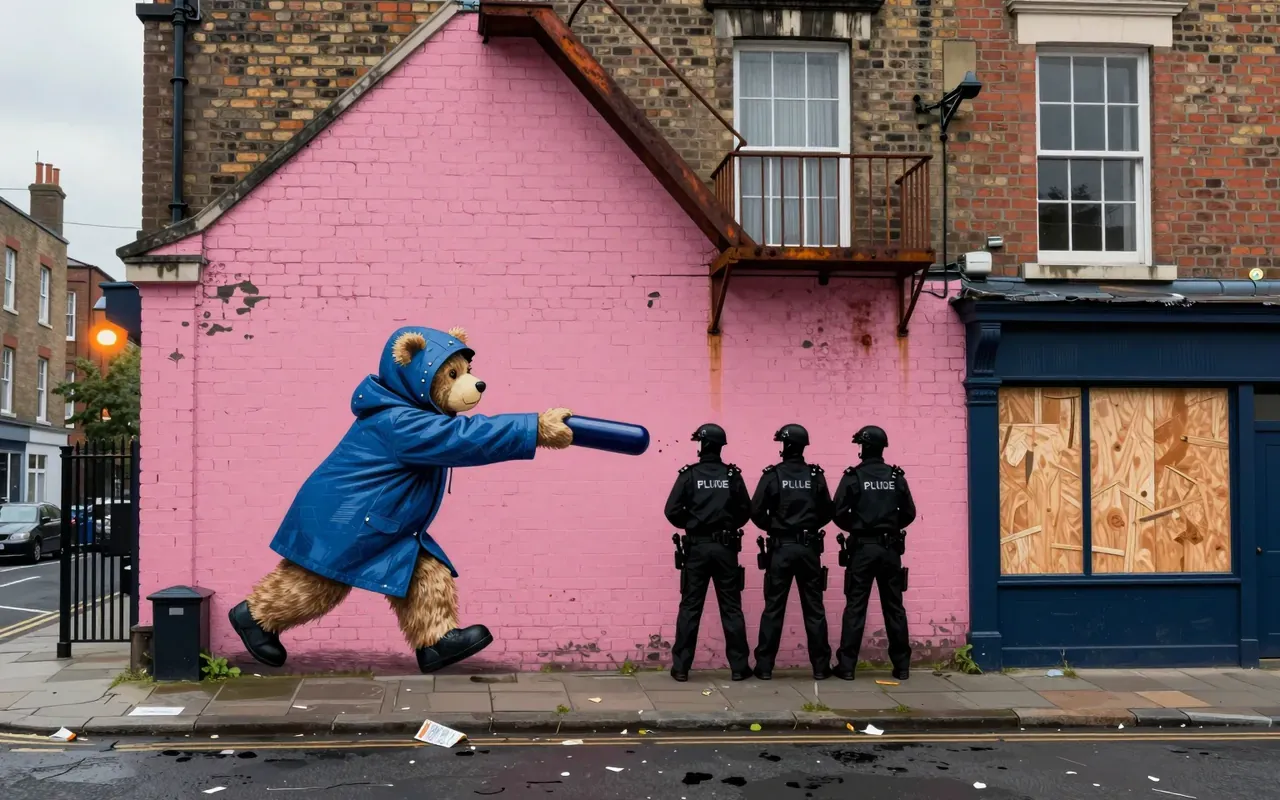
BanksyBanksy is a pseudonymous England-based street artist whose practice centres on stencilled, satirical interventions placed on publicly visible surfaces. He emerged from the Bristol underground scene in the 1990s. His first known large-scale mural was The Mild Mild West in 1997 on Stokes Croft. Banksy makes satire legible on city walls. His stencils deliver punchlines fast. They occupy surfaces people pass daily. They force confrontation without requiring attention. The method relies on evasion—but that evasion obscures authorship, dilutes accountability, and turns political gesture into branded ambiguity. His work established a template for art that operates outside institutions but trades on their validation—exposing the friction between subversion and market absorption.
9:46
BeatnikBeatnik was a media slur—not a self-chosen identity. It erased Kerouac’s spiritually grounded 'beat' in favour of a consumable caricature. Its legacy is not influence, but warning: how fast serious ideas become costumes.
9:30
Camp (style)Camp is an aesthetic sensibility rooted in artifice, affectation, and exaggeration—with playful or ironic intent. It emerged in British theatre from at least the 16th century, gained definable modern usage from the late 17th century, and was codified mid-20th century by Sontag, Isherwood, and Meyer. It disrupts modernist hierarchies of taste. It distinguishes itself from kitsch through self-awareness. It is historically tied to queer identity—especially gay male culture—and defined by Moe Meyer as 'queer parody'. Jack Babuscio identifies its frequent misuse to signify triviality and superficiality. David Carrier observes its subversive and political character.
Up next in Culture

Banksy

· 9:42

Banksy didn’t reinvent protest art—he weaponised its disappearance.

9:42