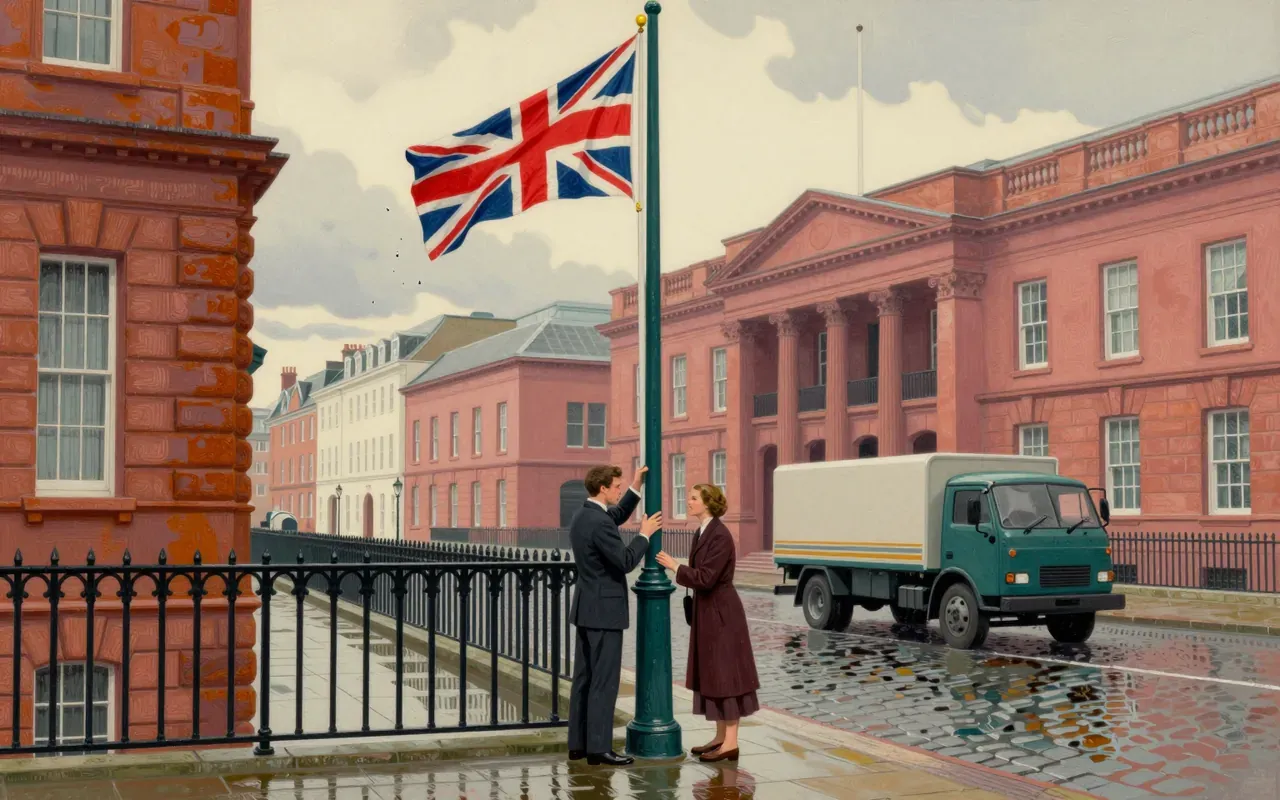
The Anti-Apartheid Movement was a British organisation founded in London in 1959. It coordinated international opposition to apartheid and supported South Africa's non-white population. It began as the Boycott Movement in response to Albert Luthuli's appeal. It attracted widespread support from students, trade unions and the Labour, Liberal and Communist parties. It launched a March Month, Boycott Action at a rally in Trafalgar Square. The Sharpeville massacre triggered an intensification of anti-apartheid action. After renaming, the AAM coordinated all anti-apartheid work and kept apartheid policy central in British politics. It campaigned for the total isolation of apartheid South Africa, including economic sanctions. The AAM scored its first major victory when South Africa was forced to leave the Commonwealth in 1961.
It began as a direct response to Albert Luthuli’s call — not as a spontaneous student protest or elite initiative.
2:03
Who Joined
Students, trade unions and three parties backed it — making it Britain’s first multi-class, multi-party anti-racist campaign.
3:08
The Turning Point
Sharpeville didn’t inspire the movement — it intensified it, exposing the gap between moral outrage and political power.
4:36
The Pivot
It renamed itself to coordinate all anti-apartheid work — shifting from boycotts to total isolation, including sanctions.
5:44
The Victory
Its first major victory — South Africa’s 1961 expulsion from the Commonwealth — was concrete, irreversible and internationally visible.
Worth your time?
Yes. Study the whole thing.
4.5/ 5
What works
coordinating international pressure
keeping apartheid central in British politics
achieving institutional consequence
What does not
influence
define
start
launch
Study it if
British public
South African non-white population
Skip it if
South African government
international diplomats
The written brief1 min read
What the thing is
A British anti-apartheid organisation founded in 1959. It coordinated international isolation of South Africa through boycotts, sanctions, and mass mobilisation.
Where it came from
It began as the Boycott Movement in London on 26 June 1959, in direct response to Albert Luthuli’s appeal.
What it gets right
It centred South Africa’s non-white population in its messaging and action. It treated apartheid as a British political issue, not a distant tragedy.
What it gets wrong
It assumed consumer boycotts alone could dismantle state violence. The Sharpeville massacre proved that moral pressure without structural leverage had limits.
Why it matters now
It shows how targeted, cross-party domestic pressure can force institutional consequences — a model now rare in Britain’s depoliticised foreign policy.
Is it worth your time
Yes — if you need to understand how a small, London-based coalition forced a global institution to expel a founding member.