culturebriefs
7:50in productionCh. 1 · The Spark/ 7:50 · ceiling 15 min
Movements & scenes · Society

May 1968

1968

May 1968 was not a revolution. It was a series of copied tactics that accidentally aligned.

May 1968 was not a single event but a rapid, uncoordinated cascade of student and worker actions across France in May 1968. It began with protests at Nanterre, escalated into riots at the Sorbonne, spread to barricades in the Latin Quarter modelled on 1871 and 1944, then triggered a one-day general strike, the first sit-down strike at Sud Aviation near Nantes, and finally the seizure of five Renault factories across France.

Chapters & takeaways4
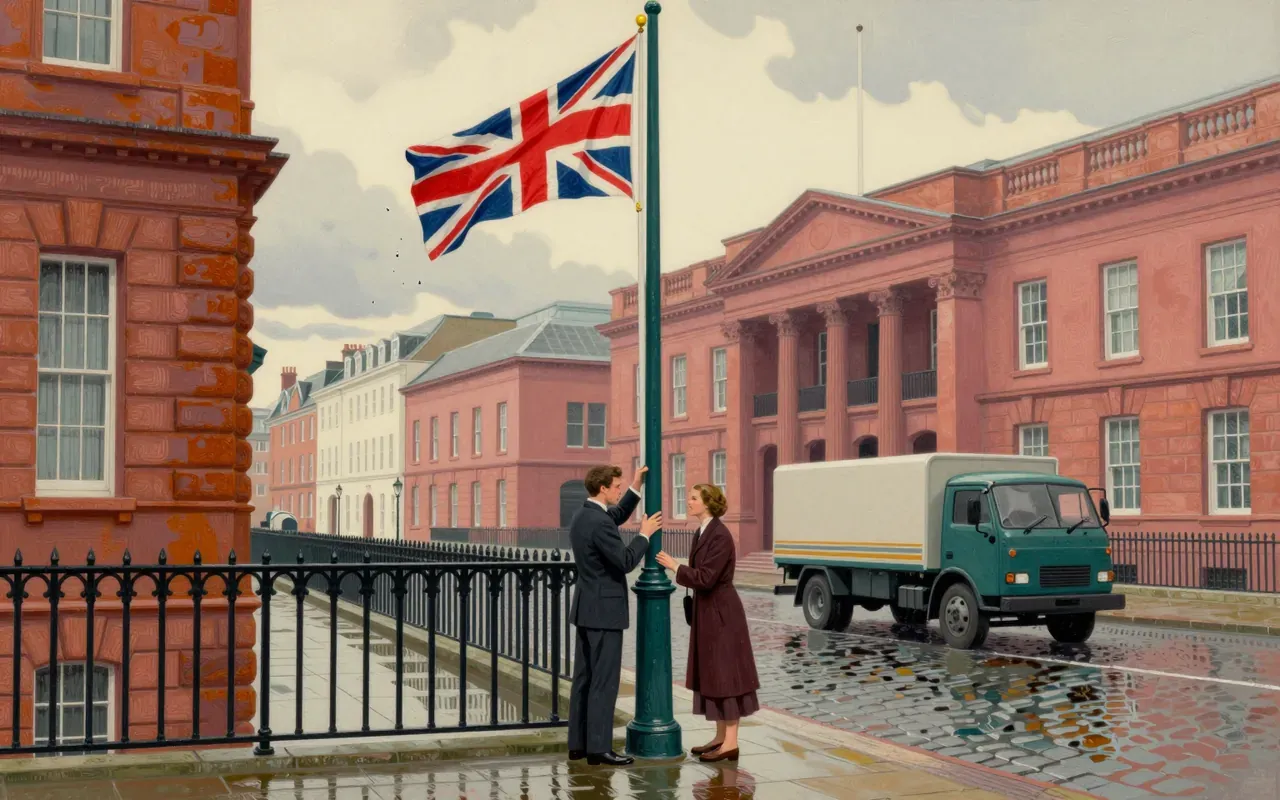
  1. 0:48
    The Spark

    Nanterre’s closure lit the fuse — and the Sorbonne riot was the first explosion.

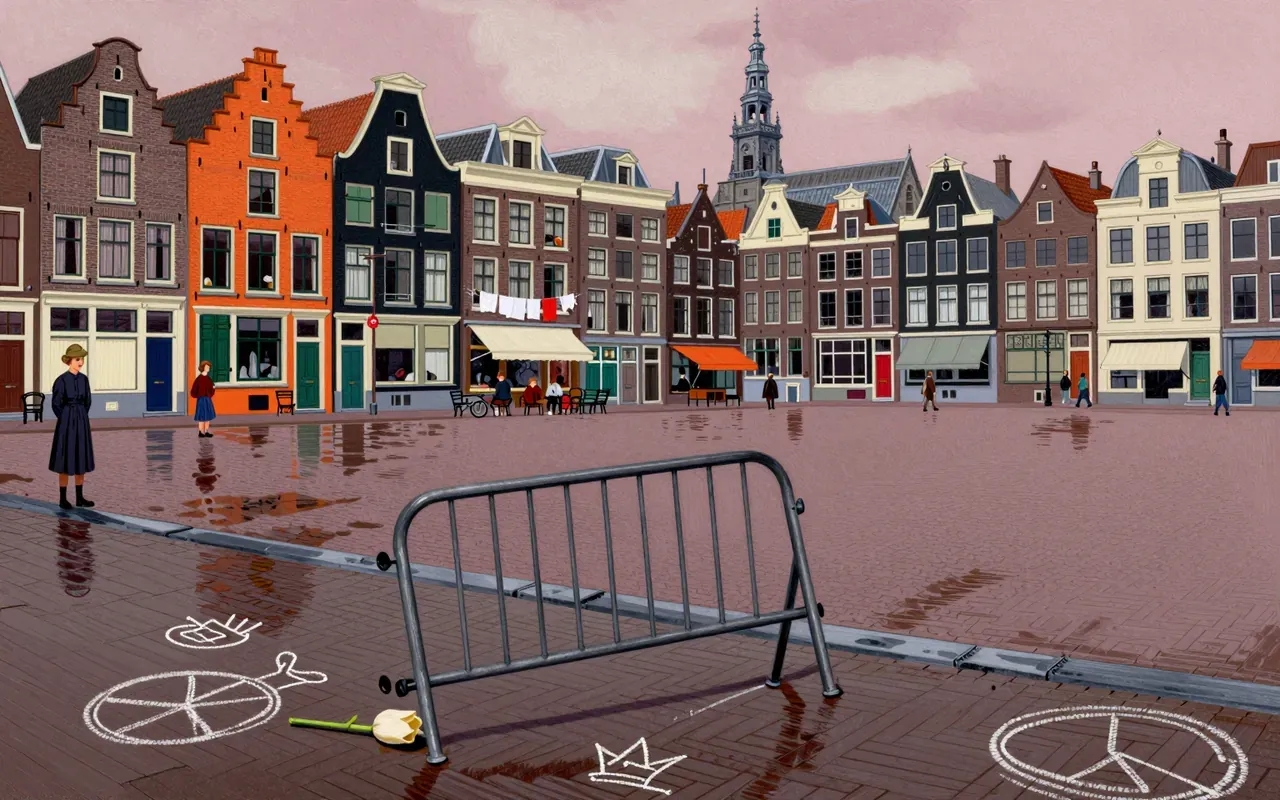
  2. 2:12
    The Script

    Barricades were not improvised — they were re-enactments of 1871 and 1944.

  3. 3:18
    The Shift

    A one-day general strike supported students — then Sud Aviation workers invented the sit-down.

  4. 4:38
    The Spread

    Renault factories fell two weeks later — Boulogne-Billancourt, Rouen, Le Havre, Le Mans, Flins.

Worth your time?

Yes. Study the whole thing.

4/ 5
What works
  • tactics
  • imitation
  • escalation
  • disruption
What does not
  • revolution
  • movement
  • ideology
  • leadership
Study it if
  • students
  • factory-workers
  • university-teachers
Skip it if
  • general-public
  • rural-france
  • government
The written brief1 min read

What the thing is

May 1968 was a cascade of uncoordinated actions: student protests, police crackdowns, barricades, one-day strikes, sit-downs, and factory seizures — all in France, all in May 1968.

Where it came from

It began at Paris University at Nanterre. Administrators shut it down after student protests. That triggered a Sorbonne protest, police intervention, and the first riot.

What it gets right

It correctly identifies the Nanterre-Sorbonne sequence as the spark. It shows barricades as deliberate historical citation, not spontaneous chaos. It documents the Sud Aviation sit-down as the first factory strike, and Renault occupations as nationwide escalation.

What it gets wrong

It implies a unified ‘May 68’ movement. The sources show no coordination between students, UNEF, CGT, CGT-FO or Sud Aviation workers — only sequential imitation and tactical convergence.

Why it matters now

It reveals how quickly state education closures, police overreach, and workplace occupation can chain-react — without central leadership, ideology, or shared demands.

Is it worth your time

Yes — if you want to understand how student action can ignite mass labour revolt, and how symbolic tactics travel across generations.
Same beat · Movements & scenes4 of 140
9:24
Adbusters1989Adbusters is a Canadian anti-capitalist activist foundation founded in 1989 in Vancouver by Kalle Lasn and Bill Schmalz. It uses culture jamming—especially subvertisements and campaigns like Buy Nothing Day and Occupy Wall Street—to challenge consumerism and corporate control of information flows. It publishes the reader-supported, advertising-free Adbusters magazine. Its founding premise is that citizens lack equal access to information flows compared to corporations.
8:14
Crypto-anarchyCrypto-anarchy is a movement, not a prophecy. It uses cryptography to enable anonymity, free speech and trade. It emerged from Timothy C. May’s 1988 manifesto and the 1992 cypherpunk founding. It gets right that code can constrain power—but wrong that it will collapse the state. A 2022 study confirms its political irrelevance—yet its architecture remains vital for Internet-native dissent.
8:35
Culture jammingCulture jamming is anti-consumerist protest that uses détournement to subvert corporate media forms. It began in the 1950s, was named in 1984 by Don Joyce of Negativland, and draws directly from the Letterist and Situationist Internationals. It correctly identifies media as a tool of perception-shaping and conformity-enforcement. But it wrongly assumes irony alone can resist power—and ignores how quickly its tactics are absorbed into branding. It matters now because corporate language has colonised every channel of attention, yet its methods remain stuck in the logic of the 1980s media landscape. It is worth your time if you want to understand why resistance so often looks like the thing it opposes.
8:55
Free software movementThe free software movement is a precise, principled refusal of proprietary control over software. It began in 1983 with GNU and institutionalised in 1985 with the FSF. It gets right that software freedom must be guaranteed—not merely permitted. It gets wrong that licence compliance alone secures user agency. Its relevance has grown as software becomes infrastructural—but its methods remain rooted in individual refusal and collective development.
Up next in Culture

Metalhead (Black Mirror)

2017 · 10:08

Silence isn’t profound here—it’s avoidance dressed as minimalism.

10:08