8:30in productionCh. 1 · Origin: From stump to seam/ 8:30 · ceiling 15 min
Society
Stocking
A stocking is not an accessory. It’s a hinge between medieval function and modern display.
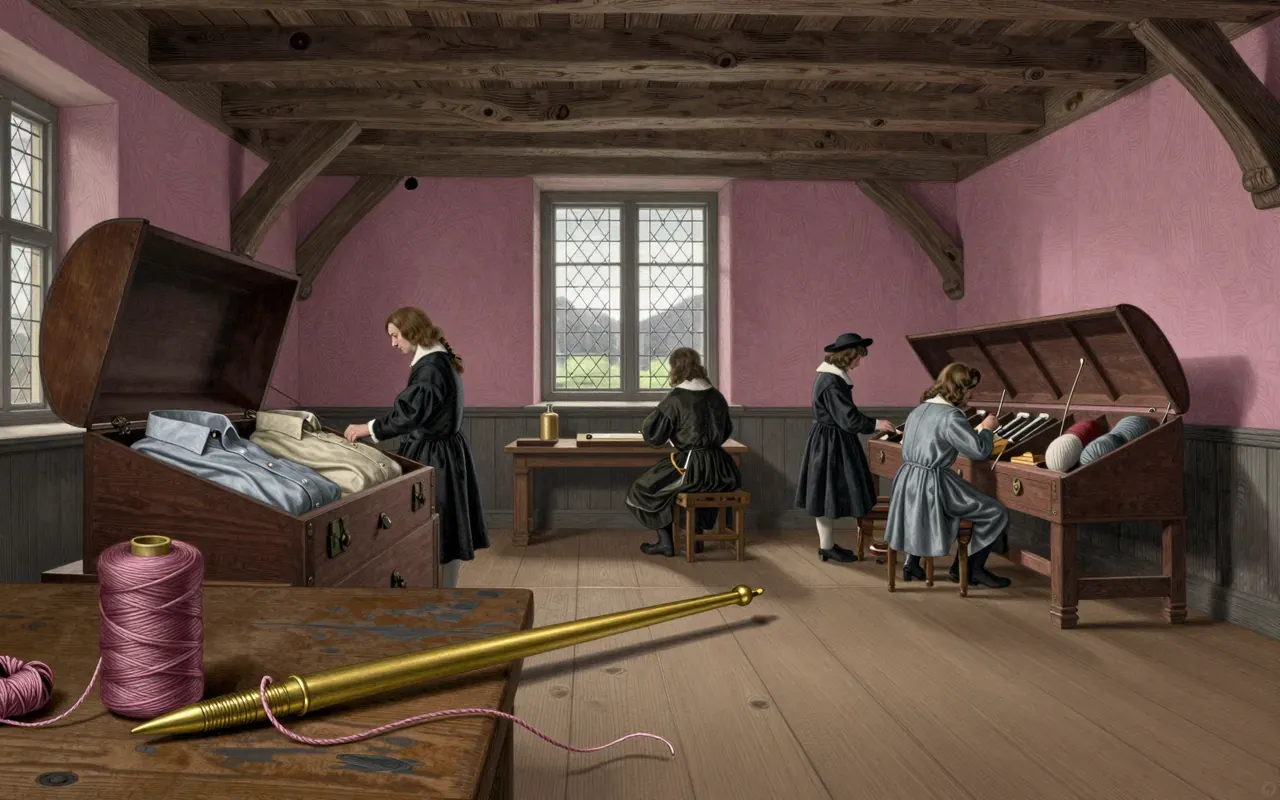
Stockings began as medieval hose—functional, full-body, worn by men. The term derived from 'stock', meaning the lower trunk. By the 1560s, elite women like Elizabeth I received silk knitted pairs as status objects. Before the 1590s, all were handmade; then machines were built solely for their production. Until the 1920s, they served warmth—not aesthetics. Their pivot to ornamentation coincided with rising hemlines, not innovation. They displaced utility with scrutiny. They matter now because they show how garments encode power, not just preference.
The word 'stocking' comes from 'stock'—a term for the lower body stump—and began as part of a full-body garment.
2:10
Status: Worn by men, weaponised by queens
Men wore hose first; elite women like Elizabeth I drove demand for silk knitted pairs by the 1560s.
3:28
Production: Handmade until the machine arrived
Before the 1590s, every stocking was handmade—then machines were invented specifically to replace that labour.
4:48
Function: Warmth first, legs second
Until the 1920s, stockings were thermal gear—not decorative—making their later aesthetic role a rupture, not an evolution.
Worth your time?
Yes. Study the whole thing.
4/ 5
What works
as a marker of status
as a driver of textile machinery
What does not
invention
gender
Study it if
elite women
men (pre-16th century)
Skip it if
working-class women before mass production
The written brief1 min read
What the thing is
Stockings are close-fitting, elastic leg coverings extending from foot to knee or thigh.
Where it came from
They evolved from medieval hose—full-body coverings called ‘stocks’ in the 15th century, named after the lower trunk and limbs.
What it gets right
It solved a real problem: covering the leg with precision, elasticity, and seamlessness. It adapted to new materials and production methods faster than most clothing.
What it gets wrong
It displaced practicality with performance. Once hemlines rose, stockings ceased to be about warmth—and became about leg presentation, surveillance, and maintenance.
Why it matters now
They reveal how bodily coverage shifts with technology, gender norms, and economics—not as progress, but as recalibration.
Is it worth your time
Yes—if you care how a functional garment became a site of gendered expectation, industrial innovation, and shifting social codes.