culturebriefs
8:54in productionCh. 1 · Not about how it looks/ 8:54 · ceiling 15 min
Fashion · Society

History of fashion design

Fashion design began when someone stopped making clothes for clients — and started telling them what to wear.

The history of fashion design is not about changing silhouettes. It is about the transfer of sartorial authority — from client to maker, then from maker to named designer. Worth did not invent beauty. He invented command.

Chapters & takeaways4
  1. 1:05
    Not about how it looks

    Fashion design is about purpose and intention — not aesthetics or trend.

  2. 2:37
    The first fashion house

    Worth invented the fashion house: a business that employed makers and imposed design authority on buyers.

  3. 3:31
    Before the designer

    Rose Bertin dressed Marie Antoinette — but she was a dressmaker, not a designer in Worth’s sense.

  4. 5:21
    How fashion spread

    Lithography turned Paris fashion plates into templates — interpreted, not copied, across Europe.

Worth your time?

Yes. Study the whole thing.

4.5/ 5
What works
  • clarifies intention over ornament
  • grounds design in business and labour
  • exposes the myth of linear progress
What does not
  • claim influence beyond the document
  • confuse Bertin with Worth
  • treat popularity as significance
Study it if
  • design students
  • cultural historians
  • critics of creative labour
Skip it if
  • those seeking visual timelines
  • style enthusiasts without interest in power structures
The written brief1 min read

What the thing is

The history of fashion design is the history of who controls garment intention — not style, not taste, but the decision-making power behind what is made and worn.

Where it came from

It began in 19th-century Paris with Charles Frederick Worth, an Englishman who ran a firm employing anonymous tailors and dictated client attire — the first modern designer.

What it gets right

It correctly locates the birth of fashion design as a distinct practice in intention: who decides what is worn, and on what terms. Worth’s firm, not his sketches, was the innovation.

What it gets wrong

It implies continuity from Bertin to Worth, but the document shows no link between them. Bertin had court influence; Worth built a commercial system. The gap is structural, not evolutionary.

Why it matters now

Because today’s debates about authorship, labour, and creative control in fashion — from fast fashion to AI-generated patterns — replay the same question Worth institutionalised: who holds the design authority?

Is it worth your time

Yes — if you want to understand how fashion design became a profession with authority, not just decoration.
Same beat · Fashion4 of 113
11:00
CosplayCosplay is a materially grounded, globally dispersed performance practice rooted in two separate histories—one in US sci-fi fandom, one in Japanese anime culture. Its significance lies in how it turns representation into labour, and character into conduct.
8:18
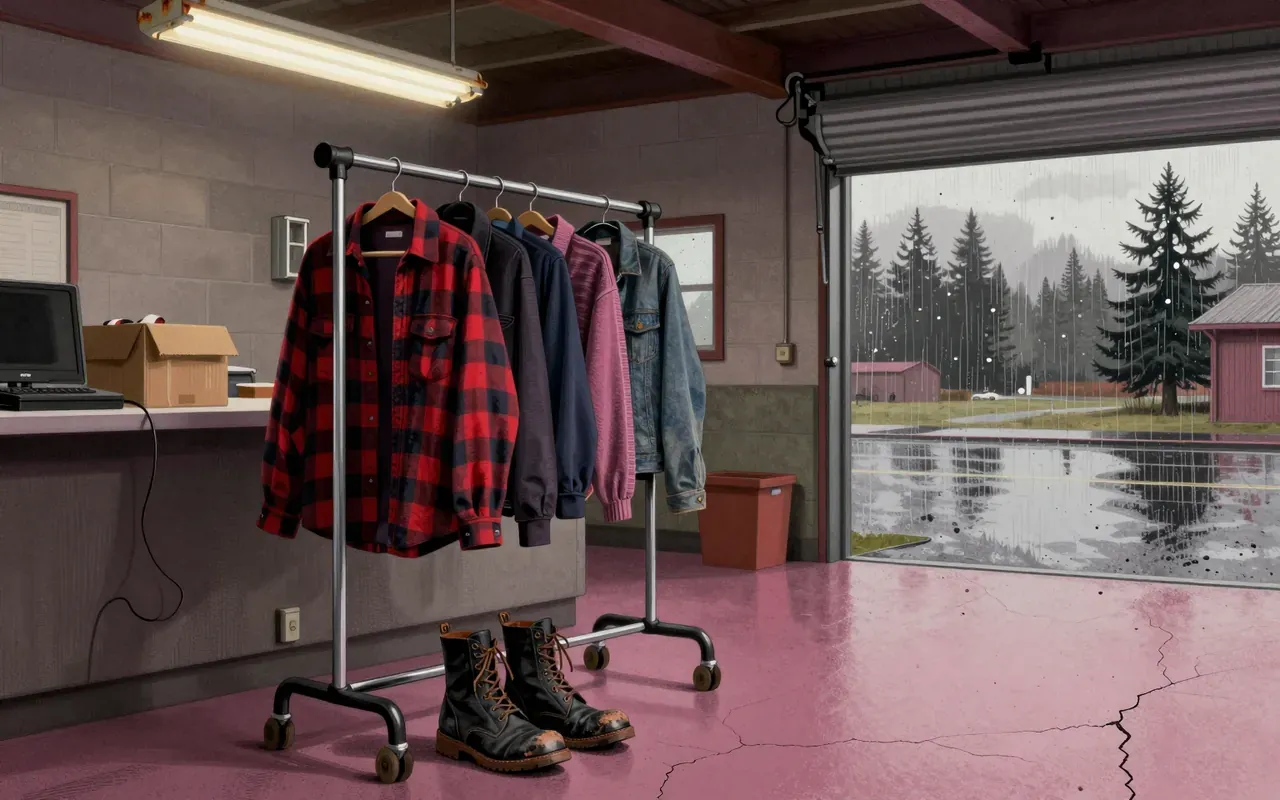
Grunge (fashion)1980Grunge fashion was an anti-fashion statement rooted in mid-1980s Seattle’s music scene. It used durable, thrift-store clothing worn loosely and androgynously—especially flannel shirts and Doc Martens—to reject 1980s flash. Kurt Cobain’s blend of lumberjack workwear and vintage feminine dresses helped define it. By the mid-1990s, it had been commodified globally—most notably by Marc Jacobs for Perry Ellis in 1993. Its legacy is not authenticity, but the speed with which resistance becomes product.
8:50
GyaruGyaru is a Japanese fashion subculture rooted in the transliteration of 'gal'. It emerged as nonconformist resistance to traditional Japanese gender roles and beauty standards—particularly the expectation that women be housewives with pale skin and dark hair. Early associations included juvenile delinquency and frivolousness among teenage girls. Kogal culture, a defining variant, rose prominently in the Heisei era (1989–2019), peaking in the 1990s and early 2000s. It is currently experiencing a revival in the Reiwa era. The subculture includes a male counterpart, gyaruo. Its core visual ingredients are consistently cited as gaudy fashion, extreme makeup, and dyed hair.
10:21
Levi Strauss & Co.Levi Strauss · 1853Levi Strauss & Co. is a pragmatic infrastructure project disguised as clothing. It began as immigrant commerce, not craft. Its innovations were patents, lot numbers, trademarks — administrative tools that made reproducible, durable workwear. It did not define youth culture, nor did it seek cultural status. It solved problems for people who needed pants to last — and kept doing so, even when the problem changed.
Up next in Culture

Fashion icon

· 8:39

A fashion icon isn’t admired—they’re instrumentalised.

8:39