Chanel didn’t liberate women with black—she weaponised austerity, sold it as chic, and made poverty look like power.
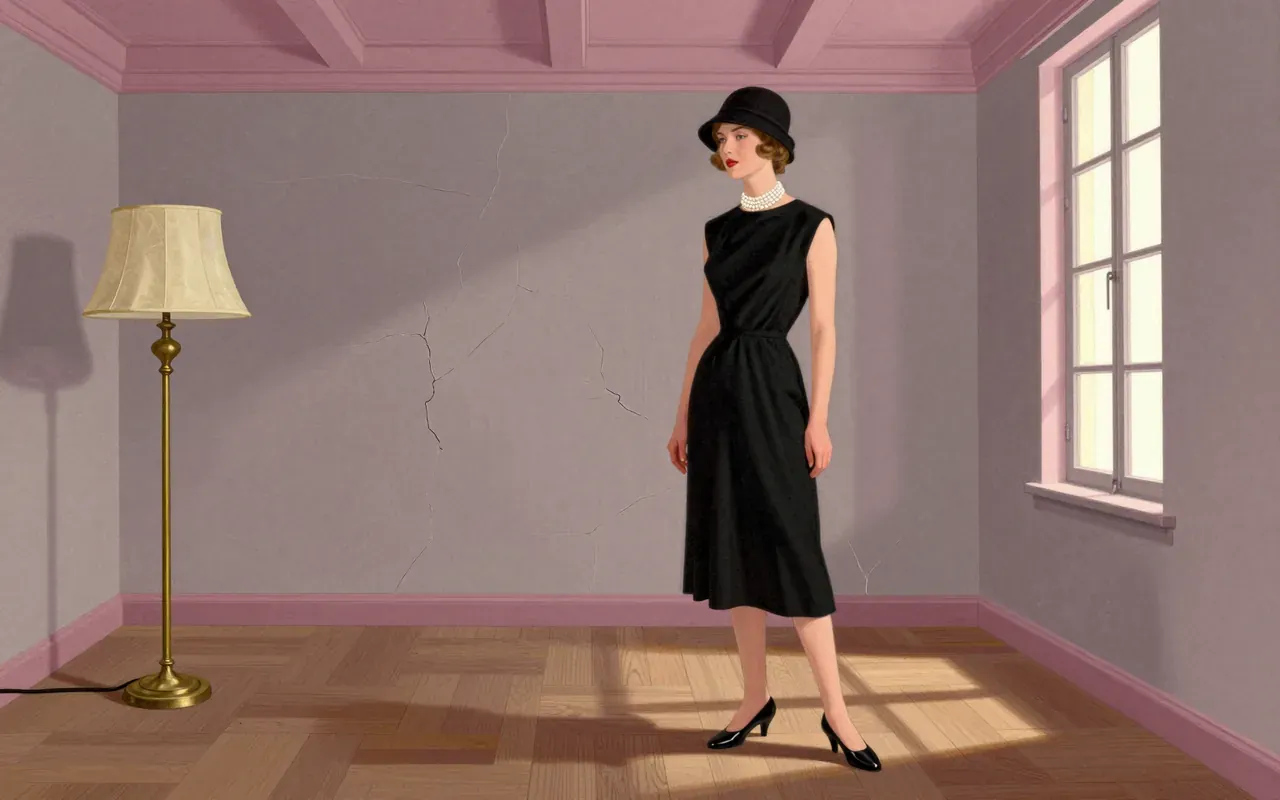
The little black dress is a 1926 Vogue-published design by Coco Chanel—a short, long-sleeved black dress that recast black as chic, not mournful. It originated earlier (1912–1913), was declared policy in 1920, and gained traction during the Great Depression due to affordability. Vogue likened it to the Model T and predicted it would become a uniform for women of taste. Male critics objected to its erasure of feminine form. By 2014, it was described as part of universal fashion vocabulary.
Origin story is older—and more deliberate—than the Vogue moment
The little black dress began not in 1926—but in 1912–1913, and was declared policy by Chanel in 1920.
2:13
It was marketed as a uniform—not a statement
Vogue compared it to the Model T: simple, mass-appeal, class-transcendent.
3:27
Black wasn’t reclaimed. It was rebranded.
Black went from mourning to high-class signal because Chanel imposed it—not because culture shifted on its own.
4:36
Its power was economic—and deeply polarising
Male critics hated its flatness; Chanel boasted it let non-wealthy women ‘walk around like millionaires’.
5:46
It succeeded because women needed cheap elegance
Its rise coincided with the Great Depression—affordability, not aspiration, drove adoption.
6:46
Its longevity proves influence, not consensus
By 2014, it was called part of universal fashion vocabulary—not because it was always universal, but because it stuck.
Worth your time?
Yes. Study the whole thing.
4.5/ 5
What works
as a tool of visual class signalling
as a vehicle for colour redefinition
as a durable commercial archetype
What does not
influence
define
start
symbolise
Study it if
women needing affordable elegance during economic crisis
editors and advertisers shaping post-war taste
designers working within austerity constraints
Skip it if
women seeking expressive femininity in the 1920s
those outside Vogue’s definition of 'taste'
mourning communities maintaining black’s traditional meaning
The written brief1 min read
What the thing is
A short, simple black dress with long sleeves, published by Coco Chanel in American Vogue in 1926.
Where it came from
Chanel first dressed Suzanne Orlandi in black velvet with a white collar in 1912–1913. She vowed in 1920 to dress all women in black after an opera audience. The 1926 Vogue image codified it.
What it gets right
It made black chic, not funereal. It offered simplicity as luxury. It let non-wealthy women project affluence during the Great Depression.
What it gets wrong
It erased feminine contours deliberately—and male journalists called it out at the time. Its ‘universality’ was a Vogue prediction, not a fact; its adoption was uneven and contested.
Why it matters now
It remains part of universal fashion vocabulary—as confirmed in 2014—but its endurance reflects how powerfully a single garment can reframe colour, class, and gender norms.
Is it worth your time
Yes—if you care how fashion reshapes social signals, not just silhouettes.