9:51in productionCh. 1 · London to Liverpool/ 9:51 · ceiling 15 min
Subcultures · Generations
Teddy Boys
1953
The Teddy Boys didn’t invent teenage rebellion—they invented the teenager as a marketable category.
The Teddy Boys were the first British youth group to claim the label 'teenager'—not as an age bracket, but as a cultural and commercial identity. They wore Edwardian-inspired clothes, listened to American rock and roll, and made headlines not for what they created, but for how loudly they disrupted. Their legacy is structural: they built the scaffolding for every youth market that followed.
They began in London and spread across the UK within months.
2:19
Tailors and Teds
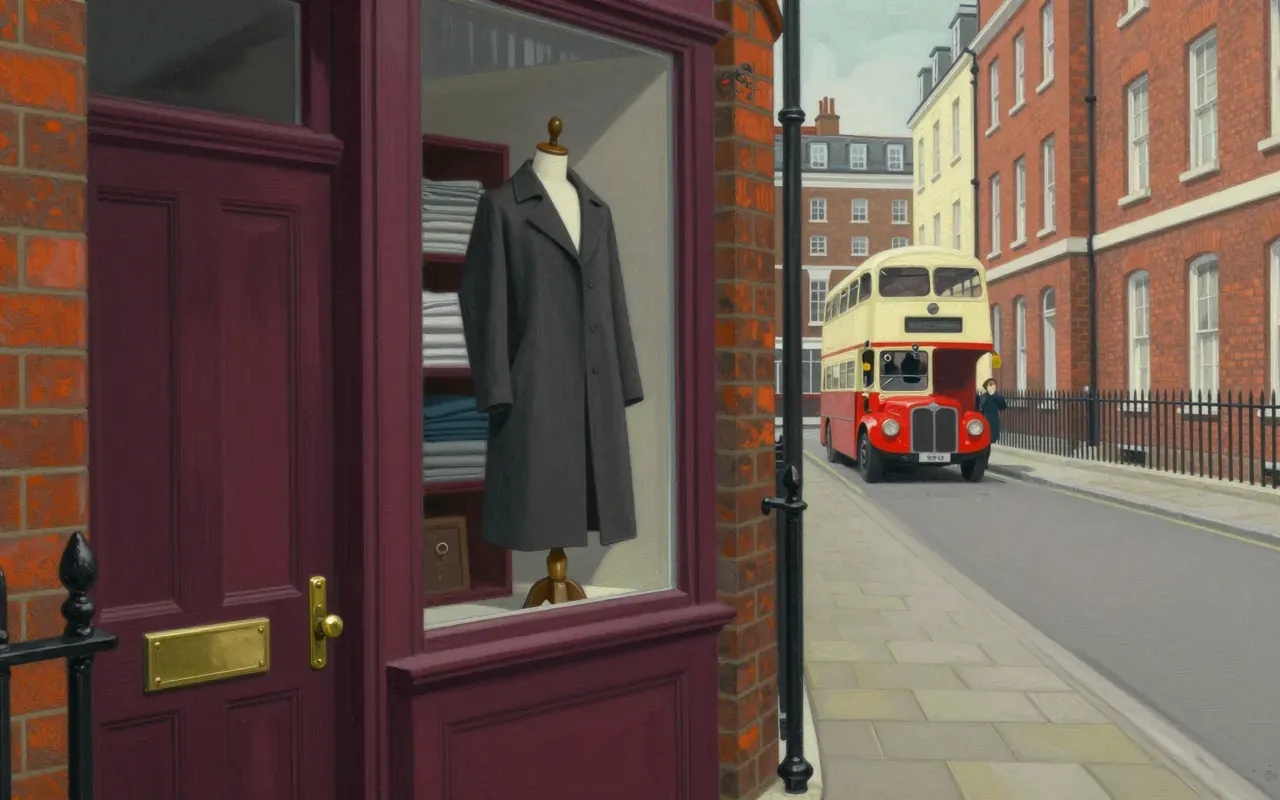
Their clothes borrowed from Edwardian dandies—but were worn by working-class youths who’d already been called Cosh Boys.
3:28
A Name in the Daily Express
The name 'Teddy Boy' was born in print—not on the street—on 23 September 1953.
4:52
The First Teenagers
They were the first British youth group to self-identify as teenagers—creating the youth market before it had a name.
6:08
Elephant and Castle, 1956
Their riot at the 1956 Blackboard Jungle screening proved they were less about fashion than about claiming space—and noise.
Worth your time?
Yes. Study the whole thing.
4/ 5
What works
as a marker of identity formation
as evidence of post-war British class negotiation
as a case study in media-driven naming
What does not
hedge
praise without reason
invent facts
claim influence beyond evidence
Study it if
historians of youth culture
designers studying sartorial rebellion
anyone tracking how markets invent categories
Skip it if
those seeking musical innovation
those looking for political activism
those expecting global influence claims
The written brief1 min read
What the thing is
The Teddy Boys were a London-born youth subculture defined by Edwardian-inspired clothing and loud allegiance to rock and roll and R&B.
Where it came from
They emerged among working-class teenagers in London in the early 1950s, building on pre-existing Edwardian-style adoption by delinquent gangs—known as Cosh Boys or Edwardians—and gaining official naming on 23 September 1953.
What it gets right
It established teenagers as a distinct social and commercial class. It fused American music with British tailoring tradition. It made working-class youth visible through deliberate sartorial rebellion.
What it gets wrong
It conflated Edwardian revivalism with delinquency before the name existed. It displaced earlier working-class youth groups—like the 19th-century scuttlers—without acknowledging their continuity.
Why it matters now
It shows how youth identity was first commercially codified in Britain—not through music alone, but through clothing, disruption, and media framing.
Is it worth your time
Yes—if you want to understand how British youth first claimed the word ‘teenager’ as a category of identity, not just age.