It is less a triumph of architecture than a monument to what happens when a government fires its architect—and then declares the result complete.
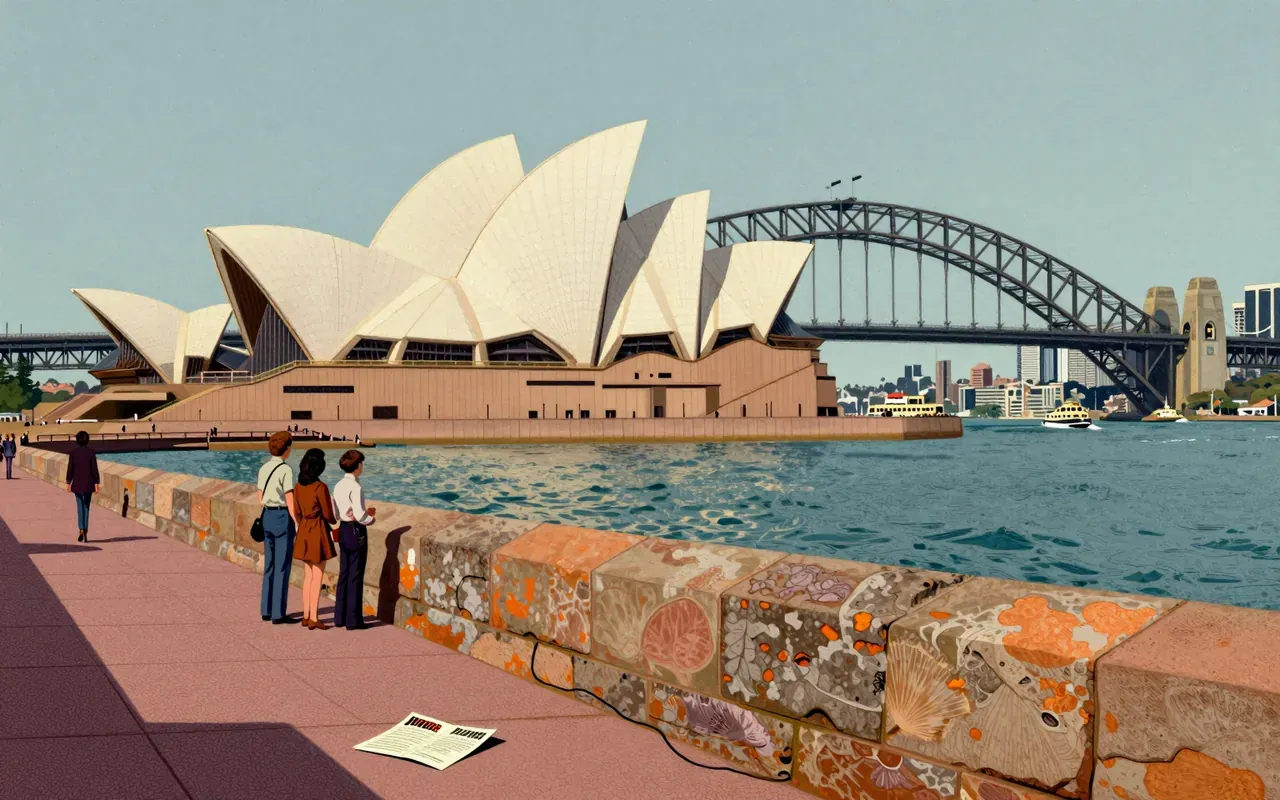
The Sydney Opera House is a multi-venue performing arts centre on Bennelong Point, Sydney Harbour. Designed by Jørn Utzon and completed by Peter Hall’s team after Utzon’s 1966 departure, it opened in 1973. Its spherical-shell roofs are a feat of modern expressionist engineering. It hosts over 1,800 performances yearly for more than 1.4 million people—and attracts over ten million visitors annually. It became a UNESCO World Heritage Site in 2007. Its legacy is split: iconic form, fractured authorship.
It is a performing arts centre occupying the entire Bennelong Point peninsula on Sydney Harbour.
2:28
Two architects, one building
Jørn Utzon designed it—but was forced out in 1966; Peter Hall’s team finished it.
4:06
Scale of use
It hosts over 1,800 performances yearly—and draws more than ten million visitors annually.
5:10
Form and formal recognition
Its spherical-shell roofs define modern expressionism—and it became a UNESCO World Heritage Site in 2007.
Worth your time?
Yes. Study the whole thing.
4/ 5
What works
formal legibility
public presence
scale of cultural programming
What does not
acoustics
interiors
functional coherence
Study it if
architects
urbanists
cultural policy makers
Skip it if
casual tourists seeking only photo ops
The written brief1 min read
What the thing is
A multi-venue performing arts centre on Bennelong Point, Sydney Harbour.
Where it came from
It originated from Jørn Utzon’s 1957 competition win. Construction began in 1958 under NSW Government authorisation, led by Premier Joseph Cahill.
What it gets right
It delivers a bold, legible architectural statement on a singular harbour site. Its spherical-shell roofs are structurally inventive and instantly legible as form derived from geometry. It hosts over 1,800 performances yearly for more than 1.4 million attendees.
What it gets wrong
Utzon’s vision was abandoned mid-construction. An Australian team led by Peter Hall completed it without him. The acoustics, interiors and functional coherence of the performance venues were compromised by this rupture.
Why it matters now
It remains a contested symbol: of civic ambition, of design authority versus political control, and of how heritage status (UNESCO, 2007) can obscure the friction embedded in its making.
Is it worth your time
Yes—if you care about architecture that shapes public life, not just postcards.