culturebriefs
9:00in productionCh. 1 · Who It Is For/ 9:00 · ceiling 15 min
Subcultures

Stan Twitter

Stan Twitter isn’t fandom — it’s a loyalty protocol with teeth.

Stan Twitter is a fandom-driven subculture on Twitter defined by obsessive, organised, and often toxic support for celebrities and media properties. It originated with Eminem’s 2000 song 'Stan', evolved linguistically (noun → verb), and developed a distinct vernacular and meme repertoire rooted partly in AAVE. Its activities include coordinated online activism, harassment campaigns, and cross-platform influence. Its contrast with 'Local Twitter' underscores its identity as a self-aware, insular, interest-based digital tribe.

Chapters & takeaways5
  1. 0:50
    Who It Is For

    Stan Twitter is a fandom-based community centred on public figures in entertainment.

  2. 1:42
    How It Got Its Name

    The word 'stan' began as a proper noun in a 2000 Eminem song and became a verb then a dictionary entry.

  3. 2:49
    Its Own Language

    It has its own terminology and memes — a linguistic signature separating it from mainstream Twitter.

  4. 4:03
    What It Does

    Its defining behaviour includes fanaticism and documented harassment, including death threats.

  5. 5:04
    Where It Spreads

    It operates across celebrities, music, TV, film, games, and social media — not one fandom, but a mode.

Worth your time?

Yes. Study the whole thing.

4/ 5
What works
  • as-a-warning-system-for-platform-governance
  • as-a-case-study-in-digital-tribalism
What does not
  • culture/art
  • culture/arts
  • culture/cities
  • culture/ideas
Study it if
  • platform-designers
  • journalists
  • media-literate-teens
Skip it if
  • casual-scrolling-adults
  • academics-seeking-historical-origins
The written brief1 min read

What the thing is

Stan Twitter is a fandom-driven subculture on Twitter defined by obsessive, organised, and often toxic support for celebrities and media properties.

Where it came from

It originated with Eminem’s 2000 song ‘Stan’, evolved linguistically from noun to verb, and developed a distinct vernacular and meme repertoire rooted partly in AAVE.

What it gets right

It names a real, observable pattern: coordinated, identity-driven fan activity that treats celebrity loyalty as a moral stance.

What it gets wrong

It conflates all fandom-adjacent activity with toxicity, erasing quieter, creative, or supportive practices that exist within the same spaces.

Why it matters now

Its methods — coordinated activism, cross-platform influence, harassment campaigns — have become templates for political, commercial, and ideological mobilisation beyond fandom.

Is it worth your time

It is worth your time if you need to understand how fandom organises, weaponises attention, and reshapes platform behaviour — not as a curiosity, but as infrastructure.
Same beat · Subcultures4 of 96
8:48
Image macroImage macros are a digital interface—not an art form. They standardised how millions expressed irony, frustration and affiliation before platforms automated tone and stripped away authorship. Their rigidity enabled scale. Their simplicity enabled theft. Their legacy isn’t humour—it’s the template as infrastructure.
10:01
BreakdancingBreakdancing is a street dance style developed by African Americans and Puerto Ricans in the Bronx during the 1970s and early 1980s. It consists of four core movement types — toprock, footwork, power moves, and freezes — performed to music featuring drum breaks. Its Olympic debut in Paris 2024 formalised a global practice that began as an act of cultural assertion in marginalised communities.
9:42
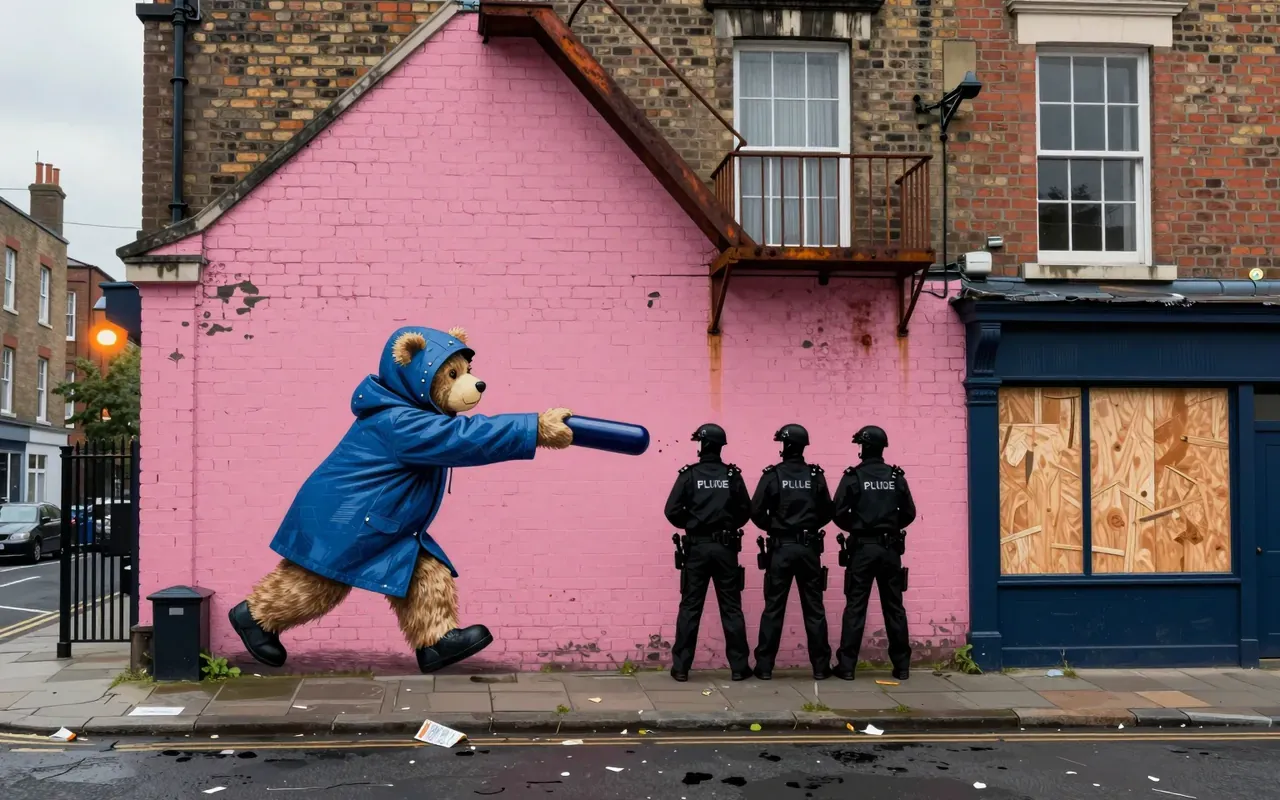
BanksyBanksy is a pseudonymous England-based street artist whose practice centres on stencilled, satirical interventions placed on publicly visible surfaces. He emerged from the Bristol underground scene in the 1990s. His first known large-scale mural was The Mild Mild West in 1997 on Stokes Croft. Banksy makes satire legible on city walls. His stencils deliver punchlines fast. They occupy surfaces people pass daily. They force confrontation without requiring attention. The method relies on evasion—but that evasion obscures authorship, dilutes accountability, and turns political gesture into branded ambiguity. His work established a template for art that operates outside institutions but trades on their validation—exposing the friction between subversion and market absorption.
9:46
BeatnikBeatnik was a media slur—not a self-chosen identity. It erased Kerouac’s spiritually grounded 'beat' in favour of a consumable caricature. Its legacy is not influence, but warning: how fast serious ideas become costumes.
Up next in Culture

Stencil graffiti

· 8:59

Stencil graffiti isn’t rebellion—it’s logistics made visible.

8:59