culturebriefs
9:01in productionCh. 1 · A Movement With a Mission/ 9:01 · ceiling 15 min
Movements & scenes · Cities

Modernisme

Modernisme wasn’t just Catalan Art Nouveau—it was Catalan identity built in iron, tile and verse.

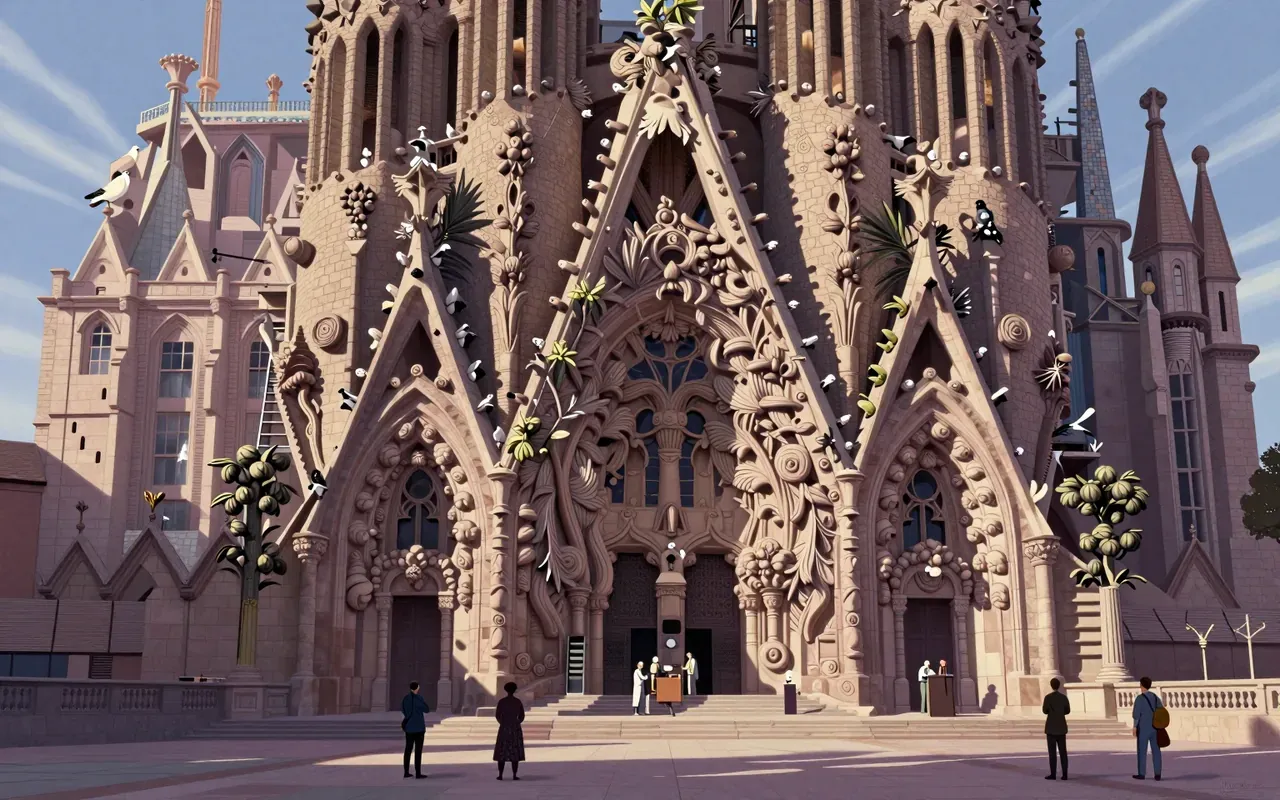
Modernisme was a Catalan art and literature movement centred in Barcelona from 1888 to 1911. It expressed cultural revindication of Catalan identity through architecture, decorative arts, poetry, fiction and drama. It emerged after the Catalan cultural revival, amid rapid urban-industrial growth in Barcelona. It adapted European fin de siècle trends but intensified local socio-ideological characteristics. It fused architecture, craft and literature into a single cultural project. It made Catalan language and symbolism central to high art. It treated ornament as ideological, not decorative. It excluded working-class Catalan voices. It relied on elite patronage. It framed modernity as stylistic renewal, not social transformation. It shows how language, craft and city-building converge in resistance to cultural assimilation—and how easily that resistance becomes heritage branding.

Chapters & takeaways4
  1. 0:51
    A Movement With a Mission

    Modernisme was a deliberate act of cultural re-entitlement—not an aesthetic accident.

  2. 2:28
    Dates Are Not Arbitrary

    It lasted exactly as long as the First Barcelona World Fair to Joan Maragall’s death: 1888–1911.

  3. 4:21
    Craft Was the Infrastructure

    Architecture led—but cabinetmaking, forged iron and ceramic tiles were co-equal political tools.

  4. 5:37
    Words Were as Structural as Stone

    It was literary (poetry, fiction, drama) and distinctly Catalan—not just a local echo of European modernism.

Worth your time?

Yes. Study the whole thing.

4/ 5
What works
  • casa-batllo
  • palau-de-la-musica-catalana
  • sagrada-familia
What does not
  • art-deco
  • bauhaus
  • surrealism
Study it if
  • design-historians
  • catalan-studies-scholars
  • urbanists
Skip it if
  • general-audiences-seeking-visual-inspiration-only
  • students-of-universal-modernism-without-regional-context
The written brief1 min read

What the thing is

Modernisme was a Catalan art and literature movement centred in Barcelona from 1888 to 1911. It expressed cultural revindication of Catalan identity through architecture, decorative arts, poetry, fiction and drama.

Where it came from

It emerged after the Catalan cultural revival, amid rapid urban-industrial growth in Barcelona. It adapted European fin de siècle trends but intensified local socio-ideological characteristics.

What it gets right

It fused architecture, craft and literature into a single cultural project. It made Catalan language and symbolism central to high art. It treated ornament as ideological, not decorative.

What it gets wrong

It excluded working-class Catalan voices. It relied on elite patronage. It framed modernity as stylistic renewal, not social transformation.

Why it matters now

It shows how language, craft and city-building converge in resistance to cultural assimilation—and how easily that resistance becomes heritage branding.

Is it worth your time

Yes—if you care about how regional identity reshapes international style. No—if you expect universal aesthetics or neutral design history.
Same beat · Movements & scenes4 of 139
9:24
Adbusters1989Adbusters is a Canadian anti-capitalist activist foundation founded in 1989 in Vancouver by Kalle Lasn and Bill Schmalz. It uses culture jamming—especially subvertisements and campaigns like Buy Nothing Day and Occupy Wall Street—to challenge consumerism and corporate control of information flows. It publishes the reader-supported, advertising-free Adbusters magazine. Its founding premise is that citizens lack equal access to information flows compared to corporations.
8:14
Crypto-anarchyCrypto-anarchy is a movement, not a prophecy. It uses cryptography to enable anonymity, free speech and trade. It emerged from Timothy C. May’s 1988 manifesto and the 1992 cypherpunk founding. It gets right that code can constrain power—but wrong that it will collapse the state. A 2022 study confirms its political irrelevance—yet its architecture remains vital for Internet-native dissent.
8:35
Culture jammingCulture jamming is anti-consumerist protest that uses détournement to subvert corporate media forms. It began in the 1950s, was named in 1984 by Don Joyce of Negativland, and draws directly from the Letterist and Situationist Internationals. It correctly identifies media as a tool of perception-shaping and conformity-enforcement. But it wrongly assumes irony alone can resist power—and ignores how quickly its tactics are absorbed into branding. It matters now because corporate language has colonised every channel of attention, yet its methods remain stuck in the logic of the 1980s media landscape. It is worth your time if you want to understand why resistance so often looks like the thing it opposes.
8:55
Free software movementThe free software movement is a precise, principled refusal of proprietary control over software. It began in 1983 with GNU and institutionalised in 1985 with the FSF. It gets right that software freedom must be guaranteed—not merely permitted. It gets wrong that licence compliance alone secures user agency. Its relevance has grown as software becomes infrastructural—but its methods remain rooted in individual refusal and collective development.
Up next in Culture

Mofongo

· 9:12

Mofongo isn’t fusion—it’s friction held together by lard and a mahogany mortar.

9:12