9:22in productionCh. 1 · Chen Mapo, not 'mapo'/ 9:22 · ceiling 15 min
Food · Cities
Mapo tofu
The first official mapo tofu recipe erased its defining ingredient—and made the dish legible to the nation by making it less Sichuan.
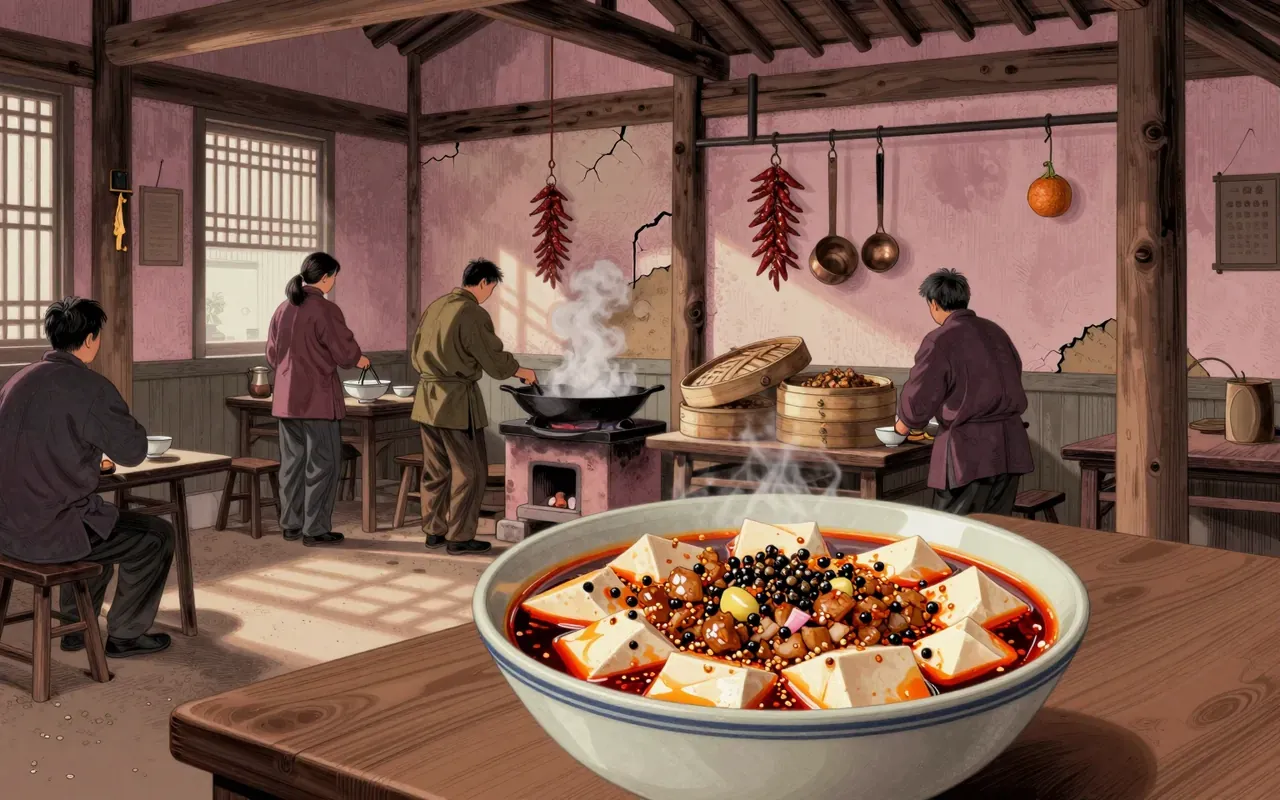
Mapo tofu is a Sichuan dish from Chengdu, created in the 1860s–1870s at Chen Mapo restaurant. Mrs. Chen’s original used pork, chilli, tofu, and Sichuan pepper. Chef Xue Xiangshun refined it in the 1920s with beef and douchi. The first official recipe appeared in a 1950s national catalogue—but excluded Pixian Doubanjiang, relying only on douchi. This omission distorts the dish’s regional character while enabling its national circulation.
Mapo tofu began as street food at a specific Chengdu eatery—not as abstract cuisine, but as functional nourishment for bridge-crossers.
2:15
Two chefs, two versions
Mrs. Chen used pork and Sichuan pepper; Xue Xiangshun switched to beef and added douchi—establishing the dish’s two foundational iterations.
3:28
The state recipe omitted the soul
The 1950s national recipe catalogue codified mapo tofu—but left out Pixian Doubanjiang, severing its link to Sichuan’s most essential condiment.
5:18
Not old, but documented early
Its origin is tied to a precise time and place: Chengdu, 1860s–1870s—not ancient tradition or vague regional heritage.
Worth your time?
Yes. Study the whole thing.
4/ 5
What works
as a case study in state-led food standardisation
as evidence of Chengdu’s street-eating infrastructure
as a counterpoint to romanticised ‘ancient’ Chinese cuisine narratives
What does not
define a movement
influence a named artist
displace another dish
represent all Sichuan cooking
Study it if
readers interested in how official records reshape regional food
those tracking the gap between practice and documentation
Skip it if
people seeking culinary praise without critique
those who assume popularity equals authenticity
The written brief1 min read
What the thing is
Mapo tofu is a stir-fried Sichuan dish of soft tofu, minced meat, chilli, Sichuan pepper, and fermented beans.
Where it came from
It emerged at Chen Mapo restaurant near Wanfu Bridge in Chengdu in the 1860s–1870s, founded by a couple named Chen, and was later refined by chef Xue Xiangshun in the 1920s.
What it gets right
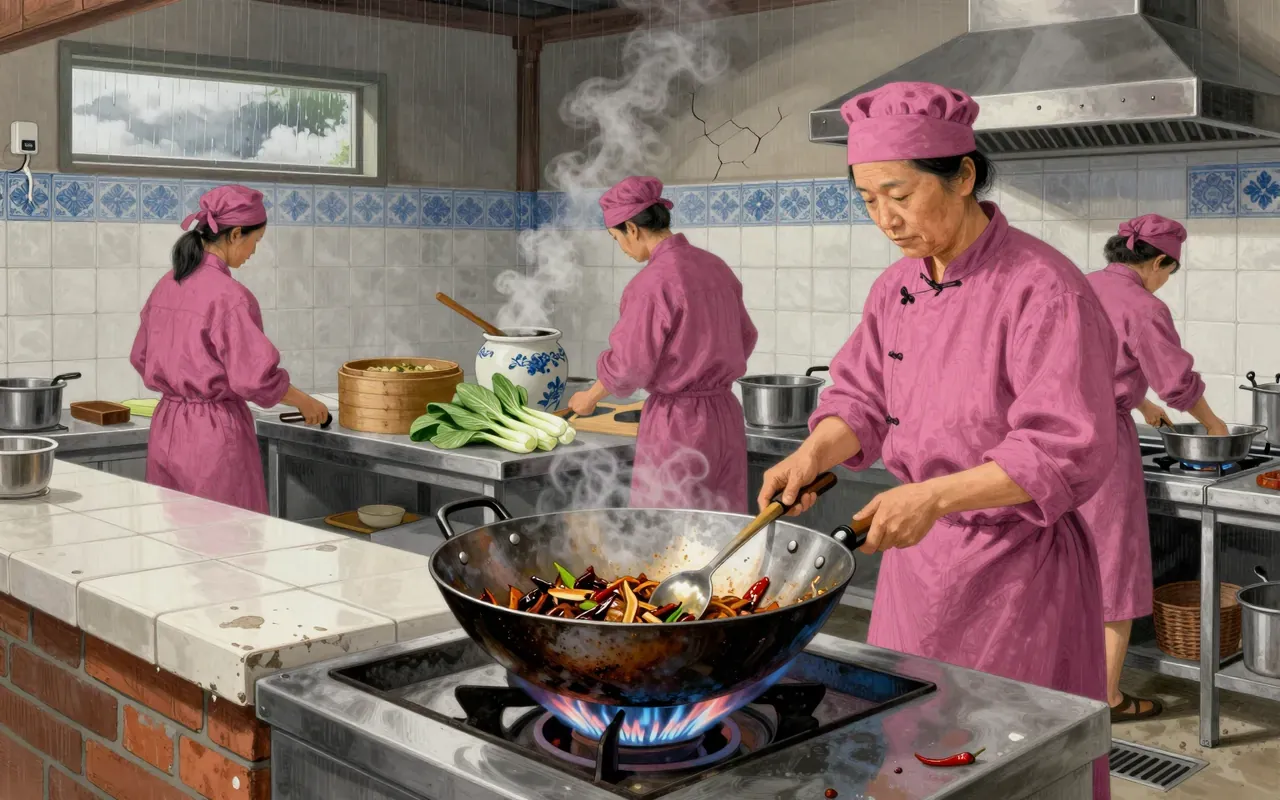
It delivers heat, numbing spice, soft tofu, and savoury depth in one bite. It anchors itself in Chengdu’s street-eating culture and Sichuan’s signature techniques.
What it gets wrong
The first published recipe dropped Pixian Doubanjiang—the fermented broad-bean paste that defines modern Sichuan heat—replacing it with douchi alone. That version misrepresents the dish’s sensory core.
Why it matters now
It reveals how state-led culinary documentation flattens regional complexity—turning a hyperlocal Chengdu dish into a simplified, transportable national recipe.
Is it worth your time
Yes—if you care how a dish’s official record erases its regional ingredients and shifts its identity from local food to national symbol.