culturebriefs
8:24in productionCh. 1 · Not Turkish. Not Greek. Abbasid./ 8:24 · ceiling 15 min
Food

Lokma

Lokma isn’t Turkish or Greek—it’s Abbasid, and it’s been migrating since the 13th century.

Lokma is a continuous culinary line—not a national invention. Its 13th-century Abbasid origin is documented; its Greek precursor enkrides appears in six classical texts; its technique has remained stable for centuries. It matters because it exposes how food history is flattened by nationalism—and how much survives beneath the labels.

Chapters & takeaways4
  1. 0:45
    Not Turkish. Not Greek. Abbasid.

    Lokma began as luqmat al-qādi—a named, documented dish in 13th-century Abbasid cookbooks.

  2. 2:10
    Same batter. Same fry. Same soak.

    Its method is stable: yeast-leavened batter, dropped into hot oil, soaked in honey or syrup.

  3. 3:24
    Ancient Greek enkrides predate it by over a millennium.

    Enkrides—the ancient Greek fried-honey dough—is attested in six classical authors, not legend.

  4. 4:52
    Loukoumades are Greek, but their roots are older than Greece’s modern borders.

    Loukoumades descend from enkrides—not from lokma—and entered Greek cuisine via Byzantium.

Worth your time?

Yes. Study the whole thing.

4.5/ 5
What works
  • preserves technique across 700 years
  • exposes nationalist flattening of food history
  • links Abbasid, Byzantine, and modern practice
What does not
  • influence
  • define
  • start
  • represent
Study it if
  • food historians
  • cooks interested in technique over trend
  • readers who distrust national origin stories
Skip it if
  • those seeking novelty
  • fans of 'authentic' national cuisine claims
  • casual eaters who don’t care about provenance
The written brief1 min read

What the thing is

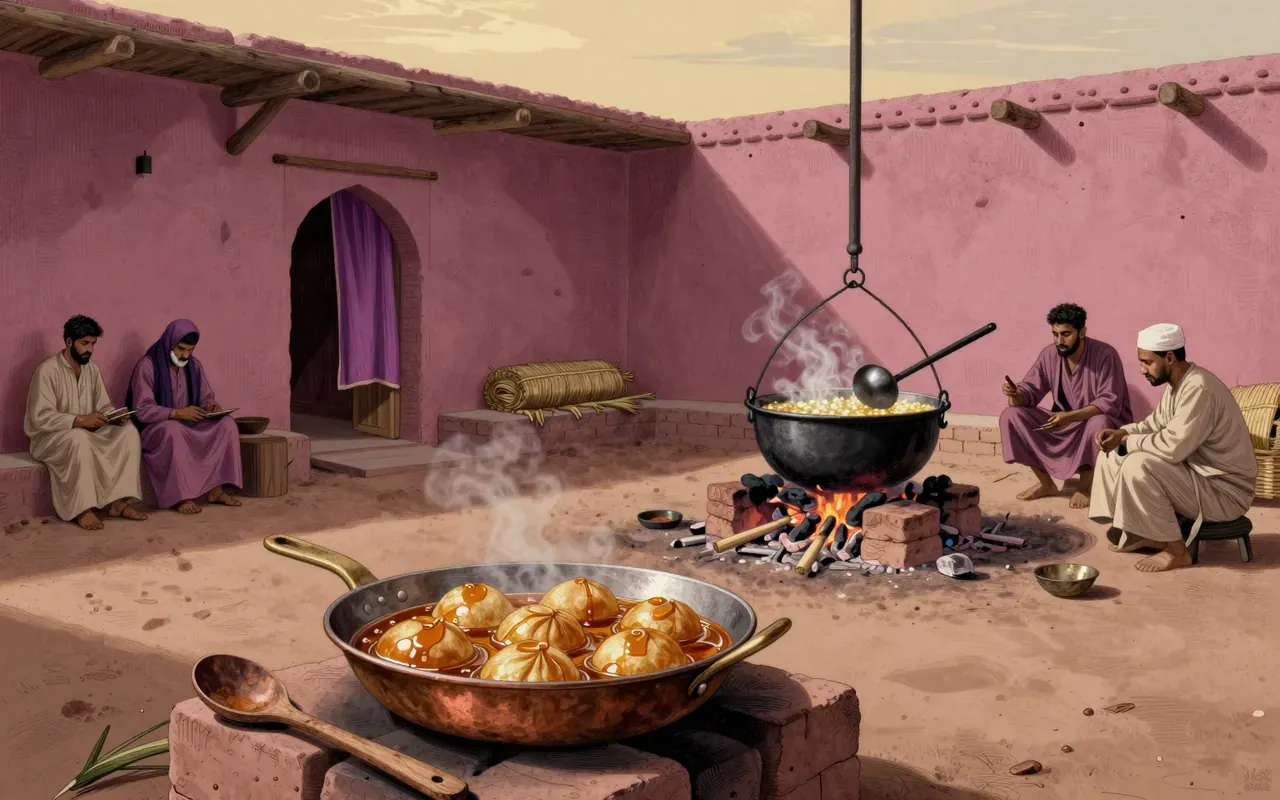
Lokma is a fried dough dessert: small, golden-brown balls of yeast-leavened batter, soaked in honey or syrup, sometimes dusted with cinnamon.

Where it came from

It originated as luqmat al-qādi in the 13th-century Abbasid Caliphate, described by al-Baghdadi and recorded in contemporary cookery books.

What it gets right

It preserves a core technique unchanged for over 700 years: yeast-leavened batter, deep-fried, soaked in honey or syrup.

What it gets wrong

It misattributes lineage when presented as purely Turkish or Greek—its documented origin is 13th-century Abbasid-era Arab cuisine.

Why it matters now

It reveals how culinary transmission works—not through rupture or reinvention, but slow migration, adaptation, and renaming across Byzantine, Ottoman, and modern national cuisines.

Is it worth your time

Yes—if you care about how food carries continuity across empires, not novelty.

Same beat · Food4 of 210
Up next in Culture

Mail art

1982 · 9:18

Mail art wasn’t democratic—it was postal.

9:18