culturebriefs
10:12in productionCh. 1 · A Trade Show, Not a Festival/ 10:12 · ceiling 15 min
Fashion · Cities

London Fashion Week

1984

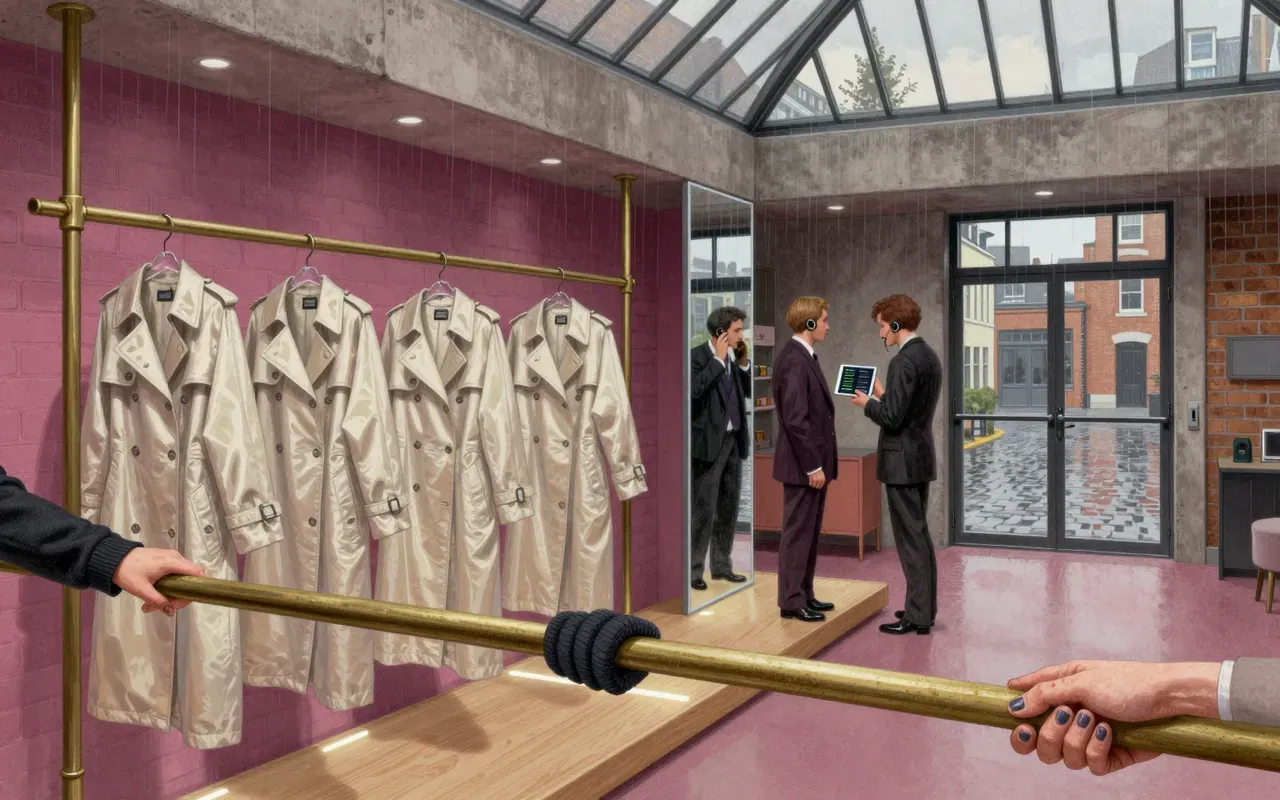
London Fashion Week wasn’t born from creativity—it was built by bureaucrats to sell clothes.

London Fashion Week is a state-supported trade infrastructure—not a spontaneous creative movement. Its 1984 launch solved a coordination problem for British designers, not a lack of visibility. It prioritised buyers and press over public engagement or artistic risk. Its later cultural branding obscures its bureaucratic origins.

Chapters & takeaways6
  1. 0:59
    A Trade Show, Not a Festival

    It was a trade show from day one—not a cultural event.

  2. 2:30
    Who Made the Schedule?

    Lynne Franks and the British Fashion Council created coordination where there had been chaos.

  3. 3:42
    How Big Was It, Right Away?

    Scale was immediate: 250+ designers, 5,000+ buyers and press, £100M+ orders.

  4. 5:02
    The Public Came Later

    Its public-facing Festival is a later addition—not part of the 1984 model.

  5. 6:01
    Where It Happened Was Functional

    Even venue choices—like Brewer Street car park—were logistical, not aesthetic.

  6. 7:06
    Who It Was Really For

    It succeeded by serving retailers and press—not designers or audiences.

Worth your time?

Yes. Study the whole thing.

3.5/ 5
What works
  • scaling British design exports
  • centralising media access
  • justifying public funding through economic metrics
What does not
  • celebrity
  • artistic innovation
  • public participation
  • subcultural emergence
Study it if
  • buyers
  • press
  • taxpayers
Skip it if
  • general public
  • emerging designers without commercial backing
  • critics seeking avant-garde work
The written brief1 min read

What the thing is

London Fashion Week is a biannual clothing trade show. It is not a public festival, nor a creative showcase by default. It is a scheduled commercial infrastructure.

Where it came from

It began in February 1984, organised by the British Fashion Council for the London Development Agency, with support from the Department for Business, Innovation, and Skills. Lynne Franks helped generate the idea of scheduling London’s shows collectively.

What it gets right

It established a coordinated, taxpayer-backed platform for British designers to access global trade and press. It replaced fragmented shows with a single, scalable event.

What it gets wrong

It was never primarily for the public or creative experimentation. Its framing as a cultural festival came decades later—retrofitting spectacle onto a trade mechanism.

Why it matters now

Because its original model—state-aided, trade-first, press-adjacent—still defines how fashion is funded, evaluated, and scaled in Britain, long after its public-facing spin-offs were added.

Is it worth your time

Yes—if you need to understand how British fashion consolidated institutional power in the 1980s, not how it looked on the catwalk.
Same beat · Fashion4 of 113
11:00
CosplayCosplay is a materially grounded, globally dispersed performance practice rooted in two separate histories—one in US sci-fi fandom, one in Japanese anime culture. Its significance lies in how it turns representation into labour, and character into conduct.
8:18
Grunge (fashion)1980Grunge fashion was an anti-fashion statement rooted in mid-1980s Seattle’s music scene. It used durable, thrift-store clothing worn loosely and androgynously—especially flannel shirts and Doc Martens—to reject 1980s flash. Kurt Cobain’s blend of lumberjack workwear and vintage feminine dresses helped define it. By the mid-1990s, it had been commodified globally—most notably by Marc Jacobs for Perry Ellis in 1993. Its legacy is not authenticity, but the speed with which resistance becomes product.
8:50
GyaruGyaru is a Japanese fashion subculture rooted in the transliteration of 'gal'. It emerged as nonconformist resistance to traditional Japanese gender roles and beauty standards—particularly the expectation that women be housewives with pale skin and dark hair. Early associations included juvenile delinquency and frivolousness among teenage girls. Kogal culture, a defining variant, rose prominently in the Heisei era (1989–2019), peaking in the 1990s and early 2000s. It is currently experiencing a revival in the Reiwa era. The subculture includes a male counterpart, gyaruo. Its core visual ingredients are consistently cited as gaudy fashion, extreme makeup, and dyed hair.
10:21
Levi Strauss & Co.Levi Strauss · 1853Levi Strauss & Co. is a pragmatic infrastructure project disguised as clothing. It began as immigrant commerce, not craft. Its innovations were patents, lot numbers, trademarks — administrative tools that made reproducible, durable workwear. It did not define youth culture, nor did it seek cultural status. It solved problems for people who needed pants to last — and kept doing so, even when the problem changed.
Up next in Culture

Madonna

· 9:40

Madonna didn’t break rules—she treated them as stage props.

9:40