culturebriefs
10:43in productionCh. 1 · Refusal, not reduction/ 10:43 · ceiling 15 min
Movements & scenes

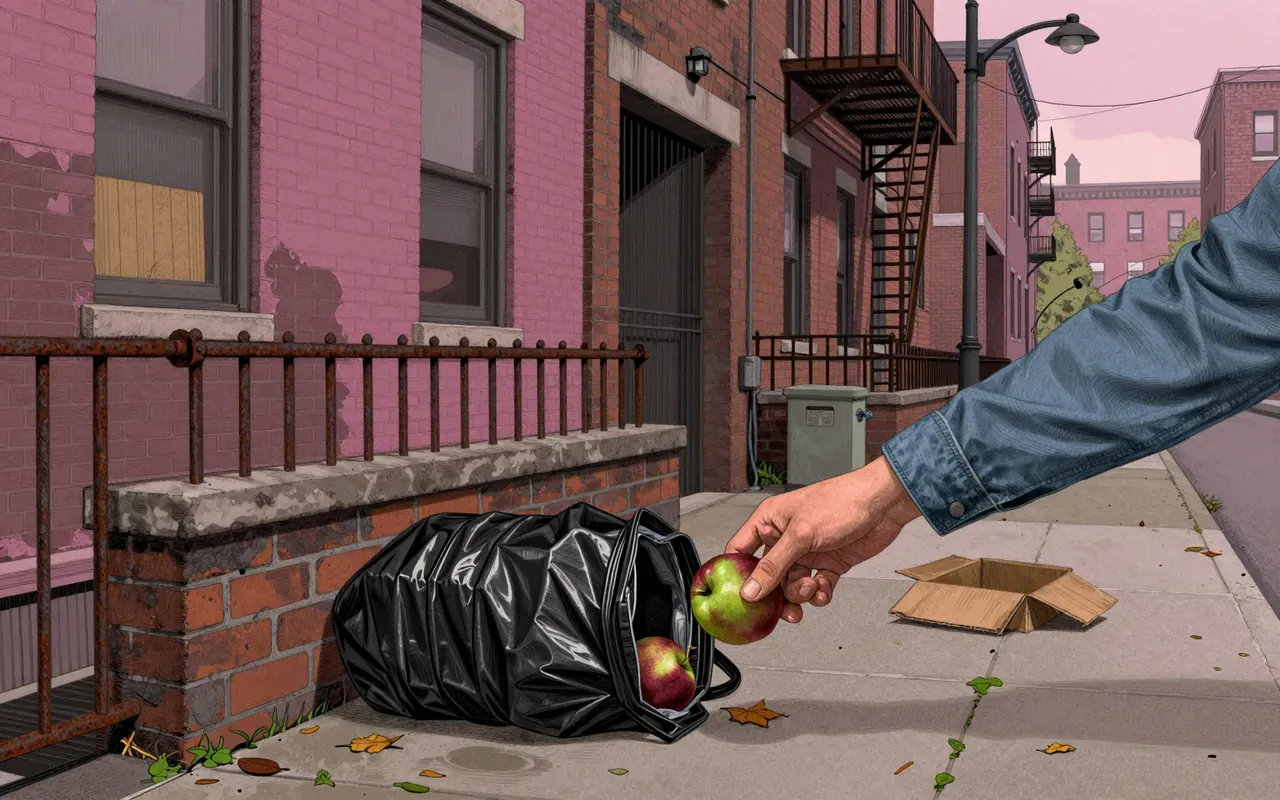
Freeganism

Freeganism doesn’t fix the food system—it starves its legitimacy by refusing to pay.

Freeganism is a tactical refusal rooted in anti-capitalist praxis—not sustainability, not thrift, but sabotage by abstention.

Chapters & takeaways4
  1. 1:04
    Refusal, not reduction

    Freeganism is defined by refusal—not austerity, not minimalism, but active withdrawal from exchange.

  2. 2:53
    A word from the margins

    The word 'freegan' was born in 1994 from Food Not Bombs, linking food access to anti-militarism and mutual aid.

  3. 4:31
    No ethical hierarchy

    The 1999 pamphlet 'Why Freegan?' lists theft and employee scams alongside foraging—refusing moral hierarchy among survival tactics.

  4. 6:18
    Organised, not organic

    The first organised freegan group formed in 2003—not as a mass movement, but as a node tied to a nightclub’s activism centre.

Worth your time?

Yes. Study the whole thing.

3.5/ 5
What works
  • as a diagnostic tool
  • as a provocation to food-system logic
  • as evidence of prefigurative politics in action
What does not
  • define a generation
  • influence mainstream policy
  • scale beyond local nodes
Study it if
  • people testing refusal as daily practice
  • organisers mapping alternatives to wage labour
  • critics of ethical consumerism
Skip it if
  • those seeking scalable solutions
  • policy designers
  • commercial sustainability consultants
The written brief1 min read

What the thing is

Freeganism is an anti-consumerist, anti-capitalist ideology centred on recovering wasted goods—especially food—and minimising participation in the conventional economy.

Where it came from

It emerged in the mid-1990s from anarchist and radical environmental movements. The term was coined in 1994 by Keith McHenry. The first organised group formed in 2003 in New York City.

What it gets right

It exposes food waste as systemic, not accidental. It treats consumption as political choice, not personal habit.

What it gets wrong

It conflates refusal with self-sufficiency. Dumpster diving does not dismantle supply chains—it bypasses them while leaving their logic intact.

Why it matters now

Because food waste remains structurally embedded in capitalism—and because refusal, however marginal, still names the system’s rot without romanticising the alternative.

Is it worth your time

Yes—if you’re tracking how anti-capitalist ethics translate into daily survival tactics, not as lifestyle but as refusal.
Same beat · Movements & scenes4 of 157
8:40
Anonymous (hacker group)2003Anonymous is a self-declared, leaderless collective that conducts cyberattacks as its primary method of activism. It originated in 2003 on the imageboard 4chan. Because it has no leadership, no action can be attributed to the membership as a whole. Some members protest using legal means, while others employ illegal measures such as DDoS attacks and hacking.
9:10
Self-managed social centerSelf-managed social centers are anti-authoritarian, volunteer-run spaces that operate as infoshops, free schools, bicycle workshops and concert venues. They began in Italy in the 1980s and spread to the US and UK in the 1990s. They oppose gentrification and megaprojects. They create and practice the commons. They are transient, precarious, and politically active—but do not survive long enough to institutionalise what they prefigure.
10:00
Home recordingHome recording is sound captured in private homes—not studios. It began with isolated pioneers in the US, UK, Australia, and Jamaica in the 1950s–1970s. The 1979 Portastudio enabled consumer multitrack recording. Digital recorders and DAWs replaced analog in the 1990s. Lockdowns in 2020 caused a global surge in home-based artists and microgenres. Untreated rooms produce misleading acoustics that compromise mixing. Professional studios have been heavily impacted over the last two decades.
10:02
Burning Man1986Burning Man is a participant-built desert gathering named for the ceremonial burning of a wooden effigy—the Man—on the Saturday before Labor Day. It began on Baker Beach in 1986, moved to the Black Rock Desert in 1990, and operates on radical self-reliance, communal effort, and theme-driven art made solely by attendees. Its ten principles were codified in 2004—not at origin—and its model has since been replicated, commercialised, and contested. It is neither pure counterculture nor corporate spectacle, but a documented instance of how ritual, place, and principle diverge over time.
Up next in Culture

Gatekeeper

· 10:07

Gatekeeping isn’t about standards—it’s about who gets to set them, and who pays the price.

10:07