What the thing is
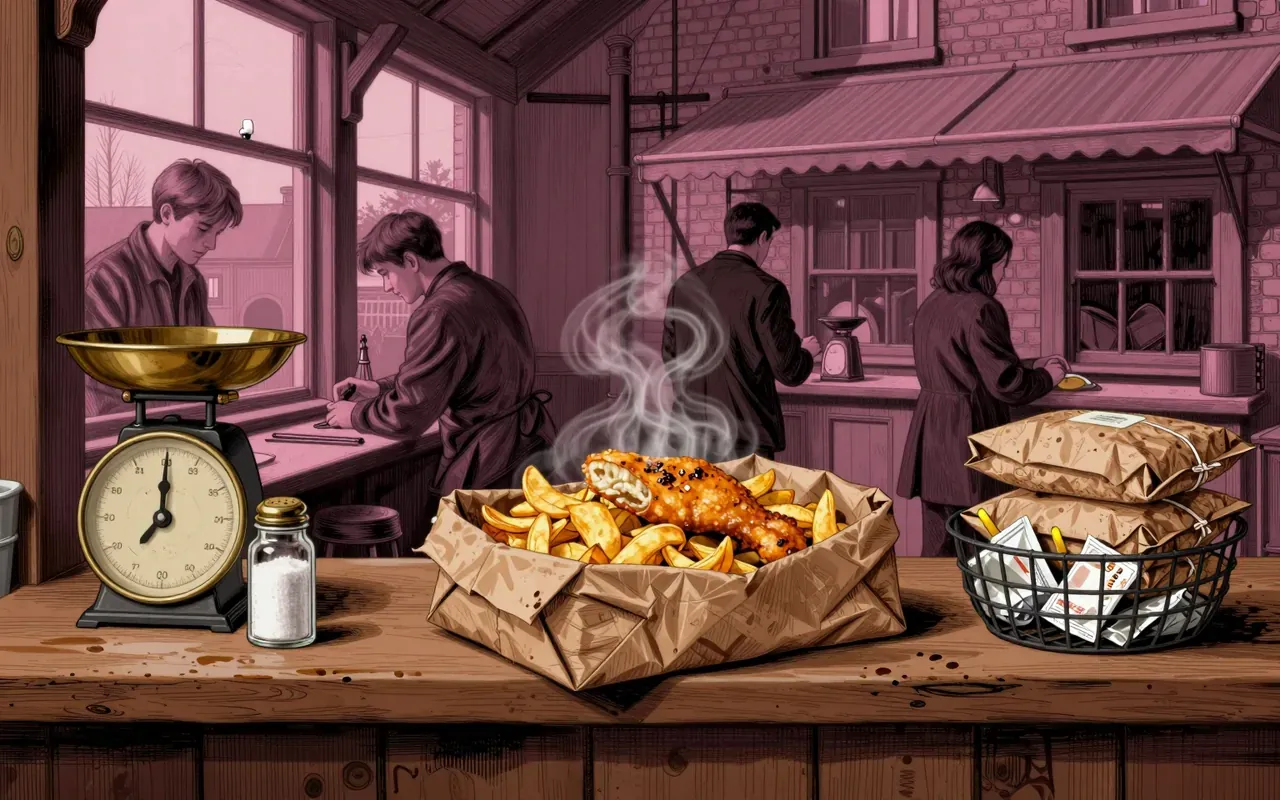
A hot dish of battered and fried fish served with deep-fried potato chips.
Where it came from
England in the 1860s. First shops opened by Joseph Malin in London and John Lees in Mossley, Lancashire. Built on pre-existing fried fish trade (‘fried fish warehouses’ from 1838) and chips (OED citation 1859).
What it gets right
It delivers cheap, hot, portable protein and starch to industrial workers. Railways moved fish inland. Trawl fishing scaled supply. Government non-rationing cemented its role as a working-class anchor.
What it gets wrong
It implies a single origin point. Fried fish and chips existed separately for at least 50 years before the 1860s. Their combination was likely regional, incremental and undocumented.
Why it matters now
It reveals how wartime policy, transport networks and migrant entrepreneurship coalesced to make one meal a symbol of resilience — not because it was beloved, but because it was reliably available.
Is it worth your time
Yes — if you want to understand how infrastructure, policy and class shaped a national food habit.