9:34in productionCh. 1 · Not a group. A gathering./ 9:34 · ceiling 15 min
Movements & scenes · Ideas
Bloomsbury Group
A friendship network dressed as an intellectual movement—and still the blueprint for how elites credential each other without institutions.
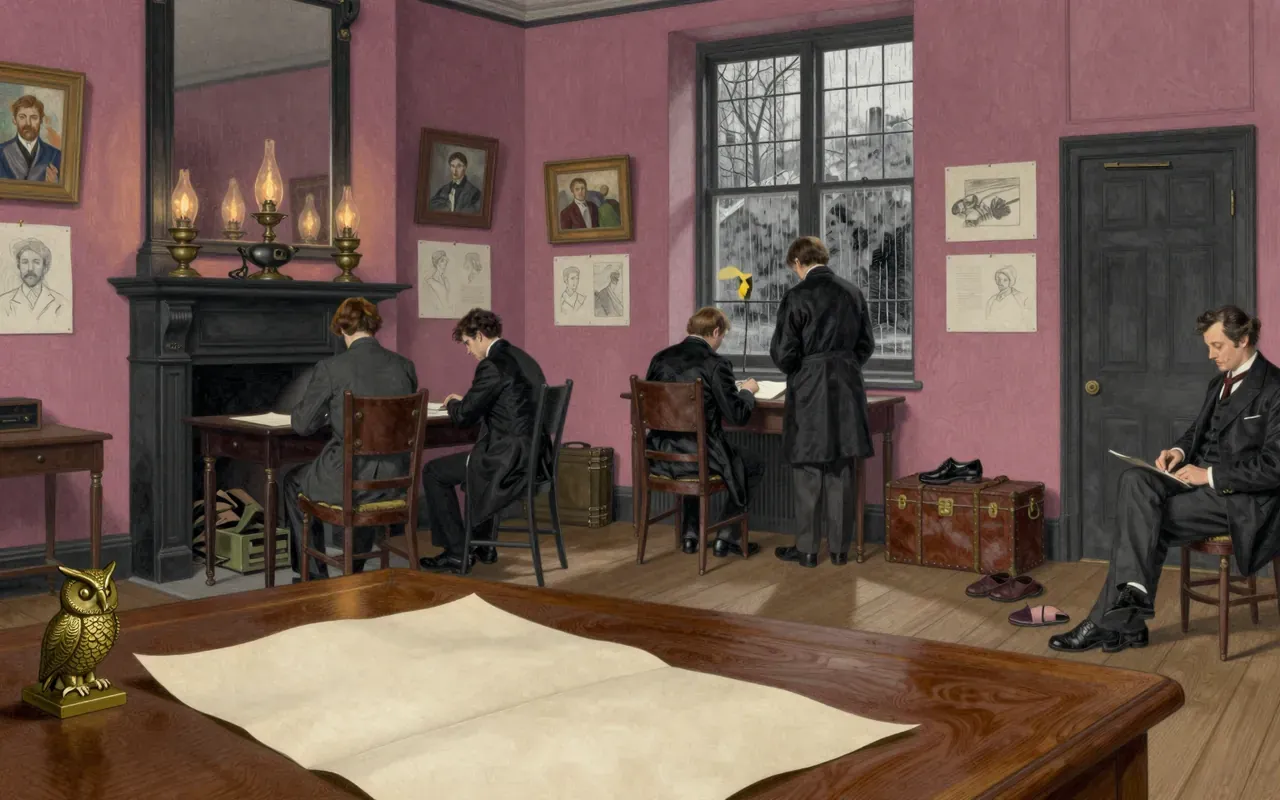
The Bloomsbury Group was a loose, friendship-based collective of British writers, intellectuals, philosophers and artists active in the early 20th century. It formed among Cambridge-educated men and their London-based female associates—including those from King’s College London—and cohered around regular gatherings (the Friday Club and Thursday Evenings), shared ethical commitments drawn from G. E. Moore, and pre-fame personal ties. Its members came largely from upper-middle-class professional families and saw themselves as part of an ‘intellectual aristocracy’ with roots in the Clapham Sect. It had no formal membership, no doctrine, and no institutional structure—only overlapping loyalties, mutual promotion, and a consistent emphasis on love, aesthetic experience and knowledge.
It was never formal—just friends and relatives from Cambridge and King’s College London who lived near Bloomsbury.
2:10
How grief built a circle.
Friday Club and Thursday Evenings began in 1905; Thoby Stephen’s death in 1906 turned them into something more deliberate.
3:12
Three things they held in common.
They shared G. E. Moore’s three prime objects: love, aesthetic experience, and knowledge—not doctrine, but orientation.
5:12
An intellectual aristocracy, not a revolution.
Their relationships predated fame—and their class background placed them in a lineage stretching back to the Clapham Sect.
Worth your time?
Yes. Study the whole thing.
4/ 5
What works
culture/literature
culture/ideas
culture/society
What does not
culture/art
culture/arts
culture/cities
culture/fashion
Study it if
readers interested in how cultural influence circulates without institutions
students of modernist literature or ethics
anyone tracking how elite networks reproduce themselves
Skip it if
those seeking a manifesto, a movement, or a unified aesthetic
The written brief1 min read
What the thing is
A loose collective of British writers, intellectuals, philosophers and artists. Not a movement. Not a school. A set of overlapping friendships anchored in shared values.
Where it came from
Cambridge-educated men and their London-based female associates—many from upper-middle-class professional families—began meeting regularly after 1905. Thoby Stephen’s death in 1906 tightened the circle.
What it gets right
It treats art, love and knowledge as inseparable. It models how friendship can sustain serious work across disciplines.
What it gets wrong
It assumes its class position is neutral. Its ‘intellectual aristocracy’ excluded those outside Cambridge, King’s College London and upper-middle-class professional families.
Why it matters now
It reveals how informal, pre-fame networks shape cultural output—and how easily such networks calcify into self-reinforcing privilege.
Is it worth your time
Yes—if you want to understand how elite intellectual networks operate without institutions, and how private ethics become public style.