culturebriefs
12:36in productionCh. 1 · Trigger/ 12:36 · ceiling 15 min
Ideas

1989 Tiananmen Square protests and massacre

1989

A sudden death sparks a million‑strong protest that ends in a night of blood and censorship.

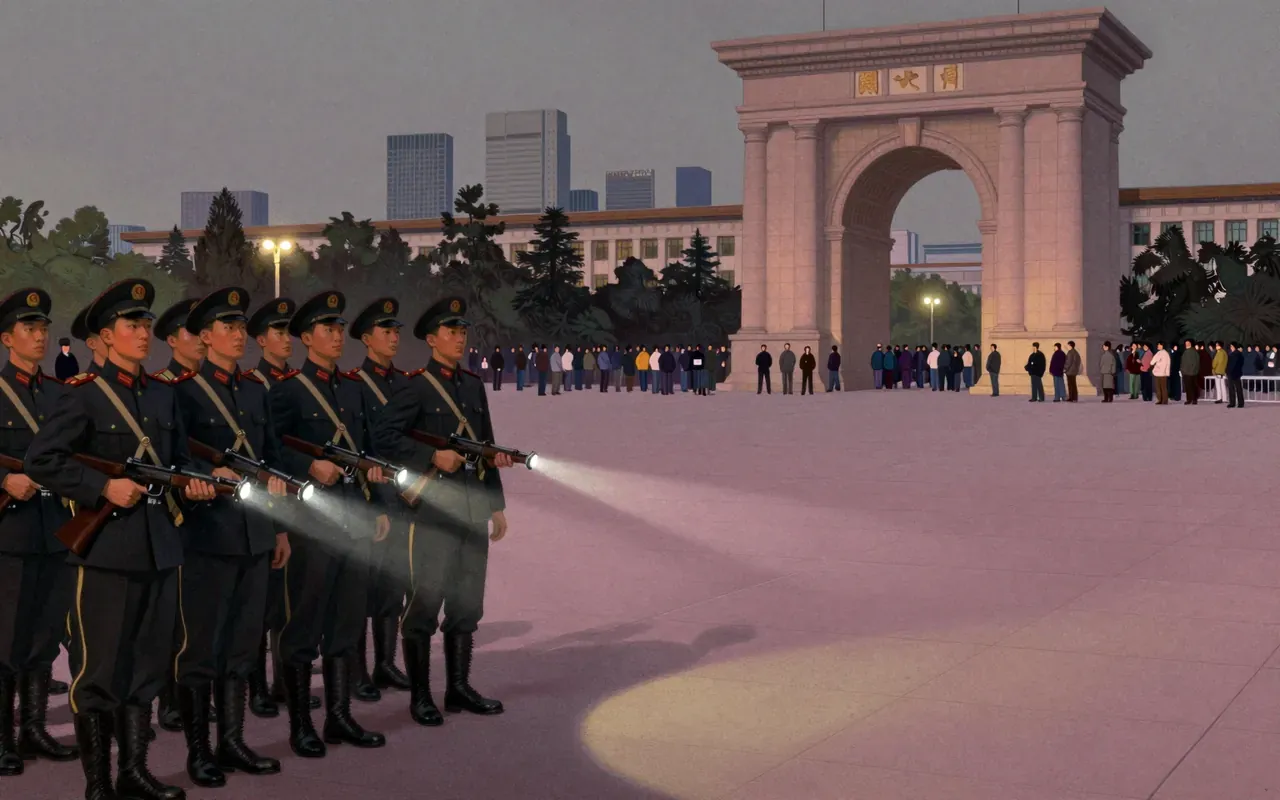
The 1989 Tiananmen Square protests were a mass demonstration in Beijing that grew to about one million participants at its peak. The Chinese government declared martial law in late May and deployed troops to occupy the square on the night of 3 June.

Chapters & takeaways5
  1. 0:55
    Trigger

    A sudden death sparks a nationwide call for reform.

  2. 2:54
    Massive Mobilisation

    A million people gather in Tiananmen Square.

  3. 4:38
    Leadership Divide

    Government splits between conciliation and hard‑line tactics.

  4. 5:56
    Violent Suppression

    Martial law is declared and troops occupy the square on 3 June.

  5. 7:37
    Aftermath and Legacy

    The crackdown triggers censorship and arrests, and limits political expression to this day.

Worth your time?

Yes. Study the whole thing.

4/ 5
What works
  • highly condensed
  • no personal anecdotes
What does not
  • present unverified claims
  • use emotional language without evidence
Study it if
  • historians
  • political scientists
  • students of contemporary China
Skip it if
  • casual readers looking for a quick recap
The written brief1 min read

What the thing is

The 1989 Tiananmen Square protests were a mass demonstration in Beijing that grew to about one million participants at its peak. The Chinese government declared martial law in late May and deployed troops to occupy the square on the night of 3 June.

Where it came from

The protests were sparked by the death of former pro‑reform CCP general secretary Hu Yaobang in April 1989.

What it gets right

The event shows how a government can use both conciliatory and hard‑line tactics, exposing divisions within leadership.

What it gets wrong

The brief underplays the scale of repression, the mass arrests, and the lasting censorship, and mislabels the event in China as a “political turmoil” rather than a massacre.

Why it matters now

The crackdown set limits on political expression that persist to the present day.

Is it worth your time

The event remains relevant because it illustrates the cost of dissent in an authoritarian state and the enduring legacy of censorship.

Same beat · Ideas4 of 214
8:14
Crypto-anarchyCrypto-anarchy is a movement, not a prophecy. It uses cryptography to enable anonymity, free speech and trade. It emerged from Timothy C. May’s 1988 manifesto and the 1992 cypherpunk founding. It gets right that code can constrain power—but wrong that it will collapse the state. A 2022 study confirms its political irrelevance—yet its architecture remains vital for Internet-native dissent.
13:44
CypherpunkCypherpunk is a libertarian movement that champions strong cryptography and privacy‑enhancing technologies to effect social and political change. It began in the late 1980s, gained traction with the 1992 mailing list, and has influenced Bitcoin, secure messaging, and privacy browsers. While it rightly foregrounds decentralisation and individual autonomy, it over‑emphasises technology as a panacea and ignores legal and economic barriers. In an era of state surveillance and corporate data mining, Cypherpunk ideas underpin modern cryptocurrencies and secure messaging, offering useful concepts for those who value digital privacy and decentralised finance, but its tech‑first focus may feel incomplete for those seeking concrete policy solutions.
8:55
Free software movementThe free software movement is a precise, principled refusal of proprietary control over software. It began in 1983 with GNU and institutionalised in 1985 with the FSF. It gets right that software freedom must be guaranteed—not merely permitted. It gets wrong that licence compliance alone secures user agency. Its relevance has grown as software becomes infrastructural—but its methods remain rooted in individual refusal and collective development.
8:42
AbsurdismAbsurdism names the friction between human meaning-making and cosmic silence. It does not resolve it. It insists on the tension. It is precise, unsparing, and useless as advice.
Up next in Culture

Absurdism

· 8:42

The absurd isn’t in you or the world — it’s the gap between them, and it’s wider than ever.

8:42