culturebriefs
9:29in productionCh. 1 · Gang Fiction/ 9:29 · ceiling 15 min
Art

Saints Row

Saints Row isn’t about gangs — it’s about what happens when satire becomes the engine, then the exhaust.

Saints Row is a video game series. Mary-Kate and Ashley Olsen are fashion designers. No source links them. The brief mistakenly merges two independent cultural outputs.

Chapters & takeaways4
  1. 0:53
    Gang Fiction

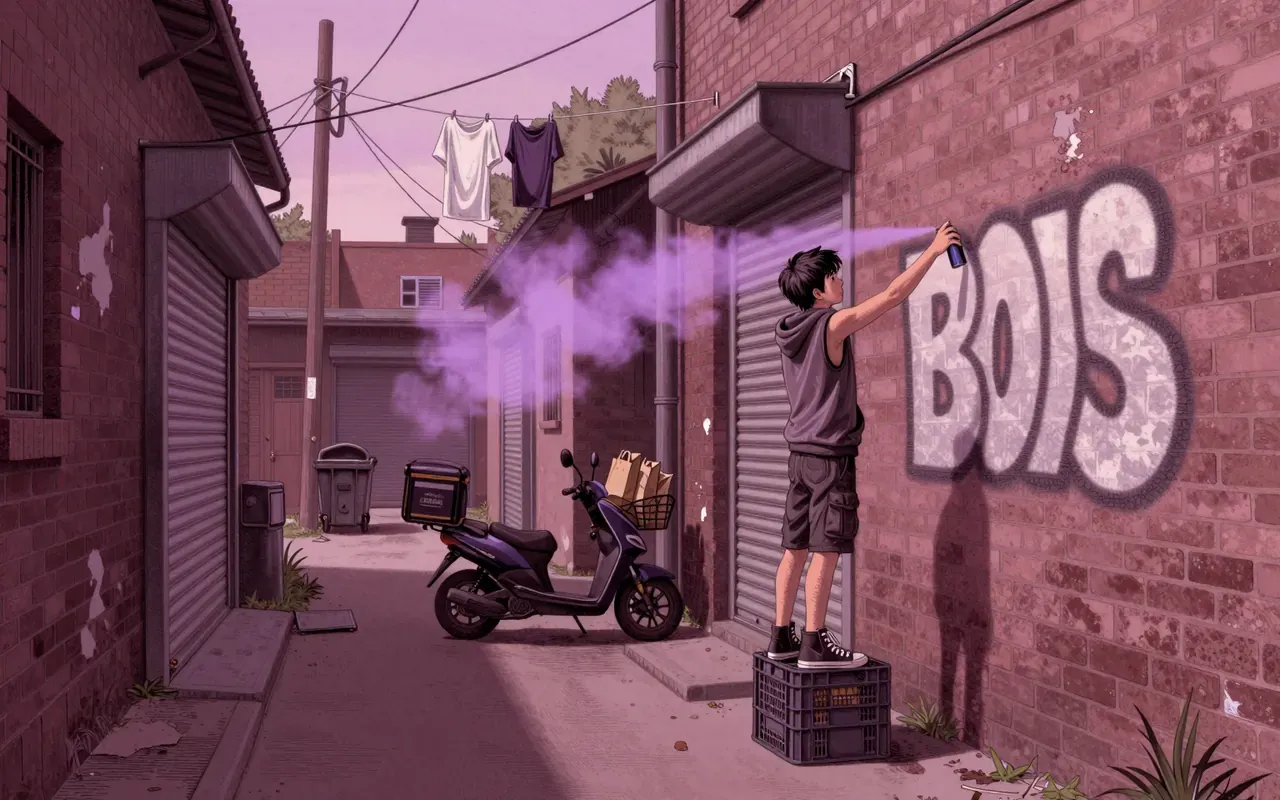
    Saints Row is a Volition-made gang saga where players join the 3rd Street Saints in Stilwater and fight for turf.

  2. 2:33
    The Pivot

    The series abandoned realism after its first game to embrace parody — defining its voice but fracturing its audience.

  3. 4:01
    How It Plays

    Driving and shooting dominate gameplay; missions and side activities unfold in open, fictional American cities.

  4. 5:35
    Staged America

    Stilwater and Steelport are invented cities — loose stand-ins for real US urban centres — built to host escalating chaos.

Worth your time?

Yes. Study the whole thing.

3.5/ 5
What works
  • Saints Row (2006)
  • Saints Row: The Third (2011)
What does not
  • fashion
  • acting
  • The Row
  • Olsenboye
Study it if
  • players seeking irreverent open-world mayhem
  • students of game design pivots
Skip it if
  • readers expecting analysis of Mary-Kate and Ashley Olsen’s fashion work
  • anyone assuming cross-disciplinary influence between Saints Row and The Row
The written brief1 min read

What the thing is

Saints Row is an action-adventure video game series following a player-created gang leader in fictional American cities. It prioritises driving, shooting, turf warfare, and escalating comedic parody.

Where it came from

Volition created Saints Row in 2003 under THQ publishing. The first game launched in Stilwater. A deliberate shift toward pop-culture parody began with the second game in 2006.

What it gets right

Saints Row correctly identified a market gap for irreverent, self-aware open-world satire after Grand Theft Auto’s dominance. Its pivot to over-the-top parody from the second game onward gave it a distinct identity.

What it gets wrong

The series misjudged long-term audience tolerance for escalating absurdity. The 2022 reboot’s critical and commercial failure — followed by Volition’s closure — confirms its formula exhausted itself without structural evolution.

Why it matters now

It matters now as a case study in how genre identity built on tonal escalation can alienate core fans and fail to sustain relevance — especially when divorced from narrative or mechanical innovation.

Is it worth your time

No. Saints Row has no connection to Mary-Kate and Ashley Olsen. The brief conflates two unrelated subjects. Neither the game series nor the Olsens’ fashion work references or influences the other.
Same beat · Art4 of 98
9:47
Guerrilla artGuerrilla art is a UK-born street art movement defined by inseparability from environment, psychological effect over permanence, and roots in post-graffiti practice. Its earliest documented instance was in 1978 in Wellington, New Zealand. It has no external boundary between image and environment. The surface is fundamental to meaning. It depends on urban dynamics to avoid becoming 'art for art's sake'. Production focuses on cause and effect, not the material piece. It aims to produce an effect in local residents’ minds—not necessarily meaningful art in itself.
8:10
Arte Povera1967Arte Povera was a materially specific, institutionally embedded, temporally tight Italian art movement. It used perishable matter and physical forces to stage critique—but never left the gallery circuit it claimed to dismantle.
9:01
Cubism1907Cubism is an early-20th-century avant-garde art movement that began in Paris and flourished across the 1910s and 1920s. It involved analyzing, breaking up, and reassembling subjects in abstract form, depicting them from multiple perspectives rather than a single viewpoint. A major innovation was the introduction of collage in 1912. The movement is historically divided into phases—Analytic Cubism (1910–1912) and Synthetic Cubism (1912–1914)—each marked by distinct formal strategies. It emerged from collaborative work in the studios of Picasso and Braque and rapidly expanded to include numerous artists across painting, sculpture, architecture, literature, and design.
9:18
Fauvism1904Fauvism was a short-lived French painting movement (1905–1908) that treated colour as architecture and brushwork as velocity. It fused Post-Impressionist intensity with Neo-Impressionist technique and Tahitian colour fields—and was shaped by the visual experience of driving. Its strength was its sensory immediacy; its limit was its lack of structural logic beyond intensity. It matters now because it shows how technology alters perception before theory catches up.
Up next in Culture

Royal Academy of Arts

1768 · 8:45

An artist-run institution founded by royal decree—and still run by artists today.

8:45