culturebriefs
10:23in productionCh. 1 · Origin/ 10:23 · ceiling 15 min
Fashion · Society

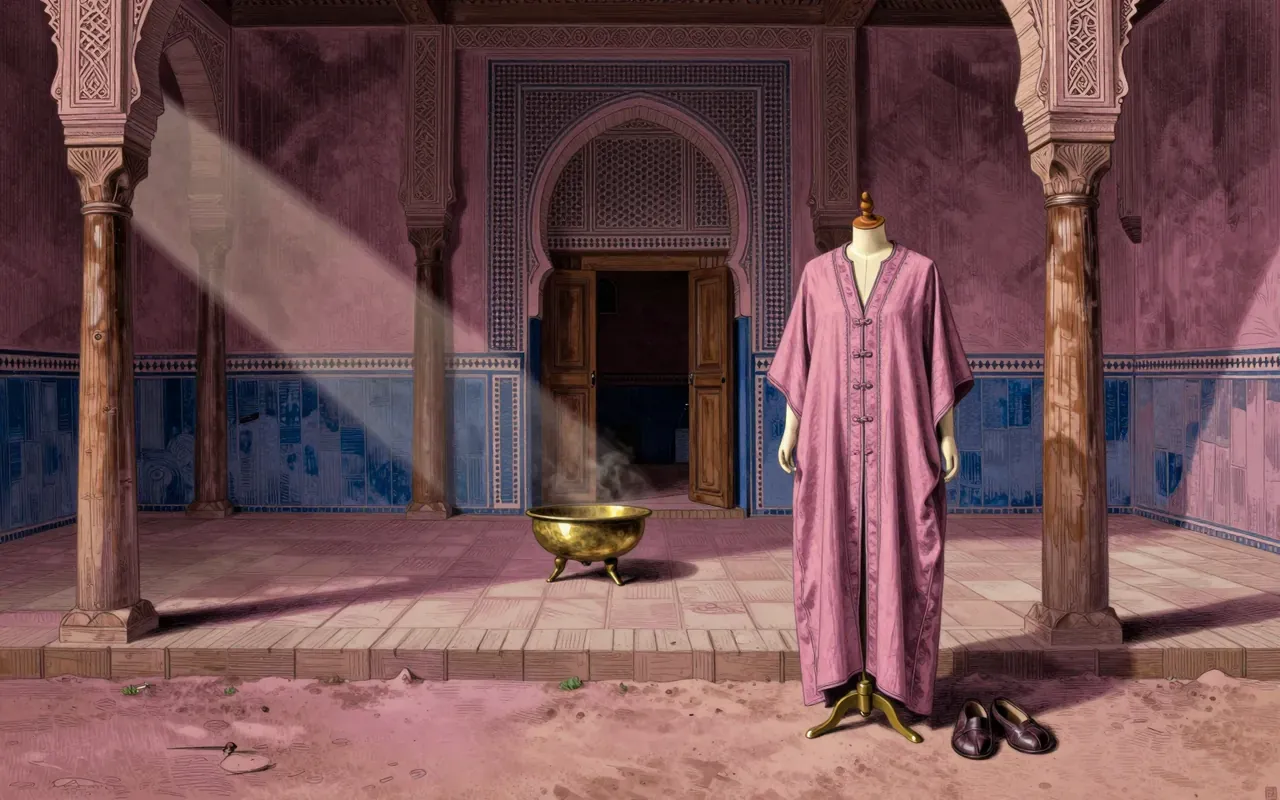
Kaftan

The kaftan isn’t one garment—it’s a linguistic smokescreen for dozens of distinct robes.

The kaftan is a functional, adaptable garment rooted in West Asia. Its name and form evolved across empires—but contemporary usage erases those distinctions.

Chapters & takeaways5
  1. 1:07
    Origin

    It began in West Asia—not Africa, not India, not the Mediterranean.

  2. 2:11
    Form

    It is defined by length, openness, and sleeve cut—not by pattern, fabric, or occasion.

  3. 3:41
    Function & Symbol

    Its function shifts with climate; its meaning shifts with hierarchy.

  4. 5:18
    Name

    The word 'kaftan' is Ottoman Turkish—but its roots may be Turkic, not Persian or Arabic.

  5. 6:47
    Luxury Turn

    Front-buttoning luxury emerged only during the Abbasid era—not earlier, not universally.

Worth your time?

Yes. Study the whole thing.

4/ 5
What works
  • clarifies linguistic provenance
  • separates form from symbolism
  • anchors claims in documented eras and regions
  • exposes category collapse in global fashion discourse
What does not
  • claim influence beyond what is verified
  • conflate cultures
  • treat popularity as significance
Study it if
  • readers tracking how clothing terms travel
  • designers researching historical precedent
  • editors fact-checking trend copy
Skip it if
  • those seeking stylistic inspiration
  • students of non-West-Asian dress systems
  • anyone expecting a definitive origin story
The written brief1 min read

What the thing is

A long-sleeved, ankle-length robe or tunic, open at the front, worn as a coat, overdress, or standalone garment.

Where it came from

West Asia, with linguistic roots possibly in Turkic via Persian and Arabic, and documented use in the Abbasid era and Ottoman Turkish.

What it gets right

It solves real problems: heat regulation in warm climates, modesty without constriction, and status signalling through fabric and cut.

What it gets wrong

It is often misrepresented as a single, unified garment rather than a family of distinct regional robes with divergent histories and functions.

Why it matters now

It reveals how fashion terminology flattens cultural specificity—and how a word like ‘kaftan’ can obscure more than it clarifies in global retail and media.

Is it worth your time

Yes—if you care about how garments encode power, climate, and cross-cultural borrowing without romanticising any of it.

Same beat · Fashion4 of 113
11:00
CosplayCosplay is a materially grounded, globally dispersed performance practice rooted in two separate histories—one in US sci-fi fandom, one in Japanese anime culture. Its significance lies in how it turns representation into labour, and character into conduct.
8:18
Grunge (fashion)1980Grunge fashion was an anti-fashion statement rooted in mid-1980s Seattle’s music scene. It used durable, thrift-store clothing worn loosely and androgynously—especially flannel shirts and Doc Martens—to reject 1980s flash. Kurt Cobain’s blend of lumberjack workwear and vintage feminine dresses helped define it. By the mid-1990s, it had been commodified globally—most notably by Marc Jacobs for Perry Ellis in 1993. Its legacy is not authenticity, but the speed with which resistance becomes product.
8:50
GyaruGyaru is a Japanese fashion subculture rooted in the transliteration of 'gal'. It emerged as nonconformist resistance to traditional Japanese gender roles and beauty standards—particularly the expectation that women be housewives with pale skin and dark hair. Early associations included juvenile delinquency and frivolousness among teenage girls. Kogal culture, a defining variant, rose prominently in the Heisei era (1989–2019), peaking in the 1990s and early 2000s. It is currently experiencing a revival in the Reiwa era. The subculture includes a male counterpart, gyaruo. Its core visual ingredients are consistently cited as gaudy fashion, extreme makeup, and dyed hair.
10:21
Levi Strauss & Co.Levi Strauss · 1853Levi Strauss & Co. is a pragmatic infrastructure project disguised as clothing. It began as immigrant commerce, not craft. Its innovations were patents, lot numbers, trademarks — administrative tools that made reproducible, durable workwear. It did not define youth culture, nor did it seek cultural status. It solved problems for people who needed pants to last — and kept doing so, even when the problem changed.
Up next in Culture

Kimono

· 9:10

The kimono isn’t timeless—it’s a bureaucratic consolidation of borrowed cloth.

9:10