What the thing is
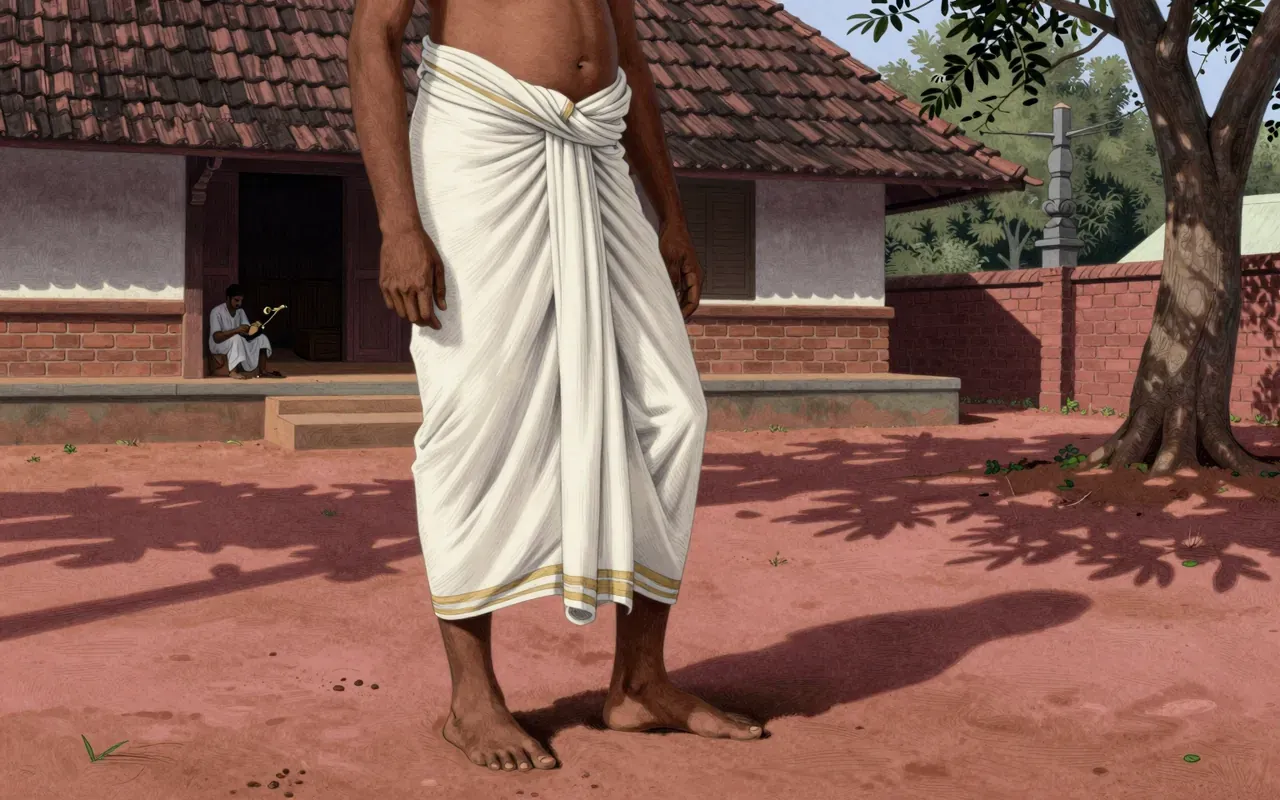
The dhoti is an ankle-length, unstitched rectangular cloth—about four yards long—wrapped around the waist and legs to form a trouser-like shape. It is ethnic menswear in the Indian subcontinent.
Where it came from
It evolved from the ancient antariya and first appears epigraphically in the Mauryan Empire.
What it gets right
It establishes a clear functional distinction: the dhoti is wrapped to form trousers, not draped or tied like a lungi. It anchors itself to ceremony—religious and secular—and to gendered equivalence with the sari.
What it gets wrong
It conflates regional terms without clarifying usage: calling mundu and veshti ‘interchangeable’ while insisting they are ‘different’ creates confusion without resolving it. It misattributes panchakacham as a synonym rather than a South Indian variant with distinct performance use.
Why it matters now
Because readymade ‘dhoti pants’ and ‘panchakachams’ circulate online as fashion items, obscuring the dhoti’s specific method of wear—and because its ceremonial role persists while its everyday use recedes, the gap between form and function is widening.
Is it worth your time
Yes—if you need to understand how unstitched cloth functions as formal menswear in the Indian subcontinent, and why its wrapping method matters more than its name.