culturebriefs
9:50in productionCh. 1 · Born in Birmingham/ 9:50 · ceiling 15 min
Ideas · Society

Cultural studies

Cultural studies doesn’t explain culture—it exposes how power dresses itself as common sense.

Cultural studies is a politically engaged, radically interdisciplinary field that treats culture as contested practice—not stable heritage. It emerged from British Marxist scholarship in the late 1950s–1970s and was institutionalised in 1964 at the University of Birmingham. It correctly insists culture and power are inseparable. It wrongly assumes methodological pluralism guarantees analytical coherence. It matters now because platforms and algorithms have made cultural meaning-making more opaque—and more consequential—than ever. It is worth your time only if you seek diagnostic tools, not solutions.

Chapters & takeaways4
  1. 0:56
    Born in Birmingham

    It began with British Marxists asking why working-class people didn’t revolt—and turned that question into a new way of reading culture.

  2. 2:23
    Culture as Process

    Culture is not a set of objects to be preserved. It is a set of practices constantly reshaped by power.

  3. 3:44
    Everyday Life Under Scrutiny

    It looks at how people make sense of their lives—not through grand theory alone, but through what they wear, watch, share and resist.

  4. 5:33
    Anti-Disciplinary by Design

    Its radical interdisciplinarity is both its strength and its weakness: it borrows freely but binds nothing tightly.

Worth your time?

Yes. Study the whole thing.

3.5/ 5
What works
  • exposes how power hides in routine cultural acts
What does not
  • explain culture
Study it if
  • students of power
  • critics of media
  • scholars of inequality
Skip it if
  • policy makers seeking metrics
  • practitioners needing frameworks
The written brief1 min read

What the thing is

Cultural studies is an academic field that examines how meaning is generated, disseminated and contested within systems of power. It studies culture as dynamic practice—not fixed tradition.

Where it came from

British Marxist academics developed it in the late 1950s–1970s. It was formally institutionalised in 1964 at the University of Birmingham’s Centre for Contemporary Cultural Studies.

What it gets right

It treats culture as unstable, contested and historically rooted. It insists culture cannot be separated from class, race, gender or nation. It refuses disciplinary silos when studying meaning-making.

What it gets wrong

It offers no shared method. Its radical interdisciplinarity risks methodological incoherence. It does not resolve tensions between political commitment and analytical rigour.

Why it matters now

Because digital platforms, algorithmic curation and global media flows intensify the very questions cultural studies asks: who controls meaning, whose lives are legible, and how power hides in routine cultural acts.

Is it worth your time

Yes—if you need tools to analyse how power works through everyday culture. No—if you expect definitive answers or predictive models.

Same beat · Ideas4 of 214
8:14
Crypto-anarchyCrypto-anarchy is a movement, not a prophecy. It uses cryptography to enable anonymity, free speech and trade. It emerged from Timothy C. May’s 1988 manifesto and the 1992 cypherpunk founding. It gets right that code can constrain power—but wrong that it will collapse the state. A 2022 study confirms its political irrelevance—yet its architecture remains vital for Internet-native dissent.
13:44
CypherpunkCypherpunk is a libertarian movement that champions strong cryptography and privacy‑enhancing technologies to effect social and political change. It began in the late 1980s, gained traction with the 1992 mailing list, and has influenced Bitcoin, secure messaging, and privacy browsers. While it rightly foregrounds decentralisation and individual autonomy, it over‑emphasises technology as a panacea and ignores legal and economic barriers. In an era of state surveillance and corporate data mining, Cypherpunk ideas underpin modern cryptocurrencies and secure messaging, offering useful concepts for those who value digital privacy and decentralised finance, but its tech‑first focus may feel incomplete for those seeking concrete policy solutions.
8:55
Free software movementThe free software movement is a precise, principled refusal of proprietary control over software. It began in 1983 with GNU and institutionalised in 1985 with the FSF. It gets right that software freedom must be guaranteed—not merely permitted. It gets wrong that licence compliance alone secures user agency. Its relevance has grown as software becomes infrastructural—but its methods remain rooted in individual refusal and collective development.
12:36
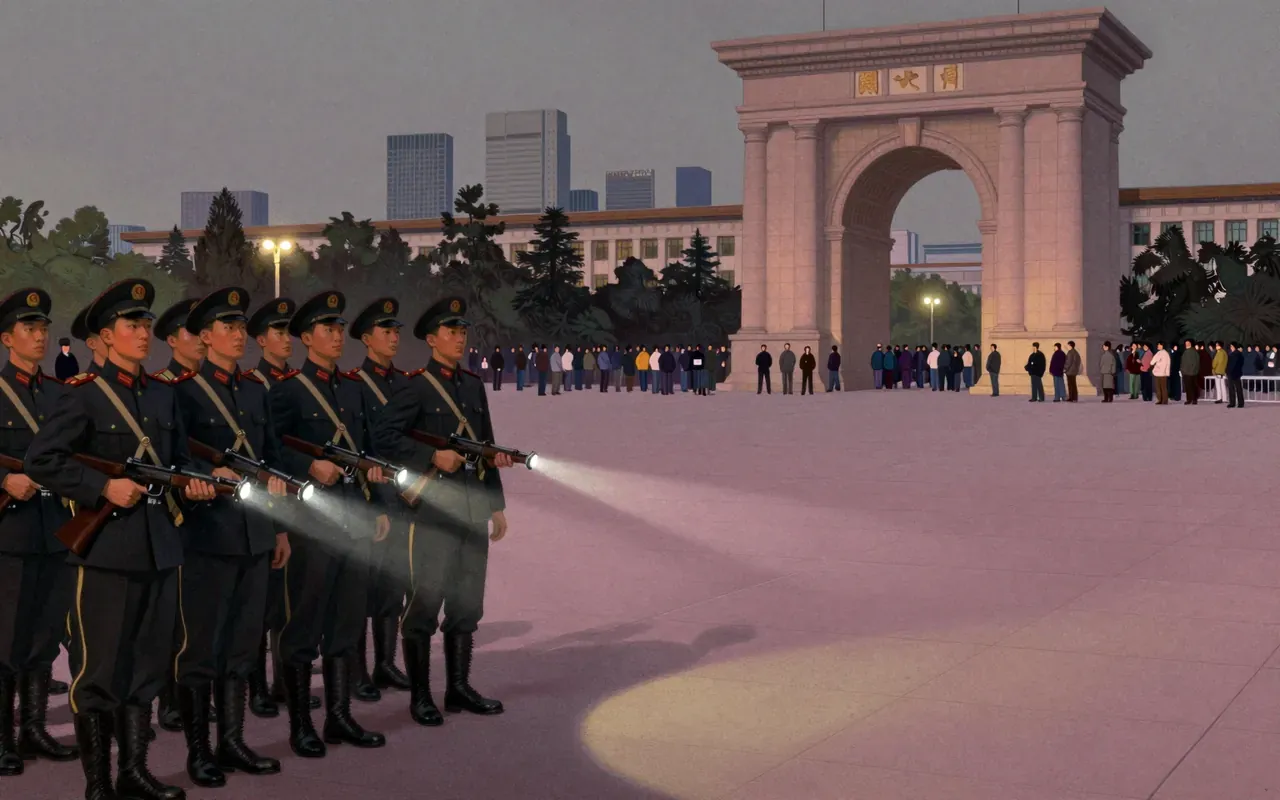
1989 Tiananmen Square protests and massacre1989The 1989 Tiananmen Square protests were a mass demonstration in Beijing that grew to about one million participants at its peak. The Chinese government declared martial law in late May and deployed troops to occupy the square on the night of 3 June.
Up next in Culture

The Civilizing Process

1939 · 8:44

Civilisation isn’t progress—it’s the slow, coercive calibration of bodies and states.

8:44