culturebriefs
9:48in productionCh. 1 · Founding by fracture/ 9:48 · ceiling 15 min
Ideas · Movements & scenes

Guy Debord

Debord didn’t predict social media—he built the first anti-spectacle toolkit, then burned the manual.

Debord’s work is a scalpel—not a hammer—for dissecting how capitalism mediates reality through images, interfaces and attention economies. It remains indispensable for diagnosing power in digital culture—but silent on repair.

Chapters & takeaways4
  1. 1:07
    Founding by fracture

    Debord’s authority came from factional leadership—not academic credentials or mass appeal.

  2. 2:48
    Raid, not revolt

    Situationist interventions were logistical operations first, artistic gestures second.

  3. 4:42
    Catalyst, not cause

    The Society of the Spectacle named a condition—but its influence on 1968 was contingent, not causal.

  4. 6:18
    Sorbonne as stage

    Debord occupied the Sorbonne—not as a student leader, but as a theorist who treated architecture as terrain.

Worth your time?

Yes. Study the whole thing.

4/ 5
What works
  • The Society of the Spectacle (1967)
  • Internationale Situationniste journal
  • 1958 Belgium art conference raid
What does not
  • offer practical alternatives
  • account for race or gender
  • engage with non-European contexts
  • acknowledge irony or humour as resistance
Study it if
  • media strategists
  • urban planners
  • platform designers
Skip it if
  • policy makers seeking implementation
  • artists wanting aesthetic models
  • historians requiring archival balance
The written brief1 min read

What the thing is

Guy Debord was a French Marxist theorist and filmmaker who co-founded the Situationist International. He wrote The Society of the Spectacle (1967) and directed interventions like the 1958 Belgium art conference raid.

Where it came from

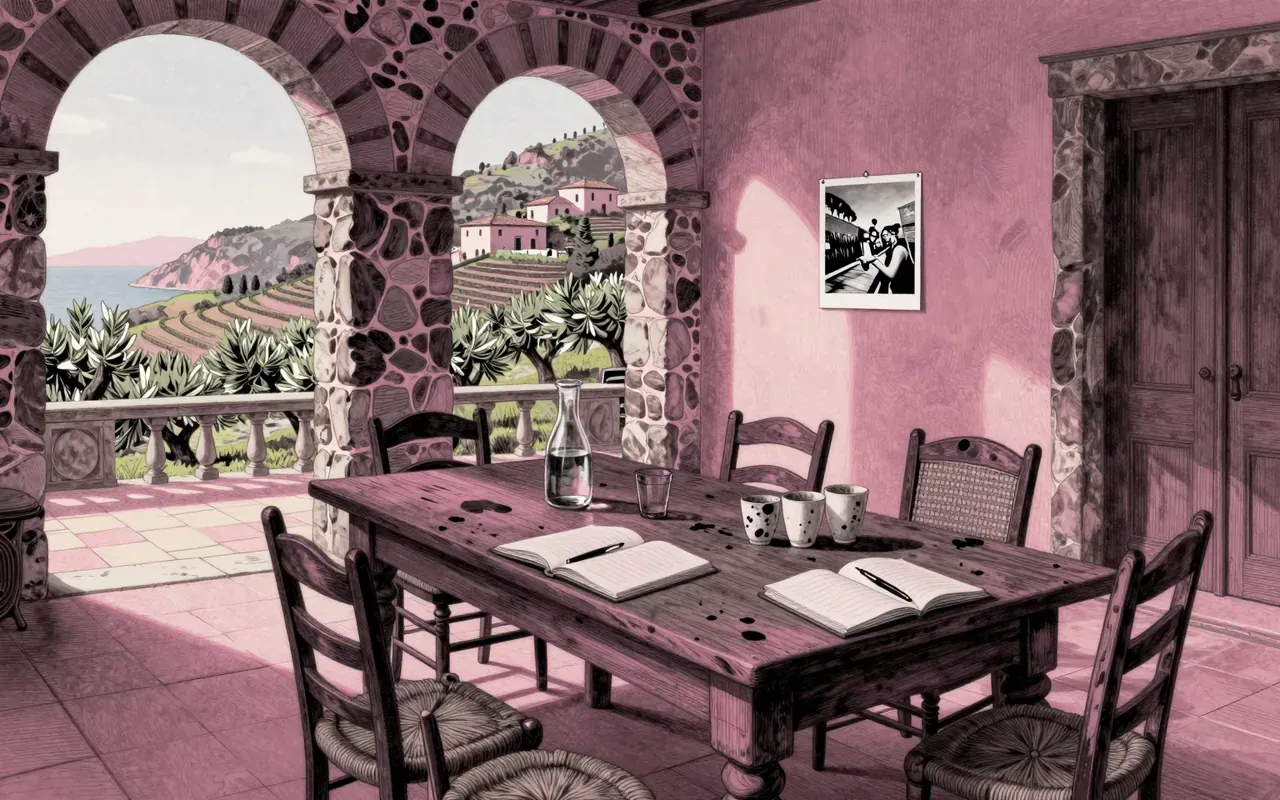
Debord joined the Lettrists at 18. In 1957, he led the Letterist delegation that merged with two other groups in Cosio d’Arroscia, Italy, to found the Situationist International.

What it gets right

It names spectacle as the organising logic of late capitalism—not as metaphor but as material condition. It shows how representation displaces lived experience, how media replaces action, how consumption replaces participation.

What it gets wrong

It treats spectacle as total and monolithic. It ignores variation in access, resistance, irony, and vernacular adaptation. It offers no account of how people actually live inside the spectacle—not just endure it.

Why it matters now

Because digital platforms have perfected spectacle: algorithmic curation, behavioural nudging, and attention arbitrage now operate at scale Debord could only sketch. His framework remains the sharpest diagnostic tool for this condition—though not a prescription.

Is it worth your time

Yes—if you want a precise, operational critique of how capitalism colonises attention and perception. No—if you expect solutions, empathy or historical nuance.

Same beat · Ideas4 of 214
8:14
Crypto-anarchyCrypto-anarchy is a movement, not a prophecy. It uses cryptography to enable anonymity, free speech and trade. It emerged from Timothy C. May’s 1988 manifesto and the 1992 cypherpunk founding. It gets right that code can constrain power—but wrong that it will collapse the state. A 2022 study confirms its political irrelevance—yet its architecture remains vital for Internet-native dissent.
13:44
CypherpunkCypherpunk is a libertarian movement that champions strong cryptography and privacy‑enhancing technologies to effect social and political change. It began in the late 1980s, gained traction with the 1992 mailing list, and has influenced Bitcoin, secure messaging, and privacy browsers. While it rightly foregrounds decentralisation and individual autonomy, it over‑emphasises technology as a panacea and ignores legal and economic barriers. In an era of state surveillance and corporate data mining, Cypherpunk ideas underpin modern cryptocurrencies and secure messaging, offering useful concepts for those who value digital privacy and decentralised finance, but its tech‑first focus may feel incomplete for those seeking concrete policy solutions.
8:55
Free software movementThe free software movement is a precise, principled refusal of proprietary control over software. It began in 1983 with GNU and institutionalised in 1985 with the FSF. It gets right that software freedom must be guaranteed—not merely permitted. It gets wrong that licence compliance alone secures user agency. Its relevance has grown as software becomes infrastructural—but its methods remain rooted in individual refusal and collective development.
12:36
1989 Tiananmen Square protests and massacre1989The 1989 Tiananmen Square protests were a mass demonstration in Beijing that grew to about one million participants at its peak. The Chinese government declared martial law in late May and deployed troops to occupy the square on the night of 3 June.
Up next in Culture

Gyros

· 9:36

Gyros isn’t Greek invention—it’s Greek inheritance, forged in forced migration.

9:36