culturebriefs
8:54in productionCh. 1 · Not from Japan/ 8:54 · ceiling 15 min
Food

Sushi

Sushi isn’t Japanese tradition—it’s Southeast Asian preservation, Chinese documentation, and Edo-period fast-food engineering.

Sushi is a preservation technology that migrated, mutated, and mechanised—first across rivers, then empires, then assembly lines.

Chapters & takeaways4
  1. 0:53
    Not from Japan

    Sushi began as fermented fish-rice in Laos, Cambodia, Thailand, Vietnam, and Myanmar—not Japan.

  2. 2:18
    Rice Is the Rule

    What makes sushi sushi is vinegared rice—not raw fish, not seaweed, not presentation.

  3. 3:44
    Fast Food, 1824

    Nigiri-zushi was invented around 1824 by Hanaya Yohei as a fast, hand-pressed format for Edo’s chōnin class.

  4. 5:13
    Chōnin Class Fuel

    It was the first mass-market street food built for urban workers—not aristocrats or ritual use.

Worth your time?

Yes. Study the whole thing.

4.5/ 5
What works
  • as a case study in functional food innovation
  • as evidence of how infrastructure shapes eating habits
  • as a corrective to culinary origin myths
What does not
  • celebrity chefs
  • Michelin stars
  • cultural diplomacy
  • fusion cuisine
Study it if
  • historians of food technology
  • urban labour historians
  • students of fermentation
Skip it if
  • sushi connoisseurs seeking tasting notes
  • readers expecting Japanese cultural nationalism
  • those looking for restaurant reviews or travel advice
The written brief1 min read

What the thing is

Sushi is vinegared rice combined with seafood, vegetables, or meat. Its defining feature is the rice—seasoned with sugar and salt—not raw fish.

Where it came from

It began as narezushi: fermented fish preserved in rice, originating in the Mekong and Irrawaddy river basins. A narezushi-like food appeared in a fourth-century Chinese dictionary.

What it gets right

It prioritises method over mystique. Fermentation reduction, vinegar substitution, and mechanised service are its true milestones—not taste, tradition, or terroir.

What it gets wrong

It misleads by calling sushi ‘Japanese’ without foregrounding its Southeast Asian fermentation roots and fourth-century Chinese textual trace. The dish is a transregional preservation technique, not a national origin story.

Why it matters now

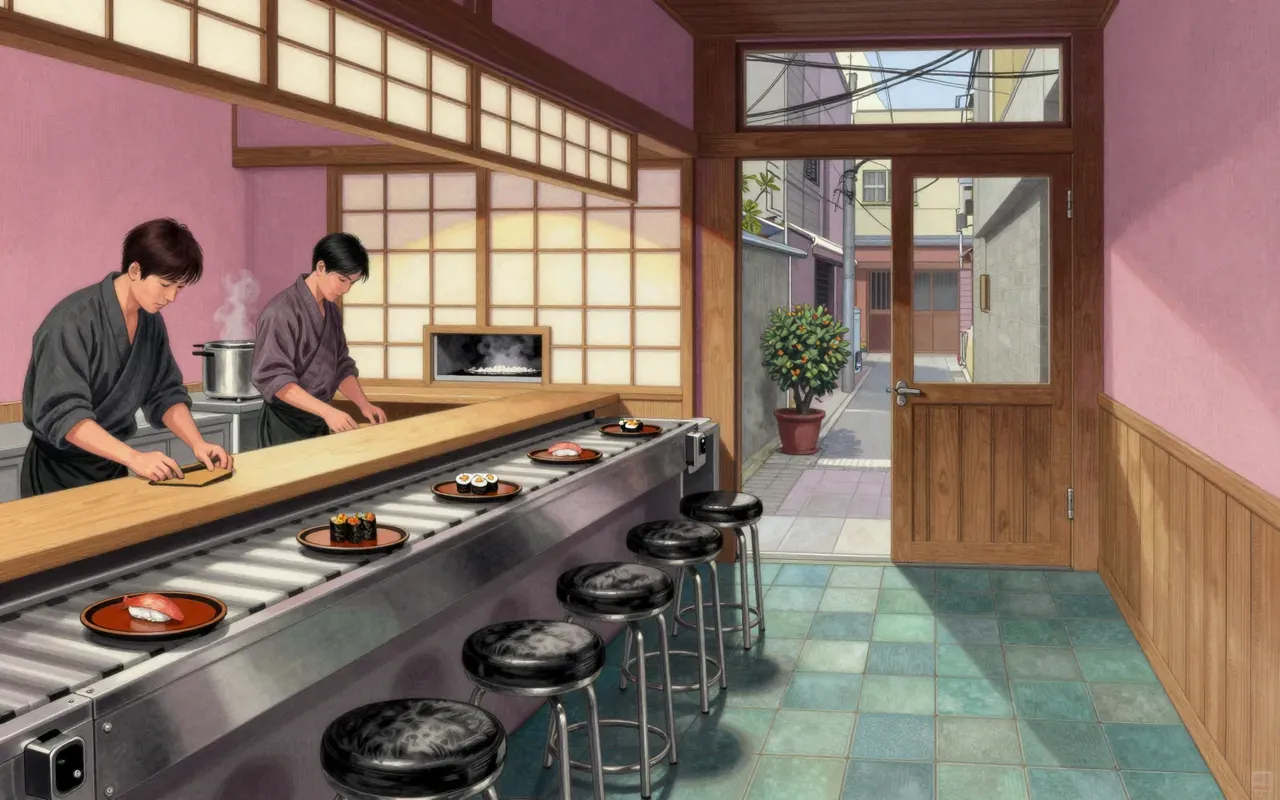
It reveals how industrial logic enters cuisine: from lactic acid fermentation to vinegar-acidification to conveyor belts. Each shift served speed, scalability, and urban working-class needs—not refinement.

Is it worth your time

Yes—if you care how food technology reshapes eating, class, and speed. No—if you expect cultural commentary or chef mythology.
Same beat · Food4 of 210
Up next in Culture

Swatch

1983 · 8:21

Swatch didn’t save Swiss watchmaking—it outsourced its soul to plastic and price.

8:21