8:04in productionCh. 1 · What it was/ 8:04 · ceiling 15 min
Movements & scenes · Ideas
Situationist International
1957
It didn’t change the world—it sharpened the scalpel for those who did.
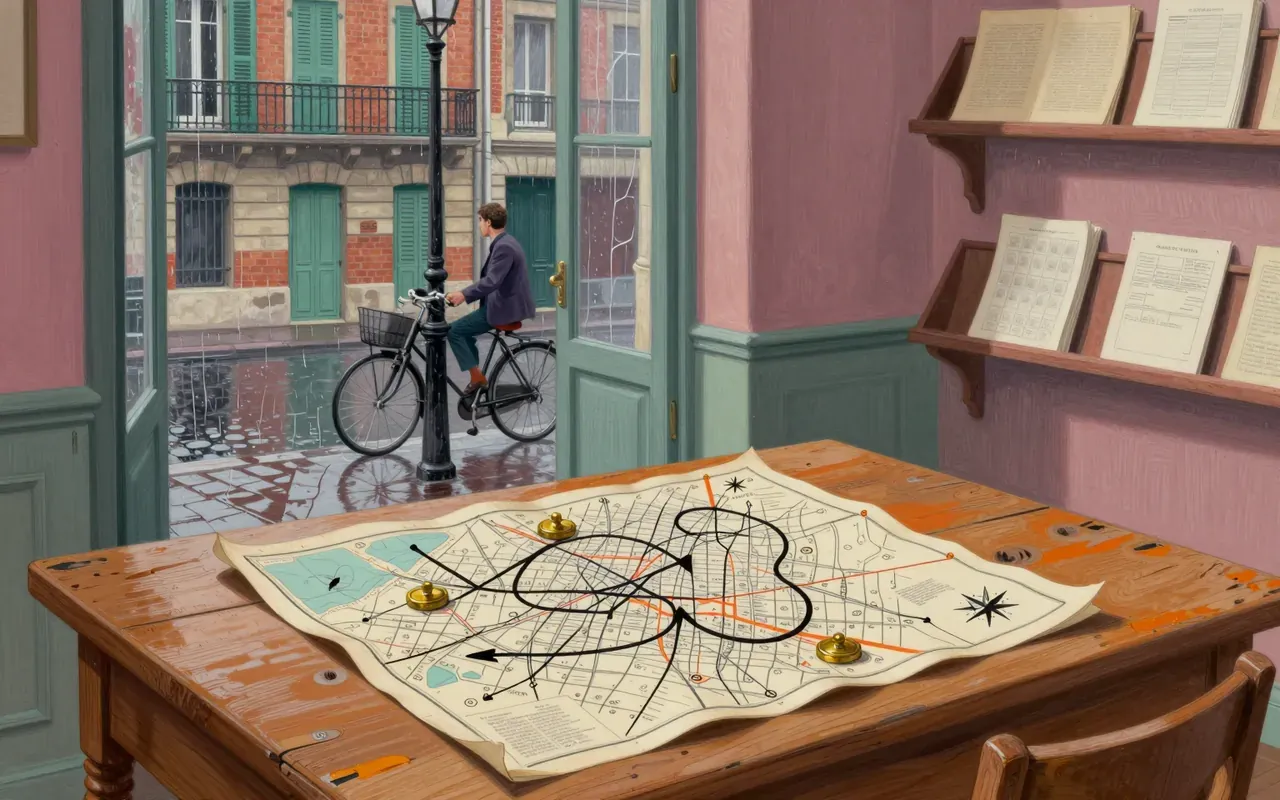
The Situationist International was a European-based international organisation of social revolutionaries active from 1957 to 1972. It fused libertarian Marxism, Dada, and Surrealism into a unified critique of advanced capitalism—the spectacle—and countered it through constructed situations, détournement, and psychogeography. It catalysed May 1968 but dissolved in 1972, leaving a sharp diagnostic tool without a durable political method.
It was an international organisation of social revolutionaries, prominent in Europe from 1957 to 1972.
2:00
Where it came from
Its foundations were libertarian Marxism, Dada, and Surrealism—not academic theory but avant-garde rupture.
3:12
What it got right
It named the spectacle: capitalism’s shift from lived experience to image-mediated alienation.
4:06
What it tried to do
It proposed ‘construction of situations’ as resistance—but never scaled it beyond small-group practice.
5:23
Why it ended
It dissolved in 1972—leaving influence without institution, critique without continuity.
Worth your time?
Yes. Study the whole thing.
4/ 5
What works
as a diagnostic framework for image-saturated society
as a record of anti-separatist art-politics
as a limit-case of revolutionary intellectualism
What does not
offer practical alternatives to capitalist institutions
sustain organisational continuity beyond 1972
bridge theory and mass political practice
Study it if
readers analysing digital alienation
critics of platform capitalism
students of post-war European radicalism
Skip it if
those seeking policy blueprints
practitioners of institutional reform
historians requiring archival breadth
The written brief1 min read
What the thing is
A European international organisation of social revolutionaries active from 1957 to 1972.
Where it came from
It formed in Europe in 1957, drawing from libertarian Marxism, Dada, and Surrealism.
What it gets right
It diagnosed the spectacle correctly: the substitution of lived experience with mediated images under advanced capitalism.
What it gets wrong
It offered no viable path beyond critique. Its rejection of ideology and institutions left no infrastructure for collective action after dissolution.
Why it matters now
Its analysis of image-mediated social relations prefigures digital platform logic—yet its refusal of reformist politics makes it a warning, not a playbook.
Is it worth your time
Yes—if you want a precise, unsentimental lens on how capitalism colonises attention and everyday life.