9:18in productionCh. 1 · Not a subculture. A secession./ 9:18 · ceiling 15 min
Subcultures
Rocker (subculture)
Rocker culture wasn’t about bikes or music—it was about using speed and leather to draw a line no pub, dance hall or newspaper would cross.
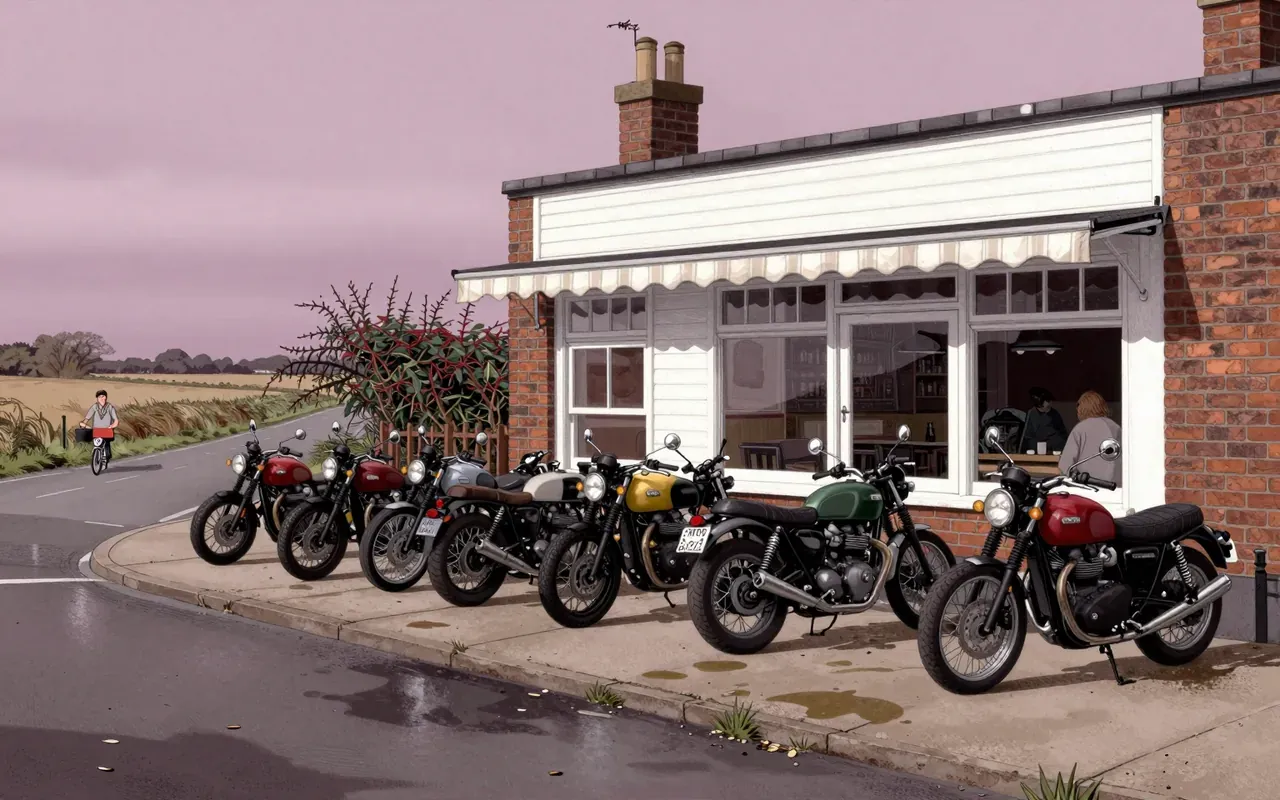
The rocker subculture was a working-class British youth movement centred on rock and roll, custom motorcycles and leather fashion. It emerged in the late 1950s, defined by ton-up speeds, café-based racing, DIY bike modifications and opposition to mainstream norms—including drug use. Media vilification cast rockers as ‘folk devils’, damaging motorcycling’s public image. Though the scene fractured in the early 1970s, revivals began in the 1980s and continue via reunions and events tied to historic sites like the Ace Cafe.
Rockers didn’t join a scene—they invented one by turning motorcycle sport into a full-time act of social withdrawal.
2:18
The ton-up threshold
Ton-up wasn’t bragging—it was calibration: 100 mph was the minimum speed needed to prove your machine, your nerve and your distance from ordinary life.
3:26
Folk devils by default
Media called them folk devils because they refused to be legible—no uniforms, no leaders, no ideology beyond the café, the bike and the road.
4:30
Intimidation as infrastructure
Leather wasn’t style—it was armour. Skull motifs weren’t decoration—they were warnings written in chrome and cowhide.
5:42
Bikes as arguments
Every stripped-down Triumph or Norton was a rebuke to factory logic: if it wasn’t built for speed, it had to be rebuilt for meaning.
Worth your time?
Yes. Study the whole thing.
3.5/ 5
What works
as-a-case-study-in-moral-panic
as-a-template-for-place-based-revival
as-a-warning-about-narrow-masculinity
What does not
iconic
groundbreaking
seminal
Study it if
working-class-youths
motorcycle-enthusiasts
subculture-historians
Skip it if
music-scholars
fashion-designers
policy-makers
The written brief1 min read
What the thing is
A UK youth subculture built around rock and roll, custom motorcycles, and leather fashion. Defined by ton-up speeds, café-based racing, DIY bike mods, and opposition to mainstream norms.
Where it came from
Late 1950s Britain. Emerged from post-war socioeconomic shifts: rising prosperity, credit access, American cultural influence, and infrastructure changes.
What it gets right
It made speed, sound and customisation tools of identity. Ton-up riding was a physical assertion of autonomy. Café culture created neutral ground for social cohesion outside mainstream venues.
What it gets wrong
It conflated risk with virtue. Skull-and-crossbone symbolism and intimidation tactics reinforced narrow, death-adjacent masculinity. Its rejection of drugs masked a rigid moralism that excluded other forms of rebellion.
Why it matters now
It shows how infrastructure—motorways, cafés, petrol stations—can incubate counterculture. Its revival at the Ace Cafe proves place-based memory still anchors subcultural continuity.
Is it worth your time
Yes—if you care about how working-class youth turned machines, music and leather into a grammar of refusal.