9:34in productionCh. 1 · A name borrowed from a port/ 9:34 · ceiling 15 min
Food · Society
Port wine
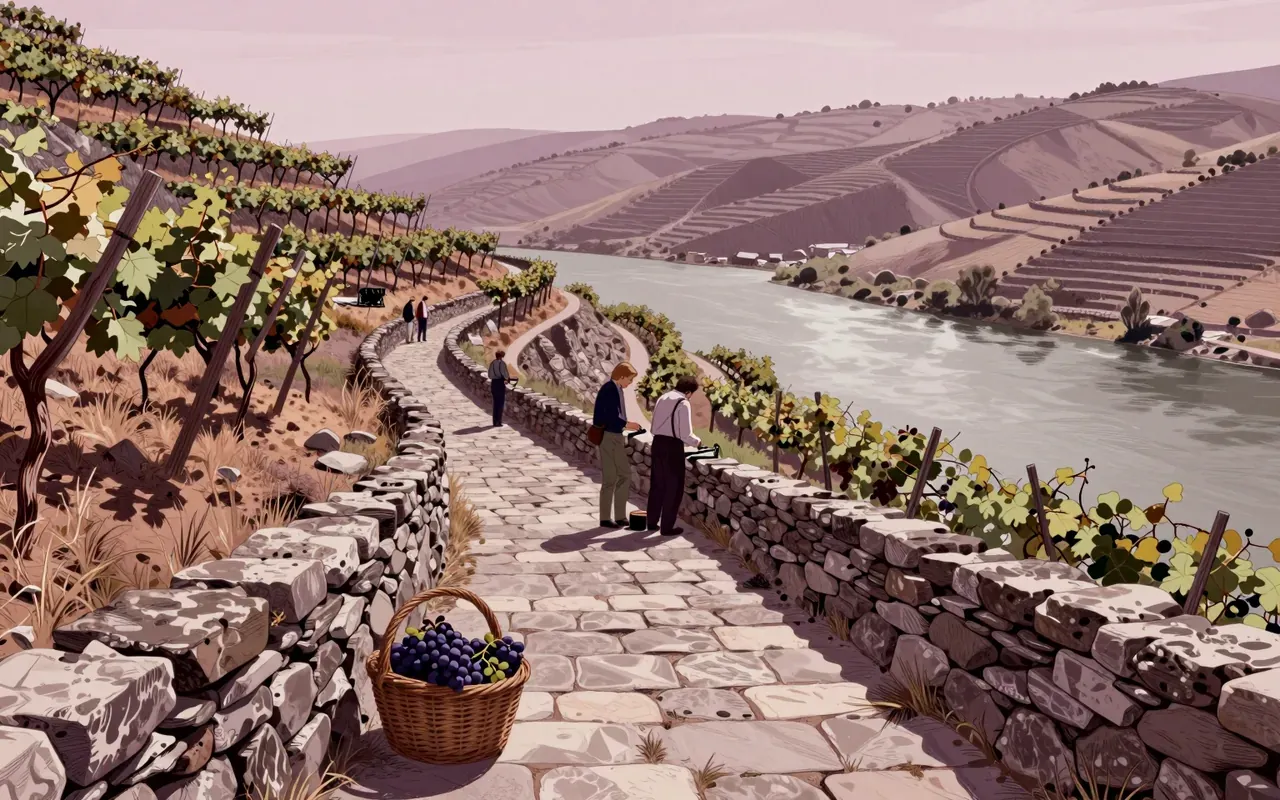
Port isn’t from Porto—it’s from the Douro, and its name is a shipping label masquerading as origin.
Port is a legally defined, fortified wine from the Douro Valley. Its name misattributes origin to Porto. Its method fixes sweetness and strength. Its success followed a treaty, not taste. Its regulation in 1756 set a precedent for protected food designations worldwide.
Port is defined by geography—not taste, not grape, not maker—but by the Douro Valley and the city of Porto, which lent it a name it does not earn.
2:40
How fortification made it stable—and sweet
Fortification with aguardente was discovered accidentally in 1678 and turned into a repeatable process: stop fermentation, keep sugar, raise alcohol.
4:14
Trade deal, not taste, built its empire
Port’s rise in England wasn’t cultural—it was geopolitical: the Methuen Treaty of 1703 cut duty while war blocked French wine.
5:34
The world’s first wine appellation with teeth
In 1756, the Douro became the third-oldest legally demarcated wine region—and the first to embed price controls and quality enforcement in law.
Worth your time?
Yes. Study the whole thing.
4/ 5
What works
as a case study in early food law
as evidence of mercantile influence on taste
as a counterexample to ‘terroir’ mythology
What does not
culture/arts
culture/literature
culture/movements-and-scenes
culture/photography
Study it if
people who study regulation
people who track colonial trade routes
people who question food labels
Skip it if
people seeking craft cocktails
people interested in modern winemaking
people looking for cultural symbolism
The written brief1 min read
What the thing is
Port is a fortified wine. It is not a style or category of wine. It is a geographically bound product defined by law since 1756.
Where it came from
It originated in the Douro Valley of northern Portugal. English merchants first encountered it there in 1678. Its name came from Porto in the latter half of the 17th century.
What it gets right
It delivers intense fruit, sweetness and alcohol reliably by halting fermentation with aguardente. This method locks in sugar and boosts strength to 19–22%.
What it gets wrong
It misleads with its name. Though named after Porto, it is not made there—it is made in the Douro Valley and only shipped from Porto.
Why it matters now
It is a working example of early food regulation—older than Chianti or Tokaj—and shows how state intervention (1756) can standardise quality and pricing across an entire region.
Is it worth your time
Yes—if you care about how trade, regulation and colonial-era mercantilism shaped a drink still consumed in ritualised form today.