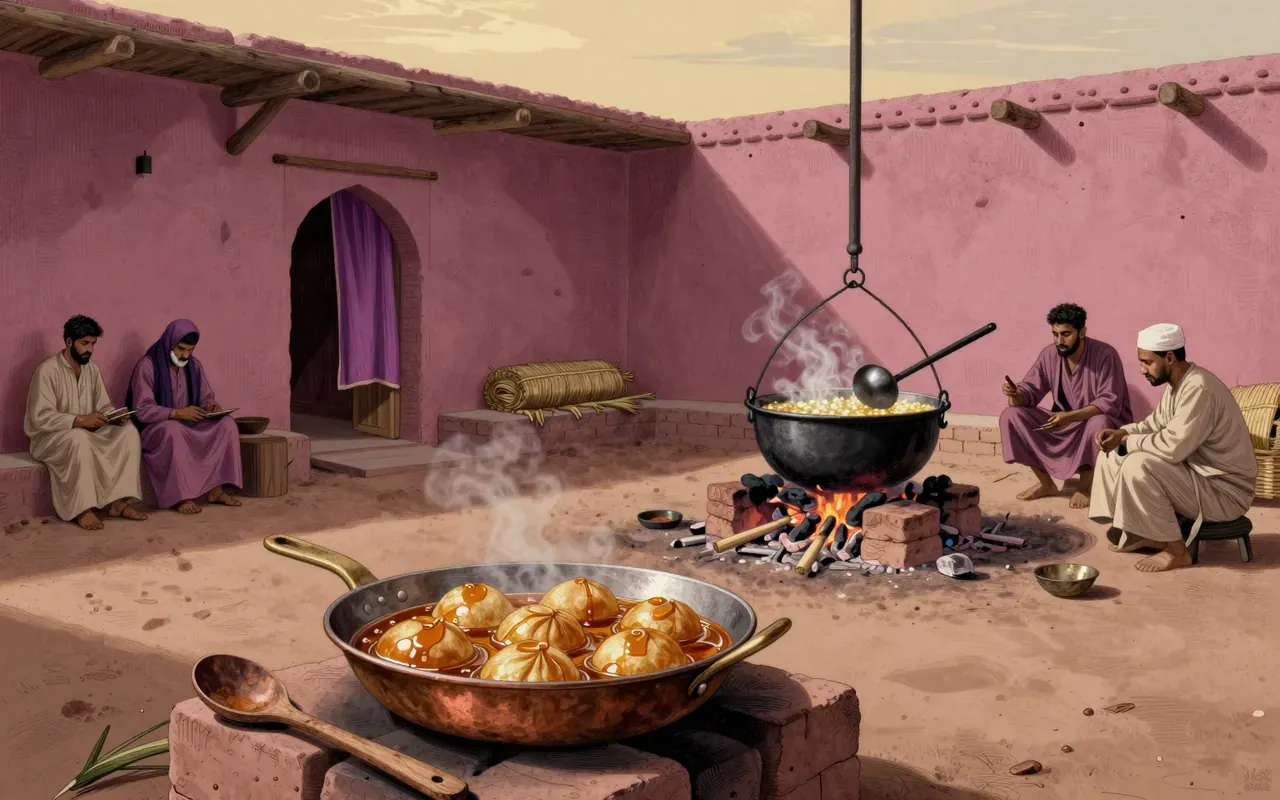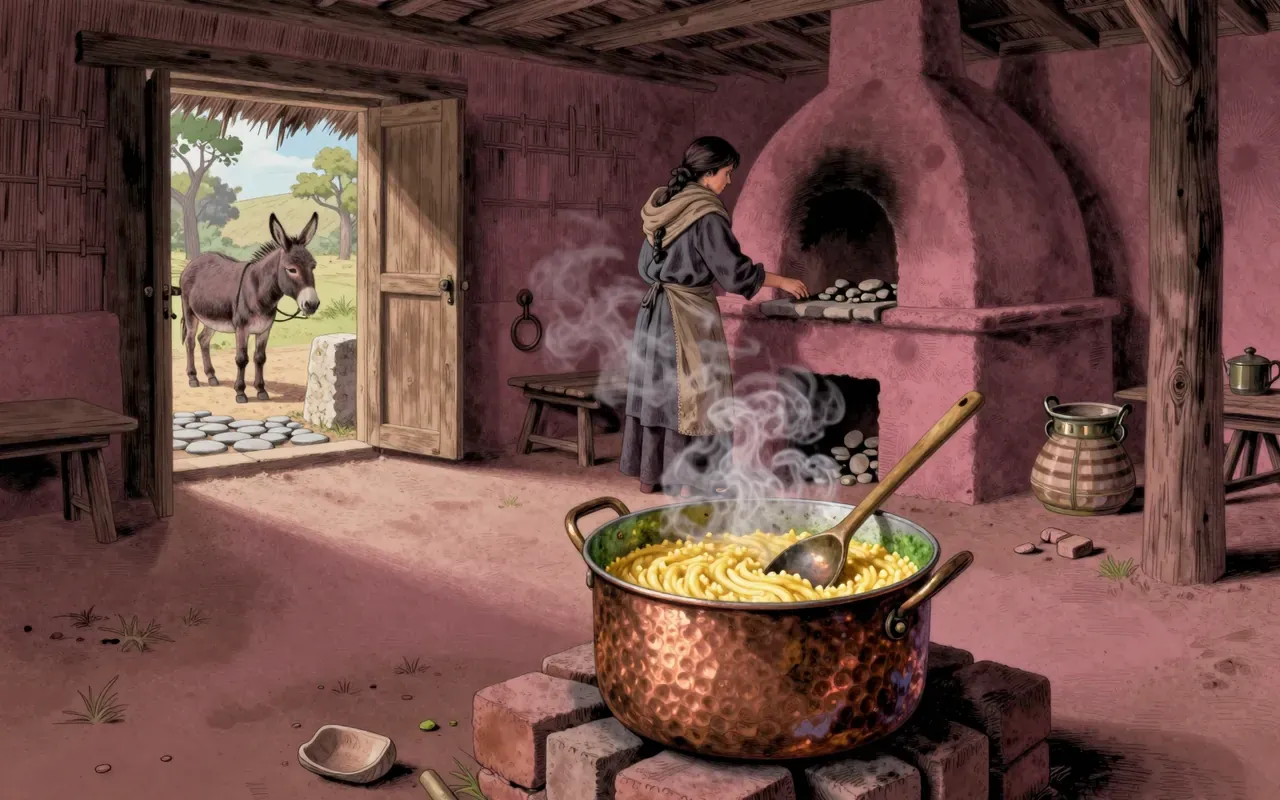
What the thing is
Polenta is boiled cornmeal mush. Yellow maize is usual. Buckwheat or white maize may substitute. Texture depends on grind: coarse for firm, fine for creamy.
Where it came from
It derives from Roman puls or pulmentum. Before maize arrived in the 16th century, it used farro, chestnut flour, millet, spelt and chickpeas. Italian immigrants brought it to southern Brazil in the late 19th century.
What it gets right
It turns cheap, starchy, shelf-stable grain into nourishment through friction and time. Coarse grind yields firmness. Fine grind yields cream. Method matches material.
What it gets wrong
It pretends to be Italian tradition while being a post-16th-century maize adaptation. Its ‘authenticity’ erases the pre-maize grains—farro, chestnut flour, millet, spelt, chickpeas—that fed people for centuries.
Why it matters now
It reveals how food staples travel with poverty—not prestige—and how migration remakes ingredients across continents. It is eaten in northern and central Italy, Swiss Italian, southern French, Croatian, Slovenian, Serbian, Romanian, Brazilian, Uruguayan and Argentinian cuisines. Its consumption was traditionally associated with lower classes.
Is it worth your time
Yes—if you care about how staple foods encode class, migration and substitution. It is not a curiosity. It is infrastructure.