culturebriefs
8:28in productionCh. 1 · What It Is/ 8:28 · ceiling 15 min
Food · Society

Lumpia

Lumpia isn’t fusion—it’s fidelity under constraint.

Lumpia is a practical adaptation—not a celebration of hybridity, but evidence of how food moves, settles, and adjusts to new rules.

Chapters & takeaways4
  1. 0:52
    What It Is

    Lumpia are defined by method, not meaning: thin wrapper, variable filling, fried or fresh.

  2. 1:55
    Where It Came From

    They descend from Fujianese and Teochew spring rolls—not invented locally, but transplanted twice.

  3. 3:12
    How It Adapts

    In Indonesia, lumpia avoids pork to serve Muslim consumers—chicken, shrimp, egg and vegetables replace it.

  4. 4:53
    Who It’s For

    Lumpia is Chinese Indonesian cuisine—not ‘Indonesian food’ broadly, but tied to cities with significant Chinese Indonesian populations.

Worth your time?

Yes. Study the whole thing.

4/ 5
What works
  • as a marker of settlement
  • as a record of religious accommodation
  • as a contrast between two postcolonial food cultures
What does not
  • fusion
  • invention
  • national dish
Study it if
  • Chinese Indonesians
  • Muslim consumers in Indonesia
  • Hokkien-descended Filipinos
Skip it if
  • general Indonesian public as a whole
  • non-Chinese Filipinos as a primary audience
The written brief1 min read

What the thing is

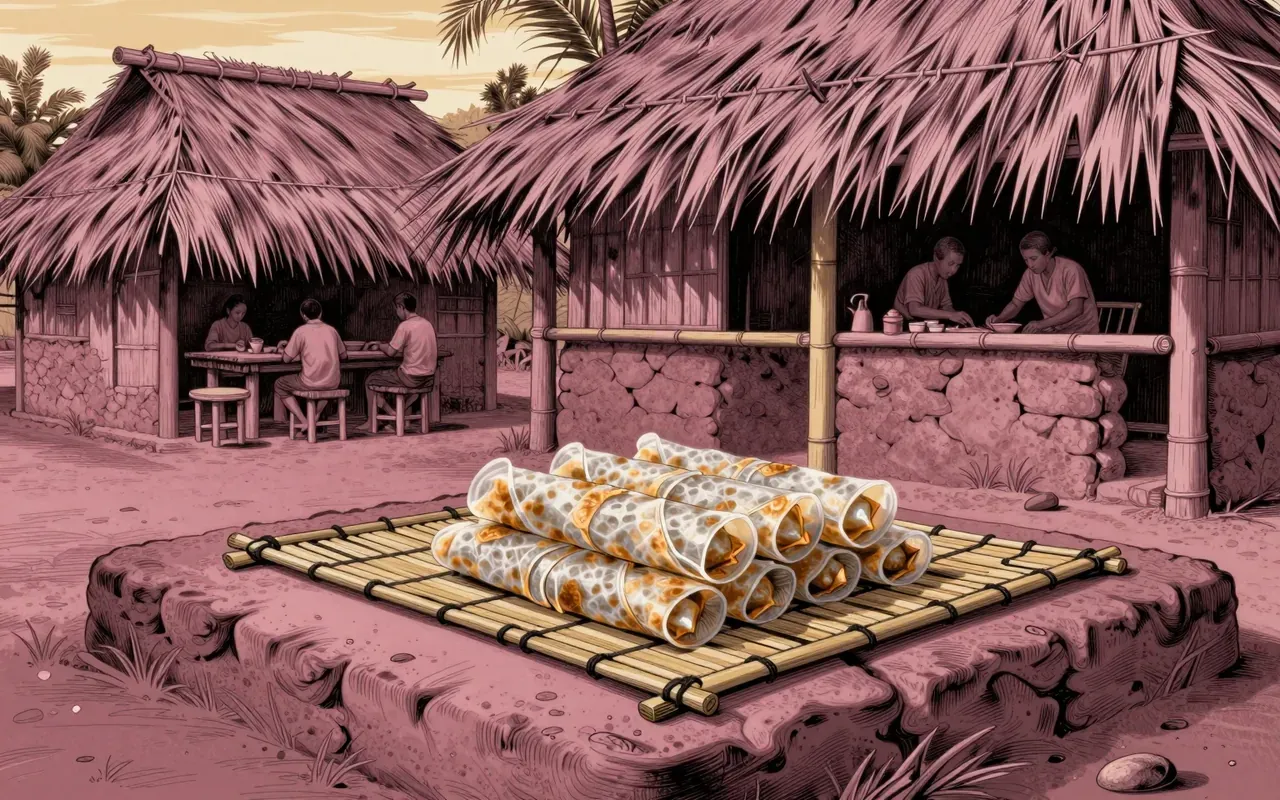
Lumpia are spring rolls made from thin paper-like or crêpe-like pastry skin enveloping savoury or sweet fillings. They are served deep-fried or fresh.

Where it came from

Lumpia are adaptations of Fujianese lūn-piáⁿ and Teochew popiah. Chinese settlers introduced them to Indonesia possibly in the 19th century. Hokkien immigrants brought them to the Philippines from Fujian.

What it gets right

It accommodates religious dietary rules without erasing origin. Indonesian lumpia replaces pork with chicken, shrimp, egg and vegetables for Muslim consumers.

What it gets wrong

It misleads by implying unity: lumpia in Indonesia and the Philippines share a root but diverge in wrapper composition, naming, and cultural placement—neither is a variant of the other.

Why it matters now

It reveals how migration embeds itself in everyday food—not through celebration, but through quiet recalibration: what’s omitted, substituted, renamed and localised.

Is it worth your time

Yes—if you care about how food adapts across borders, not as a symbol of fusion but as a record of settlement, faith and substitution.
Same beat · Food4 of 210
Up next in Culture

Madchester

1990 · 10:00

Madchester wasn’t a scene—it was a press release written over a dancefloor.

10:00