culturebriefs
8:30in productionCh. 1 · Origin point/ 8:30 · ceiling 15 min
Fashion · Subcultures

Hip-hop fashion

Hip-hop fashion wasn’t adopted by brands — it hijacked them.

Hip-hop fashion is a direct line from Urban Black America’s assertion of presence into global luxury’s vocabulary — not an offshoot, not a phase, but a recalibration.

Chapters & takeaways5
  1. 1:12
    Origin point

    It began not in studios or showrooms, but on streets in New York City, Los Angeles, and Atlanta — late 1970s to mid-1980s.

  2. 2:05
    Brand attachment

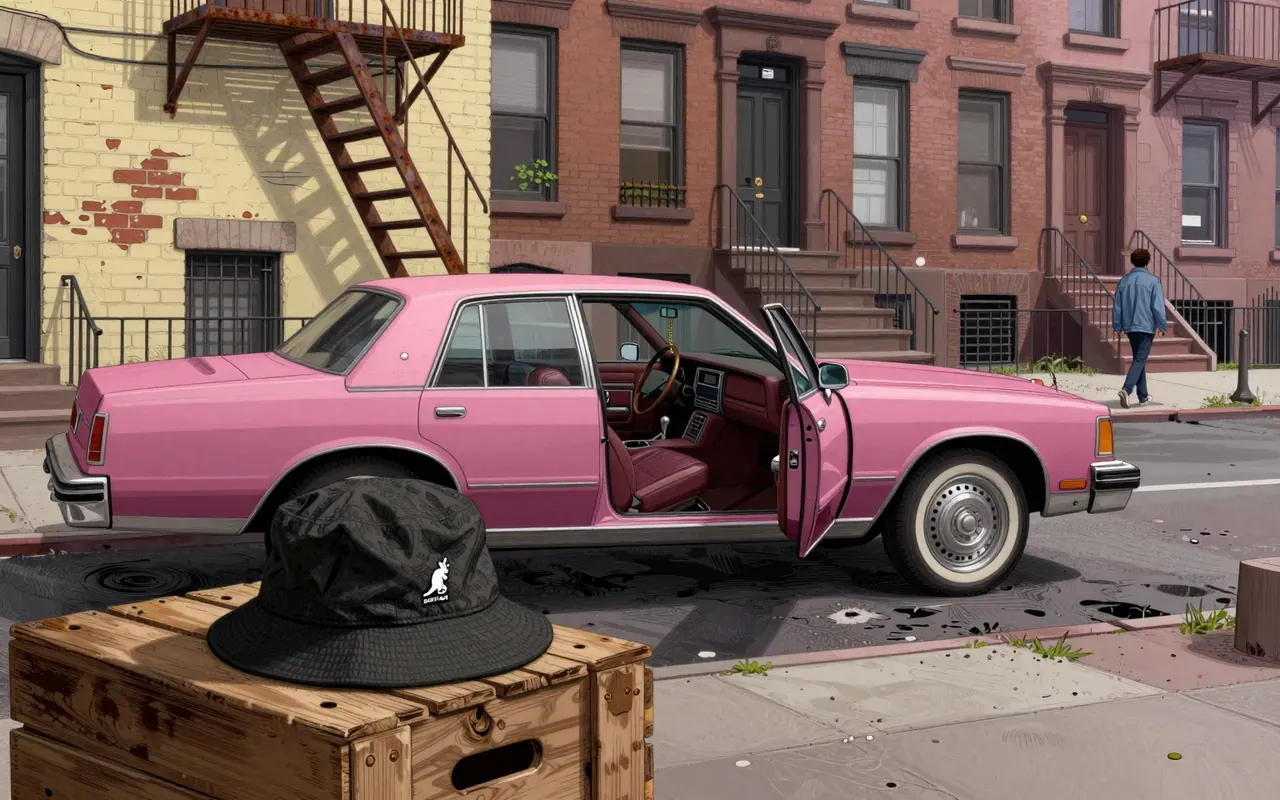
    Brands like Adidas and Kangol didn’t discover hip-hop — they attached themselves to it as it gained momentum.

  3. 3:01
    DJ uniform

    DJs dressed for visibility and authority: tracksuits, bomber jackets, Clarks, and gendered gold — chains for men, earrings for women.

  4. 4:05
    Logos as leverage

    Dapper Dan didn’t copy luxury logos — he custom-built garments that weaponised them against exclusion.

  5. 4:57
    Accessories as ID

    Accessories weren’t decorative — Cazals, Kangols, nameplates, and heavy gold declared identity before speech.

Worth your time?

Yes. Study the whole thing.

4.5/ 5
What works
  • culture/fashion
  • culture/subcultures
  • culture/society
  • culture/movements-and-scenes
What does not
  • culture/arts
  • culture/literature
  • culture/photography
Study it if
  • Urban Black America
  • inner city youth
  • New York City, Los Angeles, Atlanta
Skip it if
  • global fashion executives
  • retail buyers
  • trend forecasters
The written brief1 min read

What the thing is

Hip-hop fashion is a set of dress codes rooted in self-assertion, brand reclamation, and spatial belonging — not trend-following.

Where it came from

It emerged from Urban Black America and inner city youth in New York City, Los Angeles, and Atlanta between the late 1970s and mid-1980s.

What it gets right

It centres Urban Black America and inner city youth in New York City, Los Angeles, and Atlanta as the originators — not influencers, not consumers, but designers of meaning.

What it gets wrong

It treats hip-hop fashion as a monolith. The document shows divergent codes: DJs wore Clarks and Britishers; Dapper Dan rebranded mink coats with Fendi logos; women wore large gold earrings while men wore heavy chains. No single aesthetic unified them.

Why it matters now

Because its core method — subverting luxury branding from below — still defines how marginalised groups negotiate status in a branded world.

Is it worth your time

Yes — if you want to understand how street-level Black American style forced global fashion houses to confront their own gatekeeping.
Same beat · Fashion4 of 113
11:00
CosplayCosplay is a materially grounded, globally dispersed performance practice rooted in two separate histories—one in US sci-fi fandom, one in Japanese anime culture. Its significance lies in how it turns representation into labour, and character into conduct.
8:18
Grunge (fashion)1980Grunge fashion was an anti-fashion statement rooted in mid-1980s Seattle’s music scene. It used durable, thrift-store clothing worn loosely and androgynously—especially flannel shirts and Doc Martens—to reject 1980s flash. Kurt Cobain’s blend of lumberjack workwear and vintage feminine dresses helped define it. By the mid-1990s, it had been commodified globally—most notably by Marc Jacobs for Perry Ellis in 1993. Its legacy is not authenticity, but the speed with which resistance becomes product.
8:50
GyaruGyaru is a Japanese fashion subculture rooted in the transliteration of 'gal'. It emerged as nonconformist resistance to traditional Japanese gender roles and beauty standards—particularly the expectation that women be housewives with pale skin and dark hair. Early associations included juvenile delinquency and frivolousness among teenage girls. Kogal culture, a defining variant, rose prominently in the Heisei era (1989–2019), peaking in the 1990s and early 2000s. It is currently experiencing a revival in the Reiwa era. The subculture includes a male counterpart, gyaruo. Its core visual ingredients are consistently cited as gaudy fashion, extreme makeup, and dyed hair.
10:21
Levi Strauss & Co.Levi Strauss · 1853Levi Strauss & Co. is a pragmatic infrastructure project disguised as clothing. It began as immigrant commerce, not craft. Its innovations were patents, lot numbers, trademarks — administrative tools that made reproducible, durable workwear. It did not define youth culture, nor did it seek cultural status. It solved problems for people who needed pants to last — and kept doing so, even when the problem changed.
Up next in Culture

Hollywood, Los Angeles

· 8:53

Hollywood is not a dream factory — it’s a neighbourhood that got annexed, then weaponised by vertical integration.

8:53