culturebriefs
9:26in productionCh. 1 · No agreed definition/ 9:26 · ceiling 15 min
Ideas · Society

Heavy metals

A term with no definition, used everywhere it shouldn’t be.

The term 'heavy metals' is a linguistic relic masquerading as a scientific category. It persists in policy and public discourse despite having no consistent definition, no chemical basis, and only three unambiguous members. Its endurance reveals how deeply imprecise language can embed itself in technical practice.

Chapters & takeaways4
  1. 0:56
    No agreed definition

    The term is ambiguous by design—and widely acknowledged as such.

  2. 2:46
    Three elements hold the line

    Only mercury, lead, and bismuth satisfy every published definition.

  3. 3:41
    Ancient metals, modern label

    Iron and gold were 'heavy metals' before aluminium existed.

  4. 5:28
    The 5 g/cm³ compromise

    Density >5 g/cm³ is the most common operational criterion—but not the only one.

Worth your time?

Yes. Study the whole thing.

3.5/ 5
What works
  • as-a-warning-against-linguistic-laziness
  • as-a-case-study-in-terminological-drift
What does not
  • culture/arts
  • culture/art
  • culture/fashion
  • culture/food
Study it if
  • scientists
  • policy-writers
  • science-educators
Skip it if
  • general-audience-readers-seeking-clarity
The written brief1 min read

What the thing is

‘Heavy metals’ is not a coherent chemical category. It is a contested label applied inconsistently to elements based on density, atomic number, or behaviour.

Where it came from

The term originated in 1817 with Leopold Gmelin in Germany. Early examples included iron, copper, tin, silver, gold, and platinum.

What it gets right

It identifies a historically rooted cluster of elements with shared industrial and toxicological significance.

What it gets wrong

It implies chemical unity where none exists—mercury, lead, and bismuth are the only three elements meeting all surveyed definitions.

Why it matters now

Regulatory frameworks, public health messaging, and environmental reporting still use the term—despite its lack of scientific precision and documented ambiguity.

Is it worth your time

Yes—if you work in science communication, regulation, environmental health, or education. No—if you assume the term has a stable scientific meaning.


Same beat · Ideas4 of 214
8:14
Crypto-anarchyCrypto-anarchy is a movement, not a prophecy. It uses cryptography to enable anonymity, free speech and trade. It emerged from Timothy C. May’s 1988 manifesto and the 1992 cypherpunk founding. It gets right that code can constrain power—but wrong that it will collapse the state. A 2022 study confirms its political irrelevance—yet its architecture remains vital for Internet-native dissent.
13:44
CypherpunkCypherpunk is a libertarian movement that champions strong cryptography and privacy‑enhancing technologies to effect social and political change. It began in the late 1980s, gained traction with the 1992 mailing list, and has influenced Bitcoin, secure messaging, and privacy browsers. While it rightly foregrounds decentralisation and individual autonomy, it over‑emphasises technology as a panacea and ignores legal and economic barriers. In an era of state surveillance and corporate data mining, Cypherpunk ideas underpin modern cryptocurrencies and secure messaging, offering useful concepts for those who value digital privacy and decentralised finance, but its tech‑first focus may feel incomplete for those seeking concrete policy solutions.
8:55
Free software movementThe free software movement is a precise, principled refusal of proprietary control over software. It began in 1983 with GNU and institutionalised in 1985 with the FSF. It gets right that software freedom must be guaranteed—not merely permitted. It gets wrong that licence compliance alone secures user agency. Its relevance has grown as software becomes infrastructural—but its methods remain rooted in individual refusal and collective development.
12:36
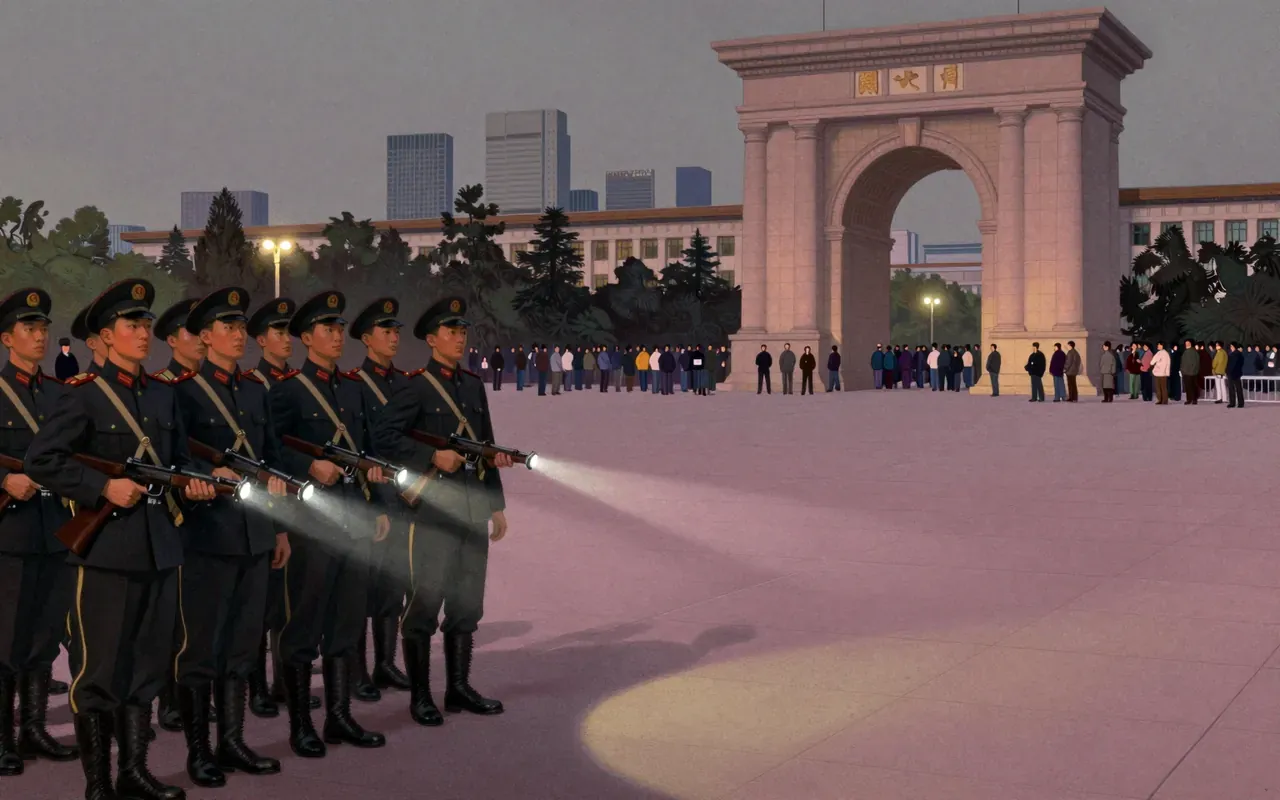
1989 Tiananmen Square protests and massacre1989The 1989 Tiananmen Square protests were a mass demonstration in Beijing that grew to about one million participants at its peak. The Chinese government declared martial law in late May and deployed troops to occupy the square on the night of 3 June.
Up next in Culture

Hip-hop

1973 · 9:38

Hip-hop began not with rhymes, but with two copies of the same record—and the decision to keep the break going.

9:38