What the thing is
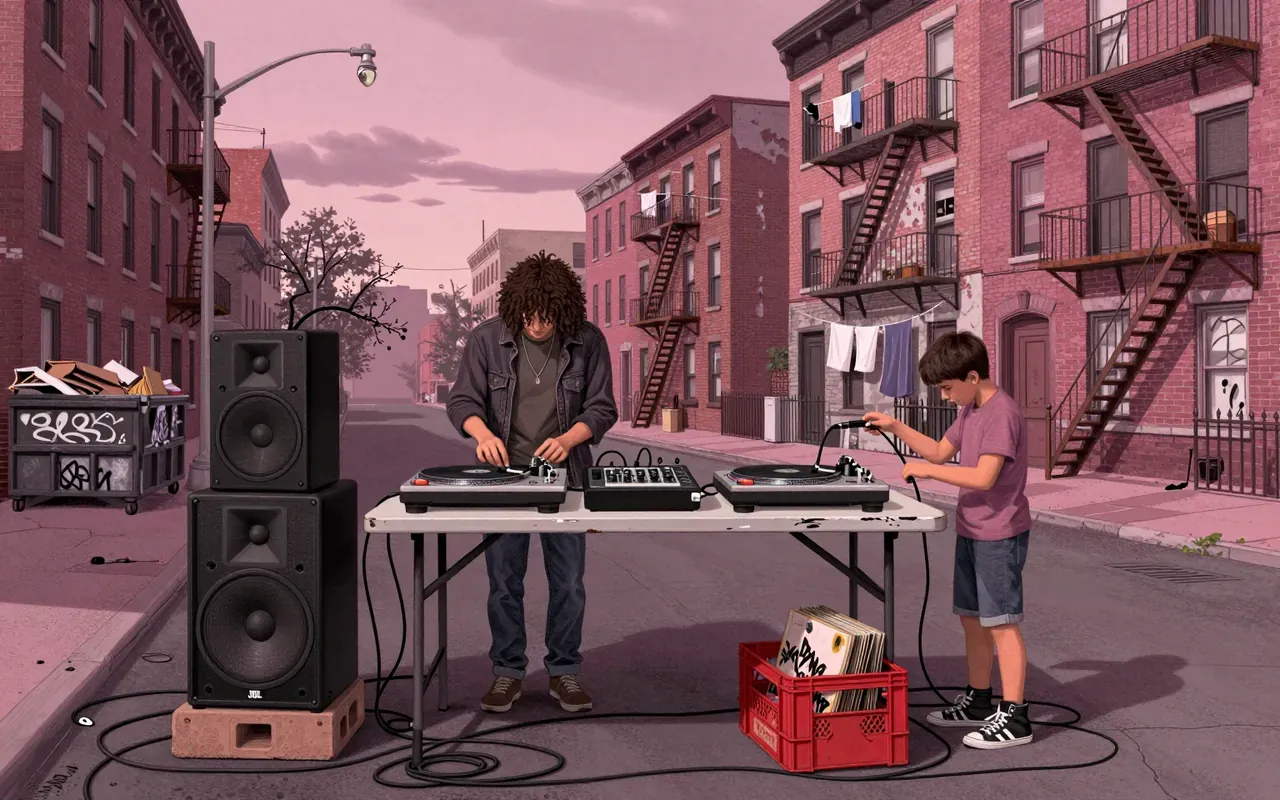
Grandmaster Flash is a set of turntable techniques anchored by the Quick Mix Theory: a method to isolate, loop, and extend drum breaks using two copies of the same record, headphones, and rapid crossfader switching.
Where it came from
The Bronx, late 1970s. Flash adapted smooth disco transitions into something tactile and mathematical—fingertip control, slipmats, spherical styli—all to serve block parties and street crews.
What it gets right
It treats turntables as instruments. It turns vinyl into a compositional surface. It gives rappers and breakdancers a stable, repeatable rhythm—something no disco DJ could deliver.
What it gets wrong
It assumes the audience is listening for musical continuity. Flash’s technique was built for dancers and MCs—not for ears trained in melody or harmony.
Why it matters now
Because every digital DJ tool—from Serato to Traktor—still simulates the physical logic Flash invented: cueing, looping, and instantaneous switching between identical audio fragments.
Is it worth your time
Yes—if you want to understand how beat-based performance culture began as a precise, physical craft rather than a software preset.