culturebriefs
9:54in productionCh. 1 · Made to taste/ 9:54 · ceiling 15 min
Food

Gado-gado

A national dish that refuses to settle on where it’s from—or whether it’s even rice-free.

Gado-gado is a national dish that performs unity while holding contradiction: it is named for eating without rice but serves lontong; claimed as Sundanese but promoted nationally without settling its origins; defined by freshness and customisation but standardised as policy. It matters not because it is beloved, but because it reveals how food becomes political infrastructure.

Chapters & takeaways5
  1. 1:06
    Made to taste

    It is assembled fresh, often to order, with spiciness adjusted live.

  2. 2:09
    A name at odds with itself

    It is thought Sundanese—but named after a Betawi verb meaning 'to eat without rice'.

  3. 3:51
    Not raw. Not Javanese. Not quite anything else.

    It differs from karedok (raw only) and resembles pecel (Javanese), but isn’t either.

  4. 4:43
    State-certified, not consensus-built

    It became one of Indonesia’s five national dishes in 2018—alongside soto, sate, nasi goreng and rendang.

  5. 5:47
    Sauce as system

    The sauce is ground fried peanuts, palm sugar, garlic, chillies, salt, tamarind and lime juice—no shortcuts.

Worth your time?

Yes. Study the whole thing.

4/ 5
What works
  • as a case study in official pluralism
What does not
  • praise without reason
  • invent influence
  • treat popularity as significance
Study it if
  • readers who track how states build culture through menus
Skip it if
  • those seeking culinary nostalgia or chef-driven innovation
The written brief1 min read

What the thing is

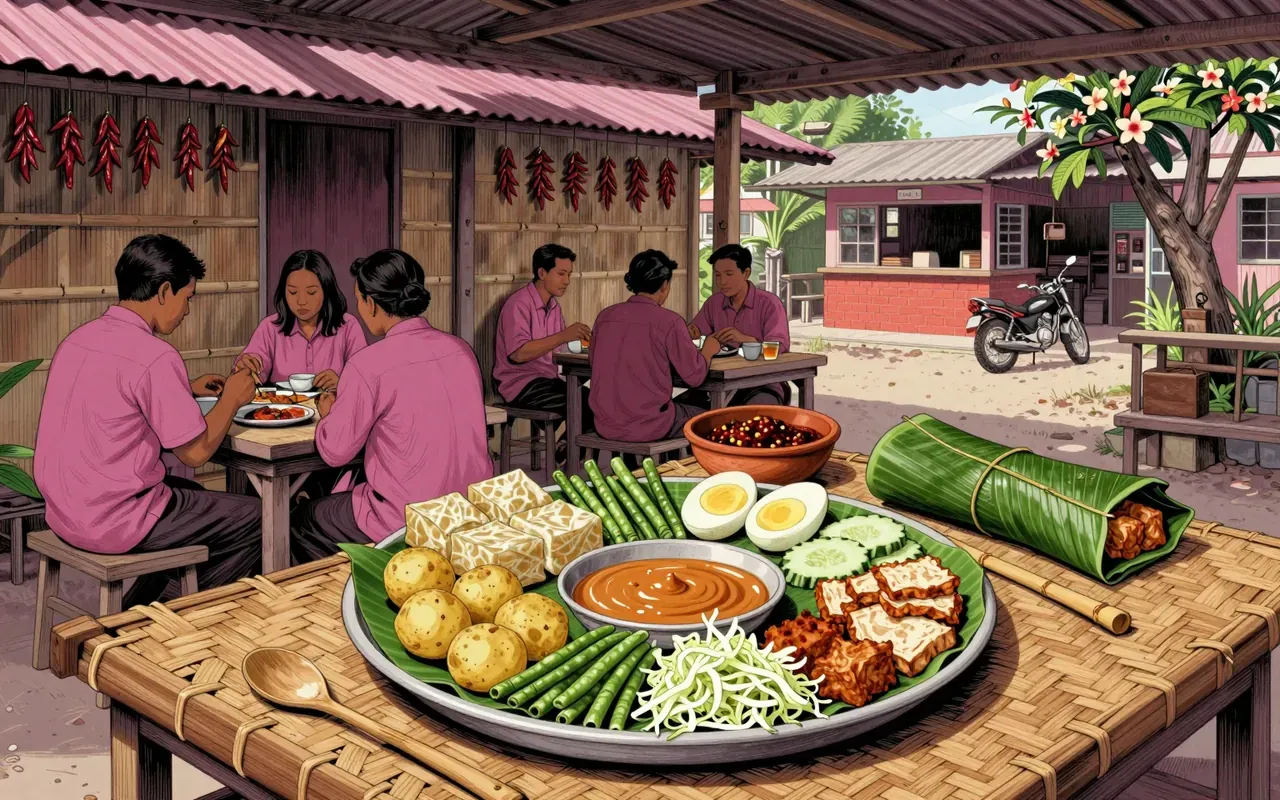
Gado-gado is an Indonesian salad of mixed raw and cooked vegetables, hard-boiled eggs, potato, fried tofu and tempeh, sliced lontong, and peanut sauce.

Where it came from

It is thought to have originated as a Sundanese dish, most prevalent in West Java, Jakarta and Banten—though contested as Tugu village or Chinese-Betawi in origin.

What it gets right

It balances texture, temperature and fat with raw and cooked vegetables, protein and lontong. The peanut sauce delivers umami, sweetness, heat and acidity in one spoonful.

What it gets wrong

It claims no rice—but serves lontong, a compressed rice cake. The name contradicts the plate.

Why it matters now

Its 2018 designation as a national dish exposes how state-led culinary branding flattens regional disagreement into unity.

Is it worth your time

Yes—if you want to understand how a dish becomes national without resolving its origins.
Same beat · Food4 of 210
Up next in Culture

Ragheed Ganni

· 10:14

A priest’s last words weren’t a prayer—they were a question: 'How can I close the house of God?'

10:14