10:14in productionCh. 1 · Mosul to Rome/ 10:14 · ceiling 15 min
Society · Ideas
Ragheed Ganni
A priest’s last words weren’t a prayer—they were a question: 'How can I close the house of God?'
Ragheed Ganni was a Chaldean Catholic priest from Mosul, Iraq, ordained in Rome in 2001 after civil engineering studies and military service under Saddam Hussein. Fluent in five languages, he reported for Asia News on Christian vulnerability in Iraq, publicly opposing the 2003 invasion. He continued celebrating Holy Qurbana despite threats—and was killed on 3 June 2007 after refusing an order to close his church. His final words—'How can I close the house of God?'—were a refusal of erasure, not a call to martyrdom.
He was an Iraqi engineer turned priest—not a symbol, but a man shaped by Mosul, Saddam’s army, and Rome.
3:01
Ordained in Rome
His ordination in 2001 and licentiate in ecumenical theology anchored him in both tradition and interfaith engagement.
5:11
Correspondent, Not Commentator
He used five languages not for prestige but to report on Christian vulnerability—before and after the 2003 invasion.
6:47
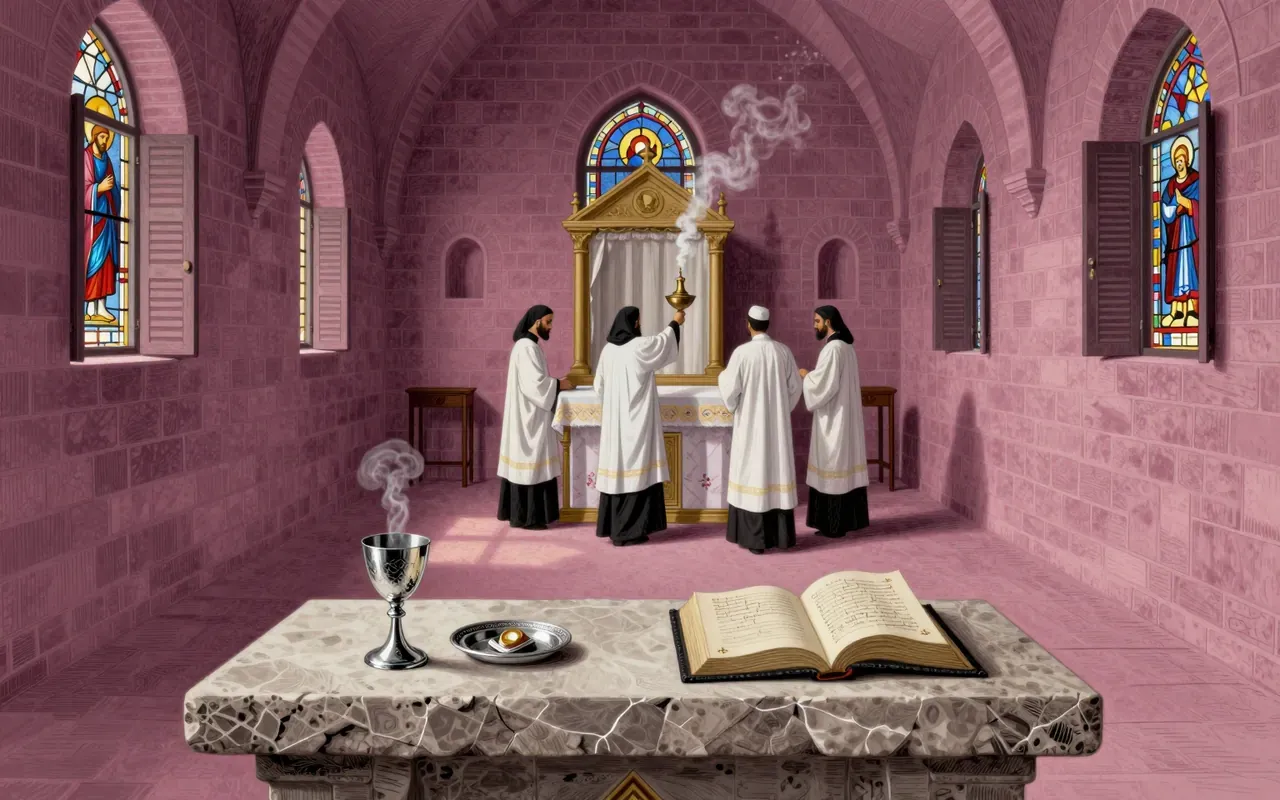
The House of God
He died celebrating Holy Qurbana—refusing to close the church when armed men demanded it.
Worth your time?
Yes. Study the whole thing.
4.5/ 5
What works
as a precise, unvarnished account of one man’s pastoral resistance
as a corrective to narratives that flatten Iraqi Christians into victims or symbols
What does not
claim influence on artists or movements
treat popularity as significance
invoke retrospective consensus
praise without grounding in evidence
Study it if
readers tracking the material reality of religious minorities in conflict zones
those questioning how ‘martyr’ becomes shorthand for silencing
Skip it if
readers seeking cultural trend analysis
those looking for aesthetic innovation or artistic legacy
The written brief1 min read
What the thing is
Ragheed Ganni was a Chaldean Catholic priest from Mosul who was killed for continuing to celebrate Holy Qurbana after being ordered to shut his church.
Where it came from
He was born in Mosul in 1972, studied civil engineering and served in the Iraqi military under Saddam Hussein, then trained in Rome at the Pontifical University of St. Thomas Aquinas Angelicum before ordination in 2001.
What it gets right
It establishes Ragheed Ganni as a multilingual, theologically trained Iraqi Christian who acted on principle—not symbolism—by refusing to close his church under armed threat.
What it gets wrong
It does not claim he founded a movement, inspired legislation, or shifted policy. It makes no claims about influence beyond what is documented: his correspondence, his opposition to invasion, his pastoral persistence.
Why it matters now
Because his death—on 3 June 2007, after refusing to close the house of God—exposes the erasure of indigenous Christian presence in Iraq not as historical drift but as violent, deliberate displacement.
Is it worth your time
Yes—if you want to understand the cost of religious witness in a collapsing state, not as abstraction but as refusal: a priest who chose liturgy over survival.