culturebriefs
10:56in productionCh. 1 · Tokyo, 1969/ 10:56 · ceiling 15 min
Fashion · Ideas

Comme des Garçons

Comme des Garçons didn’t expand fashion—it declared war on its assumptions.

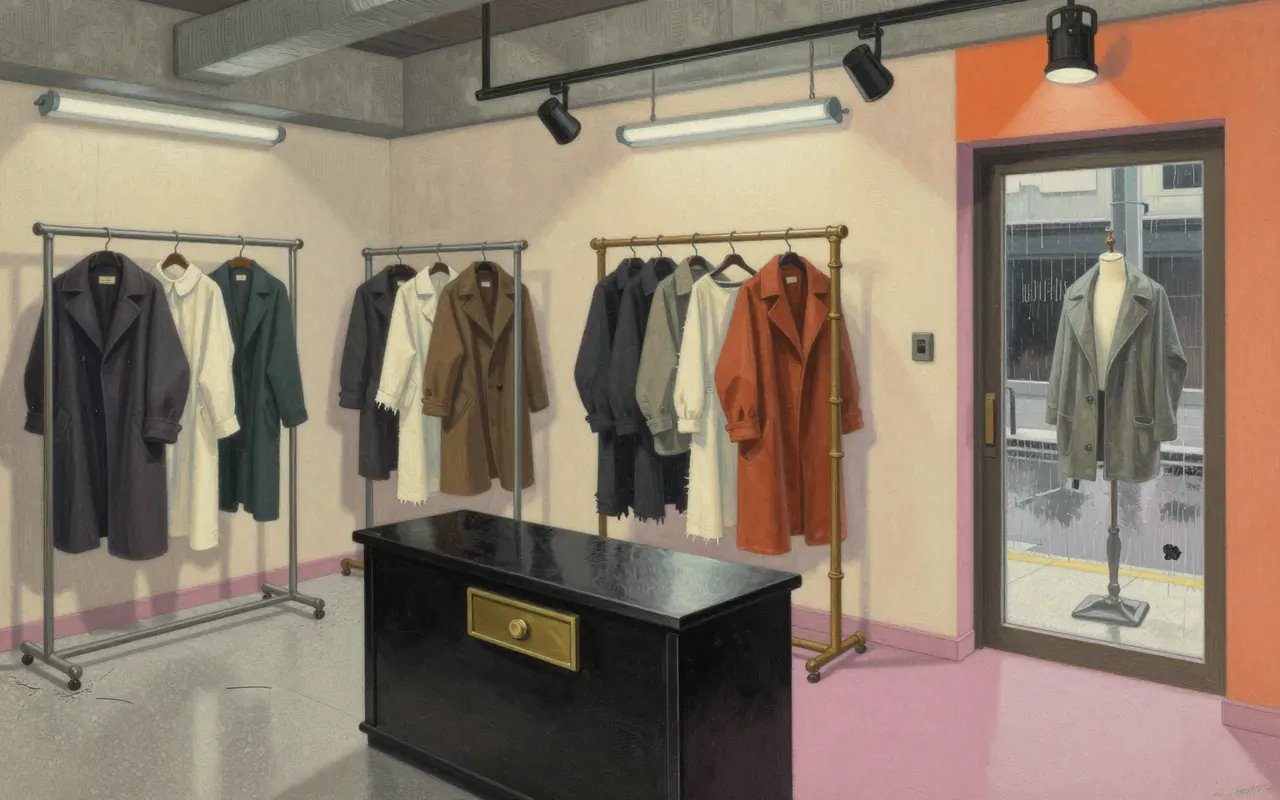
Comme des Garçons is a Japanese fashion label founded by Rei Kawakubo in Tokyo in 1969. It is anti-fashion, austere, sometimes deconstructed—and deliberately rejects consensus notions of beauty, history, and fit.

Chapters & takeaways6
  1. 0:58
    Tokyo, 1969

    Comme des Garçons began in Tokyo in 1969—not Paris, not Milan—as a self-contained enterprise with its own boutique by 1975.

  2. 2:05
    Paris, 1981

    Its 1981 Paris debut wasn’t celebrated—it provoked outrage, with journalists labelling the clothes 'Hiroshima chic'.

  3. 3:18
    Destroy, 1982

    The 1982 'Destroy' collection was met with condemnation: Women's Wear Daily called it the 'Hiroshima bag lady look'; the Associated Press dubbed Kawakubo the 'high priestess of the Jap wrap'.

  4. 4:20
    From Zero

    Kawakubo treated clothing, graphics, advertising and shop interiors as one vision—and in 1982, she rejected all prior fashion history to start 'from zero'.

  5. 5:32
    Anti-Fashion

    Its garments used black distressed fabrics, unfinished seams, organic forms and protrusions—and discarded standard sizing to propose new ideas of beauty.

  6. 7:13
    Expansion Without Assimilation

    It launched a men's line in 1978, presented in Paris each season from 1981, and opened a Paris boutique in 1982—expanding without assimilating.

Worth your time?

Yes. Study the whole thing.

4.5/ 5
What works
  • redefining beauty
  • unified branding
  • radical novelty
What does not
  • groundbreaking
  • iconic
  • timeless
  • seminal
Study it if
  • designers
  • critics
  • students of visual culture
Skip it if
  • casual shoppers
  • trend-followers
  • historical costume enthusiasts
The written brief1 min read

What the thing is

Comme des Garçons is a Japanese fashion label founded in 1969. It produces anti-fashion, austere, sometimes deconstructed garments.

Where it came from

It was founded by Rei Kawakubo in Tokyo in 1969. It opened its first boutique there in 1975. It incorporated as a company in 1973.

What it gets right

It redefined beauty through organic forms, protrusions, and non-standard sizing. It treated graphic design, advertising, and shop interiors as inseparable from clothing. It committed to radical novelty by rejecting 1920s–30s fashion and folkloric references in 1982.

What it gets wrong

Its early Paris presentations provoked hostile misreadings—‘Hiroshima chic’, the ‘Hiroshima bag lady look’—that conflated aesthetic rupture with cultural trauma. Its austerity and deconstruction were dismissed as negation, not proposition.

Why it matters now

It matters now because its insistence on starting ‘from zero’—rejecting inherited references to make work with a ‘strong image’—remains a rare, uncompromising model of authorial autonomy in an era of algorithmic trend-chasing and historical pastiche.

Is it worth your time

Yes—if you want to understand how fashion can reject consensus, not court it.

Same beat · Fashion4 of 113
11:00
CosplayCosplay is a materially grounded, globally dispersed performance practice rooted in two separate histories—one in US sci-fi fandom, one in Japanese anime culture. Its significance lies in how it turns representation into labour, and character into conduct.
8:18
Grunge (fashion)1980Grunge fashion was an anti-fashion statement rooted in mid-1980s Seattle’s music scene. It used durable, thrift-store clothing worn loosely and androgynously—especially flannel shirts and Doc Martens—to reject 1980s flash. Kurt Cobain’s blend of lumberjack workwear and vintage feminine dresses helped define it. By the mid-1990s, it had been commodified globally—most notably by Marc Jacobs for Perry Ellis in 1993. Its legacy is not authenticity, but the speed with which resistance becomes product.
8:50
GyaruGyaru is a Japanese fashion subculture rooted in the transliteration of 'gal'. It emerged as nonconformist resistance to traditional Japanese gender roles and beauty standards—particularly the expectation that women be housewives with pale skin and dark hair. Early associations included juvenile delinquency and frivolousness among teenage girls. Kogal culture, a defining variant, rose prominently in the Heisei era (1989–2019), peaking in the 1990s and early 2000s. It is currently experiencing a revival in the Reiwa era. The subculture includes a male counterpart, gyaruo. Its core visual ingredients are consistently cited as gaudy fashion, extreme makeup, and dyed hair.
10:21
Levi Strauss & Co.Levi Strauss · 1853Levi Strauss & Co. is a pragmatic infrastructure project disguised as clothing. It began as immigrant commerce, not craft. Its innovations were patents, lot numbers, trademarks — administrative tools that made reproducible, durable workwear. It did not define youth culture, nor did it seek cultural status. It solved problems for people who needed pants to last — and kept doing so, even when the problem changed.
Up next in Culture

Conceptual art

1960 · 9:37

Conceptual art didn’t kill the object—it made the object optional, and the idea compulsory.

9:37