culturebriefs
8:38in productionCh. 1 · Illustrator First/ 8:38 · ceiling 15 min
Fashion · Society

Betty Jackson

Betty Jackson designed clothes for courts and job interviews—not catwalks—and that’s where her real influence lies.

Betty Jackson is a British fashion designer whose practice sits outside fashion’s usual metrics: no signature logo, no seasonal spectacle, no celebrity client list. She worked inside institutions—designing for judges, advising on model health, equipping unemployed women—not to make statements, but to solve problems with cloth, cut and context. Her influence is procedural, not aesthetic.

Chapters & takeaways5
  1. 1:01
    Illustrator First

    She started as an illustrator—not a designer—and never stopped thinking like one: translating ideas into clear visual language.

  2. 1:53
    Made in the System

    Her training came from working inside British ready-to-wear systems: Quorum, Dagworthy—not avant-garde studios or heritage houses.

  3. 3:14
    Advisory, Not Advocacy

    She helped shape the 'size zero' debate not as a commentator but as a panel member advising the British Fashion Council.

  4. 4:26
    Dress for Authority

    In 2008, she redesigned judicial gowns for High Court and Court of Appeal judges—replacing symbolism with wearability and dignity.

  5. 5:32
    Clothes as Equipment

    She gave clothes and interview coaching to unemployed women through Smart Works—treating fashion as vocational infrastructure.

Worth your time?

Yes. Study the whole thing.

4/ 5
What works
  • judicial-gown-design
  • model-health-advice
  • Smart-Works-volunteering
What does not
  • iconic
  • groundbreaking
  • seminal
  • timeless
Study it if
  • designers
  • policy-makers
  • career-changers
Skip it if
  • trend-watchers
  • biography-readers
  • archive-hunters
The written brief1 min read

What the thing is

Betty Jackson is a London-based English fashion designer whose career spans illustration, ready-to-wear design, institutional consultancy, and volunteer-led social intervention.

Where it came from

She began in Bacup, Lancashire. Trained at Birmingham College of Art under Zandra Rhodes. Entered fashion as an illustrator in 1971. Worked for Ossie Clark’s Quorum line and as Wendy Dagworthy’s assistant from 1973.

What it gets right

It treats clothing as functional communication. Her judicial gowns redefined authority through cut and cloth. Her Smart Works work treated dress as a tool for social re-entry.

What it gets wrong

It assumes visibility equals influence. Jackson’s advisory roles—on model health, judicial dress—were structural, not stylistic. They changed policy, not trends.

Why it matters now

Because her work exposes a strand of British fashion that prioritises utility, ethics and public service over branding or biography—countering today’s dominant narratives of fashion as personality-driven content.

Is it worth your time

Yes—if you care about how British fashion design operates behind the scenes, not as spectacle but as craft, consultation and quiet civic duty.


Same beat · Fashion4 of 113
11:00
CosplayCosplay is a materially grounded, globally dispersed performance practice rooted in two separate histories—one in US sci-fi fandom, one in Japanese anime culture. Its significance lies in how it turns representation into labour, and character into conduct.
8:18
Grunge (fashion)1980Grunge fashion was an anti-fashion statement rooted in mid-1980s Seattle’s music scene. It used durable, thrift-store clothing worn loosely and androgynously—especially flannel shirts and Doc Martens—to reject 1980s flash. Kurt Cobain’s blend of lumberjack workwear and vintage feminine dresses helped define it. By the mid-1990s, it had been commodified globally—most notably by Marc Jacobs for Perry Ellis in 1993. Its legacy is not authenticity, but the speed with which resistance becomes product.
8:50
GyaruGyaru is a Japanese fashion subculture rooted in the transliteration of 'gal'. It emerged as nonconformist resistance to traditional Japanese gender roles and beauty standards—particularly the expectation that women be housewives with pale skin and dark hair. Early associations included juvenile delinquency and frivolousness among teenage girls. Kogal culture, a defining variant, rose prominently in the Heisei era (1989–2019), peaking in the 1990s and early 2000s. It is currently experiencing a revival in the Reiwa era. The subculture includes a male counterpart, gyaruo. Its core visual ingredients are consistently cited as gaudy fashion, extreme makeup, and dyed hair.
10:21
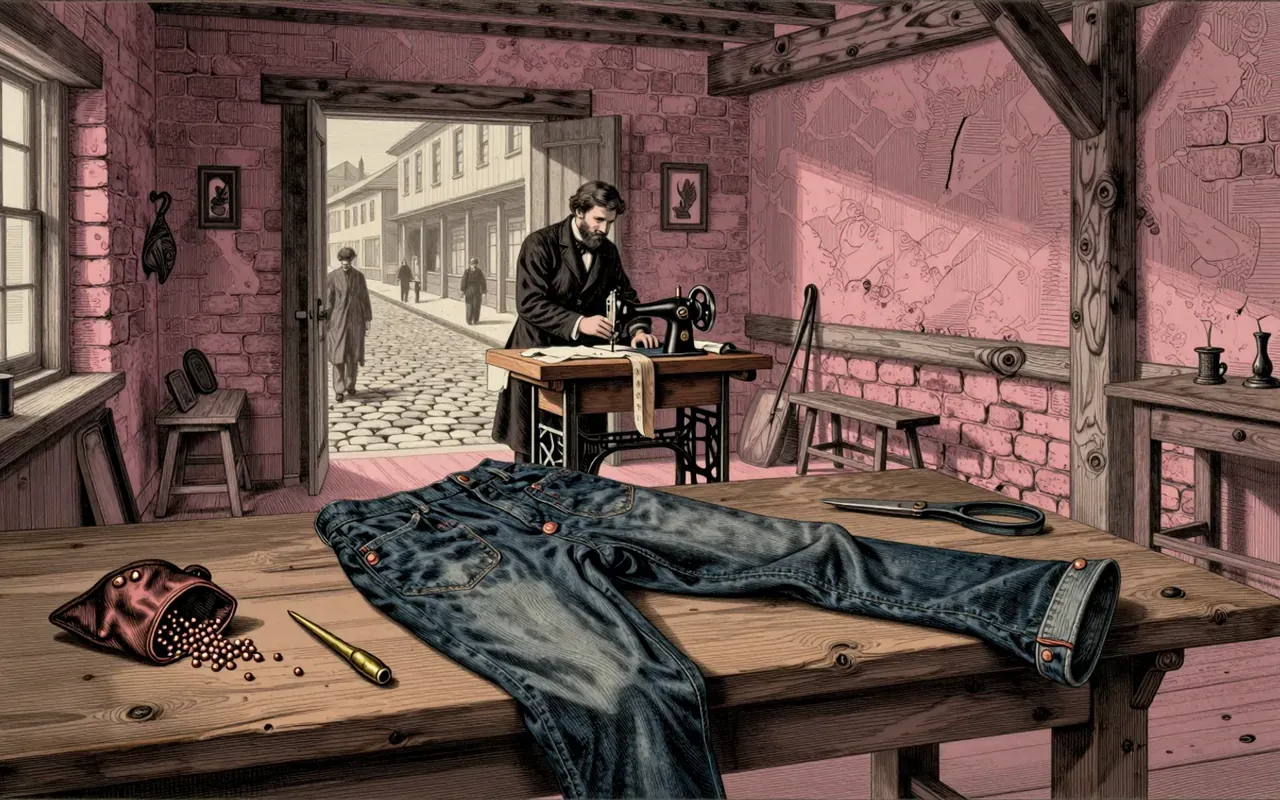
Levi Strauss & Co.Levi Strauss · 1853Levi Strauss & Co. is a pragmatic infrastructure project disguised as clothing. It began as immigrant commerce, not craft. Its innovations were patents, lot numbers, trademarks — administrative tools that made reproducible, durable workwear. It did not define youth culture, nor did it seek cultural status. It solved problems for people who needed pants to last — and kept doing so, even when the problem changed.
Up next in Culture

Biblioteca Nazionale Centrale di Roma

1875 · 8:49

Italy’s national library in Rome collects everything published in the country—but locks it behind bureaucracy.

8:49