culturebriefs
9:10in productionCh. 1 · Not a breed. Four breeds./ 9:10 · ceiling 15 min
Food

Wagyu

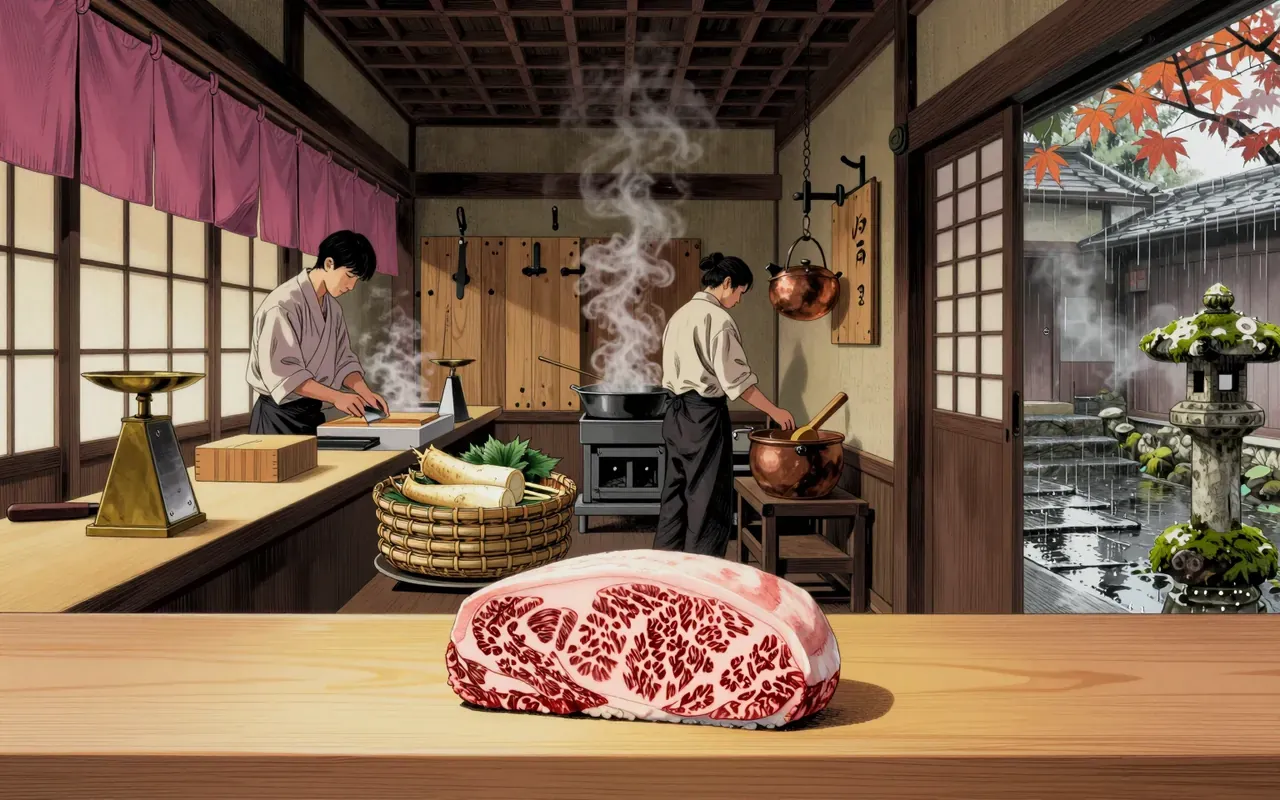
Wagyu isn’t marbled beef—it’s a Japanese cattle registry, and calling anything else Wagyu is linguistic fraud.

Wagyu is a regulated term for four Japanese cattle breeds—not a synonym for marbling or luxury. Its meaning is precise in Japan but diluted abroad. It matters because it reveals how food terms travel faster than their definitions—and how easily origin gets erased in global trade.

Chapters & takeaways4
  1. 0:49
    Not a breed. Four breeds.

    Wagyu names four specific Japanese cattle breeds—not a type of beef or a quality standard.

  2. 2:22
    Made, not found.

    These breeds were built deliberately: native stock crossed with imports, then locked down by closed breeding.

  3. 3:28
    90% is Japanese Black. That’s where sashi lives.

    Japanese Black dominates production and delivers sashi—the real marker of what people call 'Wagyu taste'.

  4. 5:33
    A label with borders.

    Japan’s 2007 rules tie 'Wagyu' to birth, rearing, and documented lineage—in Japan only.

Worth your time?

Yes. Study the whole thing.

4/ 5
What works
  • culture/food
What does not
  • culture/art
  • culture/arts
  • culture/cities
  • culture/fashion
Study it if
  • chefs
  • food-policy-watchers
  • importers
Skip it if
  • casual-diners-who-like-marbling
  • restaurant-marketers
The written brief1 min read

What the thing is

Wagyu is a legal and zoological category—not a style of beef. It names four Japanese cattle breeds, not a marbling standard or cooking method.

Where it came from

It emerged from late-nineteenth-century crossbreeding of regional native Japanese cattle—including Mishima and Kuchinoshima—with imported stock, then crystallised as four closed breeds via selective breeding.

What it gets right

It correctly identifies four distinct Japanese cattle breeds developed through documented regional selection and closed breeding. It anchors the term to biological lineage and national rearing—not just taste or texture.

What it gets wrong

It misleads outside Japan by allowing ‘Wagyu’ to label beef from non-Japanese cattle of those breeds—even when raised elsewhere, fed differently, and lacking sashi or aroma. The term is geographically unmoored in export markets.

Why it matters now

Because ‘Wagyu’ is used globally on beef with no Japanese origin, no sashi, and no regulatory oversight—eroding the meaning of terroir, breed integrity, and consumer trust.

Is it worth your time

Yes—if you care about precise language, food labelling, or how global supply chains obscure origin. No—if you assume ‘Wagyu’ guarantees marbling, flavour, or Japanese provenance.
Same beat · Food4 of 210
Up next in Culture

Walter Benjamin

· 10:20

Benjamin didn’t predict the internet—he built its philosophy of ruins.

10:20