culturebriefs
10:22in productionCh. 1 · Two origins, not one/ 10:22 · ceiling 15 min
Food · Society

Tteokbokki

A dish that began in the palace, went to the street, crossed a border, and got banned for being too South Korean.

Tteokbokki is a dish defined by fracture: royal and clan, soy and spice, rice and wheat, South and North. Its history is not linear progress but layered displacement—each version replacing, not evolving from, the last. Its 2024 ban in North Korea confirms what the dish always was: edible evidence of division.

Chapters & takeaways4
  1. 1:05
    Two origins, not one

    Tteokbokki was never just one dish—it split early between palace refinement and clan-specific soy tradition.

  2. 2:14
    How scarcity built a snack

    The spicy version succeeded because imported wheat flour and gochujang made it scalable, cheap, and transportable.

  3. 3:48
    What the palace put in—and what got left out

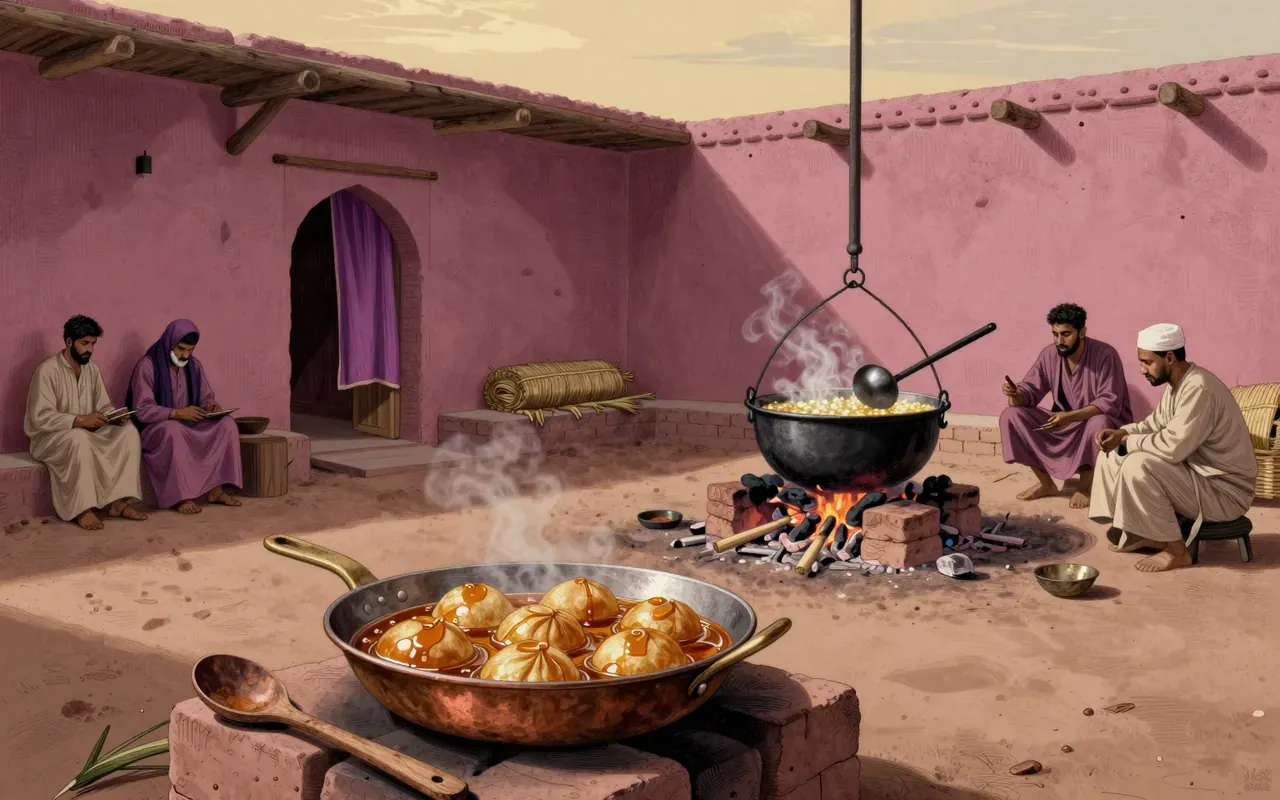
    The royal court version used sirloin, pine nuts, rock tripe, and toasted sesame—ingredients that vanish in the modern red-sauce version.

  4. 5:11
    Banned for being from the South

    Its arrival in North Korea in 2017 and ban in 2024 show how food can become a line-item in ideological enforcement.

Worth your time?

Yes. Study the whole thing.

4.5/ 5
What works
  • as a lens on postwar material adaptation
  • as proof that cuisine can be policed like ideology
What does not
  • banned-works
  • propaganda
Study it if
  • students
  • street vendors
  • policy watchers
Skip it if
  • casual eaters seeking novelty
The written brief1 min read

What the thing is

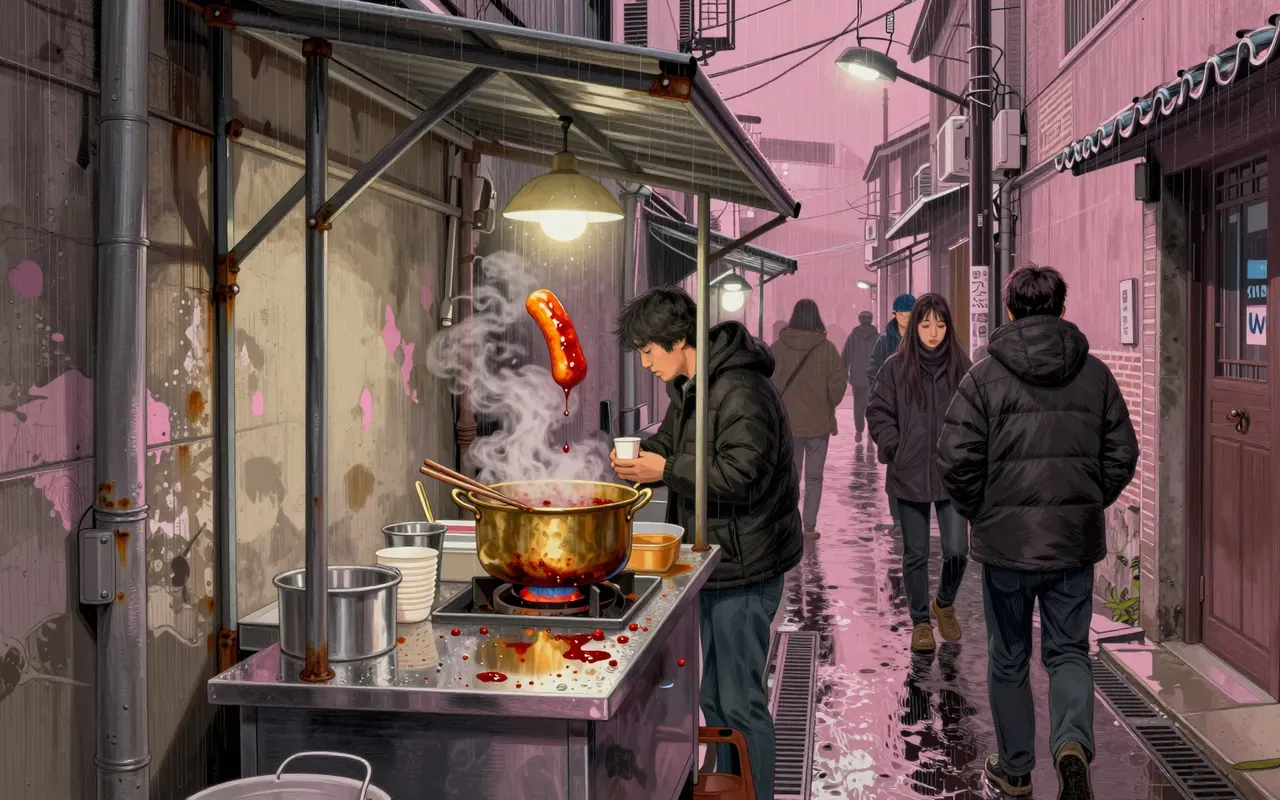
Tteokbokki is a boiled rice cake dish. Two distinct versions exist: one savoury and soy-based, documented since the 19th century; the other spicy and gochujang-based, first recorded in 1953.

Where it came from

It originated in the Korean royal court, documented in the 19th-century cookbook Siŭijŏnsŏ. A separate soy sauce–based version was made by the Papyeong Yun clan. The spicy variant emerged in 1953 at a Korean-Chinese restaurant opened by Ma Bok-rim.

What it gets right

It delivers immediate heat and chew in one bite. It turned scarcity into consistency: wheat flour from imports, gochujang as a shelf-stable ferment, tteok as a resilient starch. It reached students, factory workers, and street vendors precisely because it required no premium ingredients after 1953.

What it gets wrong

It erases its own origin. The royal court version—white tteok, sirloin, pine nuts, rock tripe—was never cheap or casual. The Papyeong Yun clan’s soy sauce–based variant was regional and elite. Neither is visible in today’s red-sauce shorthand.

Why it matters now

Because North Korea banned it in 2024—not for taste or safety, but for origin. Its popularity there in 2017, then its prohibition, maps a border not of geography but of cultural sovereignty claimed through cuisine.

Is it worth your time

Yes—if you care about how food encodes political rupture, culinary adaptation under scarcity, or the quiet violence of a ban on a snack.
Same beat · Food4 of 210
Up next in Culture

Turmeric

· 10:57

Turmeric is a food colour and pH paper — not an anti-inflammatory, not a medicine, and never was.

10:57