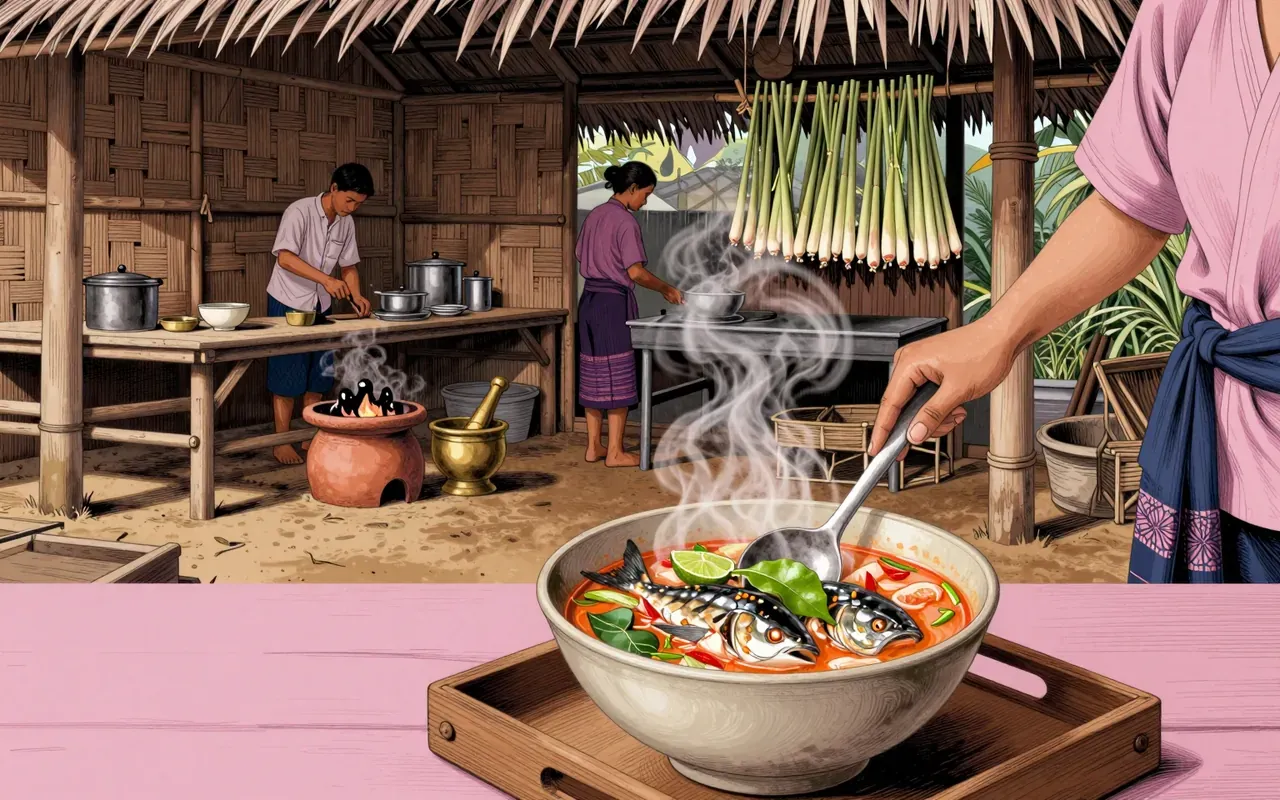
Tom yum isn’t Thai cuisine’s ambassador—it’s its export infrastructure.
Tom yum is a family of hot and sour Thai soups whose name encodes its method: boiling and mixing. Its most famous version—tom yum kung—originated in the Rattanakosin Kingdom, though a historian traces earlier roots to India. Before mass tourism, tom yam pla (fish-based) was the dominant form; tom yam nam khon (thickened, 1980s) followed. As of 2018, tom yum’s popularity had created work for at least 120,000 south Thai cooks in Malaysia—mainly in Selangor and Kuala Lumpur.
Tom yum is defined by process—not ingredients—boiling and mixing are in its name.
1:38
Two Origins, One Name
Tom yum kung is Rattanakosin-era; its Indian roots are contested, not confirmed.
3:09
The Fish Before the Prawn
Before tourism, tom yam pla—not prawn soup—was the everyday version.
4:01
The 1980s Thickening
Tom yam nam khon is a 1980s thickened variant—late, deliberate, and restaurant-ready.
5:22
Labour, Not Legend
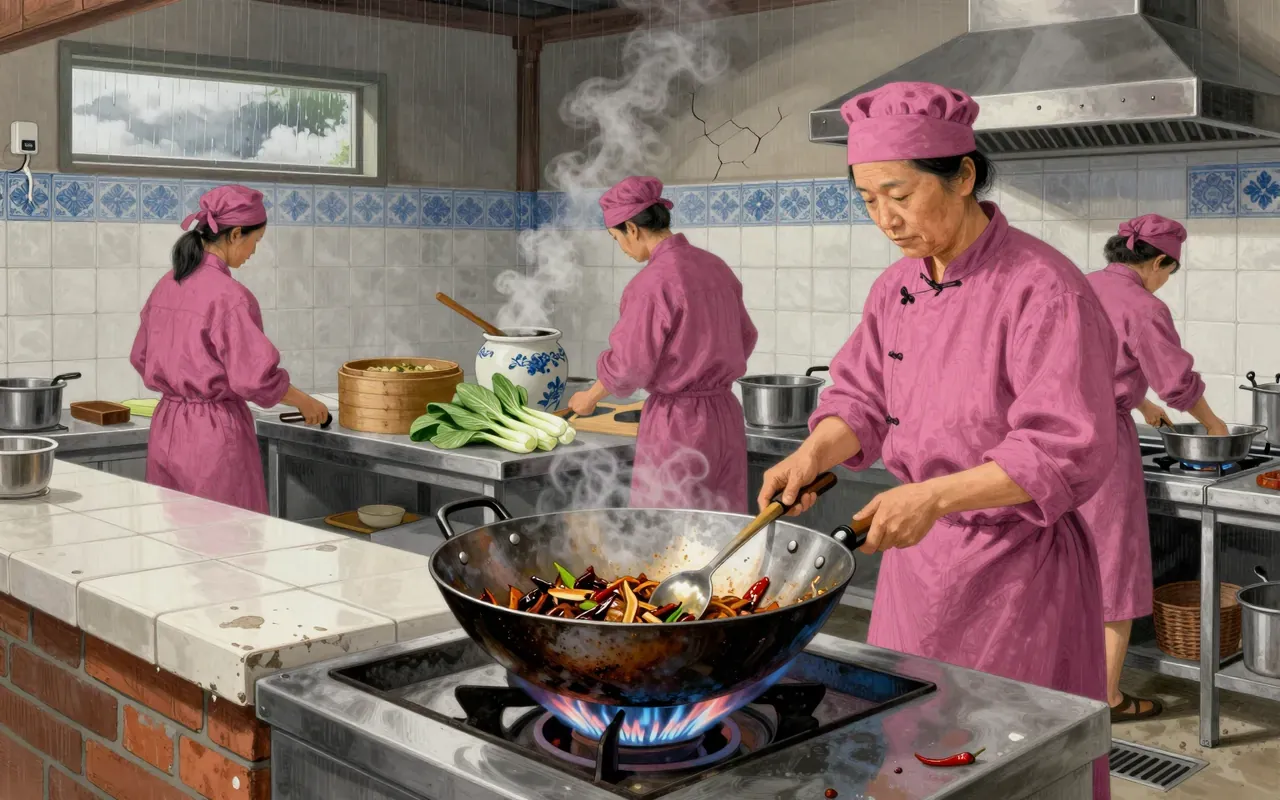
In 2018, tom yum helped employ 120,000 Thai cooks in Malaysia—labour, not lore.
Worth your time?
Yes. Study the whole thing.
4/ 5
What works
names its method before its ingredients
separates tom yum kung from tom yam pla
grounds impact in employment data, not sentiment
What does not
praise without reason
invent facts
claim influence beyond source
Study it if
readers tracking culinary labour flows
those questioning tourism’s taste hierarchies
Skip it if
readers seeking origin myths
those wanting chef profiles or recipe lore
The written brief1 min read
What the thing is
Tom yum is a family of hot and sour Thai soups. Each variant centres on boiling and mixing—processes embedded in its name.
Where it came from
Its name comes from Thai words for ‘boiling’ and ‘mixed’. Tom yum kung originated in the Rattanakosin Kingdom. A historian traces broader origins to India. Tom yam nam khon emerged in the 1980s.
What it gets right
It delivers immediacy: heat, sourness, and aromatic clarity in one bowl. It uses what is locally abundant—fish in rivers and canals, prawns on coasts, herbs in home gardens.
What it gets wrong
It displaces tom yam pla—the original widespread form—with tom yum kung, a tourist-facing version that depends on prawns, not accessibility.
Why it matters now
As of 2018, tom yum’s popularity employed at least 120,000 south Thai cooks in Malaysia—proof of its role in cross-border labour and informal culinary diplomacy.
Is it worth your time
Yes—if you care about how regional food economies shift across borders, or how tourism reshapes culinary hierarchies.