What the thing is
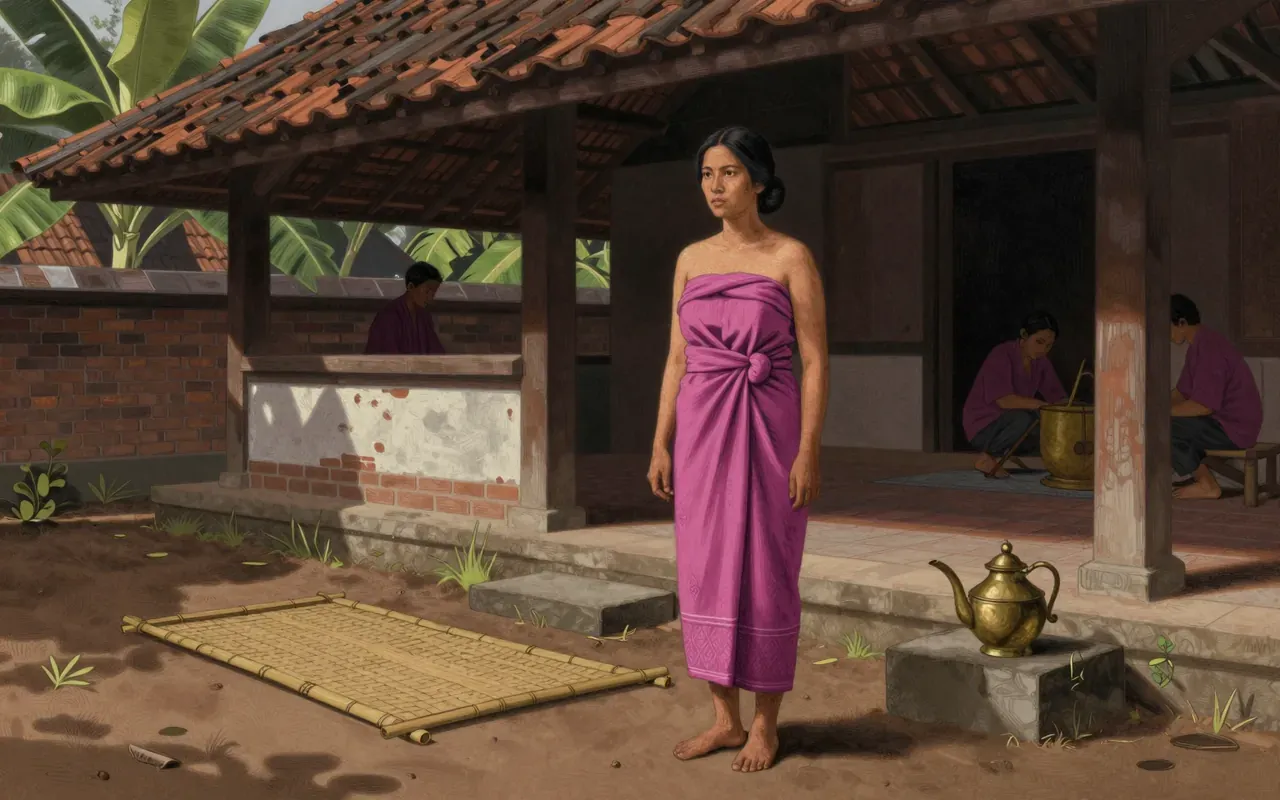
A tubular lower garment, about 0.91 m wide and 2.3 m long, stitched at the narrow edges.
Where it came from
It originated as the Malay word ‘sarong’, meaning ‘to cover’ or ‘to sheath’, first recorded in English in 1834 referring to the skirt-like garment of Malays.
What it gets right
It names a precise, functional garment: a stitched tube, worn low, with a defined head panel, secured by rolling the hem.
What it gets wrong
It implies universality. The sarong is not one thing. It is many region-specific garments—named differently, made differently, worn differently—unified only by English-language cataloguing.
Why it matters now
It reveals how ethnographic naming flattens diversity: ‘sarong’ erases distinctions between West African kente-wrapped wrappers, Javanese batik tubulars, and Pacific island sulus—yet remains the default term in global fashion and museum labels.
Is it worth your time
Yes—if you care about how a single garment encodes regional identity, gendered labour, and colonial documentation practices.