
culturebriefs
9:36in productionCh. 1 · Origin/ 9:36 · ceiling 15 min
Ideas · Society

Law of attraction (New Thought)

It doesn’t attract wealth — it attracts bankruptcy.

The law of attraction is a New Thought spiritual belief rooted in Phineas Quimby’s early 19th-century teachings. It claims thoughts are 'pure energy' that attract matching experiences via affirmations, cognitive reframing, and emotionally felt visualization. It has no empirical support and is widely regarded as pseudoscience. Recent research links it to increased financial risk-taking and bankruptcy susceptibility. It misrepresents science, ignores systemic constraints, and enables victim-blaming. It persists not because it works, but because it sells agency as a feeling.

Chapters & takeaways6
  1. 0:51
    Origin

    It is a New Thought belief born from Phineas Quimby’s early 19th-century teachings.

  2. 2:17
    Method

    It treats thought as 'pure energy' and prescribes affirmations, reframing, and emotionally felt visualization.

  3. 3:22
    Mechanism

    It promises resonance with reality — but only through untestable energetic alignment.

  4. 4:43
    Evidence

    It has no empirical support and is widely classified as pseudoscience.

  5. 5:47
    Consequence

    It correlates with higher financial risk-taking and greater susceptibility to bankruptcy.

  6. 6:48
    Cost

    It replaces structural analysis with individual responsibility — and calls it liberation.

Worth your time?

No. The brief is enough.

1.5/ 5
What works
  • as a cultural artefact
  • as a lens on late-capitalist individualism
What does not
  • work
  • explain causality
  • withstand scrutiny
Study it if
  • those seeking certainty without evidence
  • those selling motivational content
Skip it if
  • anyone making financial decisions
  • anyone recovering from hardship
The written brief1 min read

What the thing is

It is a New Thought spiritual belief. It holds that like energy attracts like energy. It prescribes cognitive reframing, affirmations, and emotionally charged creative visualization to manifest desired life outcomes.

Where it came from

It emerged from Phineas Quimby’s teachings in the early 19th century. It was named in 1855 and systematized by Prentice Mulford in 1886–1887.

What it gets right

It correctly identifies that thought patterns influence behaviour and emotional states can shape perception of opportunity.

What it gets wrong

It falsely claims thoughts emit ‘pure energy’ that attracts matching outcomes. It misrepresents physics, ignores systemic barriers, and blames individuals for misfortune.

Why it matters now

It matters now because it fuels contemporary self-help culture, shapes financial decisions, and normalises victim-blaming under the guise of empowerment.

Is it worth your time

It is not worth your time as a tool for material change. It displaces agency with magical thinking, encourages financial risk, and offers no testable mechanism.
Same beat · Ideas4 of 268
9:30
Camp (style)Camp is an aesthetic sensibility rooted in artifice, affectation, and exaggeration—with playful or ironic intent. It emerged in British theatre from at least the 16th century, gained definable modern usage from the late 17th century, and was codified mid-20th century by Sontag, Isherwood, and Meyer. It disrupts modernist hierarchies of taste. It distinguishes itself from kitsch through self-awareness. It is historically tied to queer identity—especially gay male culture—and defined by Moe Meyer as 'queer parody'. Jack Babuscio identifies its frequent misuse to signify triviality and superficiality. David Carrier observes its subversive and political character.
10:36
Celebrity brandingCelebrity branding is a marketing method using a well-known person to promote a product, service, or cause. It originated with Lillie Langtry’s 1882 Pears Soap endorsement. It relies on image transfer to boost attention and trust. Empirical studies confirm its effectiveness—especially online—but also document steep financial and reputational risks when the match-up fails or scandals erupt. Modern developments include influencer marketing, mandatory disclosure, and celebrity-owned product lines.
8:03
The Engineering of Consent1947The Engineering of Consent is a theory and practice developed by Edward Bernays, first articulated in a 1947 essay and expanded in a 1955 book, defining public relations as a scientific, engineering-like discipline grounded in social science research and aimed at shaping public attitudes through strategic use of communication channels, themes tied to conscious and subconscious motives, and influence via group leaders; it emerged from Freudian psychoanalytic concepts applied to consumer behavior and was institutionalised through academic publishing and professional practice.
9:56
Framing (social sciences)Framing is a theoretical perspective in the social sciences concerning how individuals, groups, and societies organize, perceive, and communicate about reality.
Up next in Culture

Lipstick effect

· 10:26

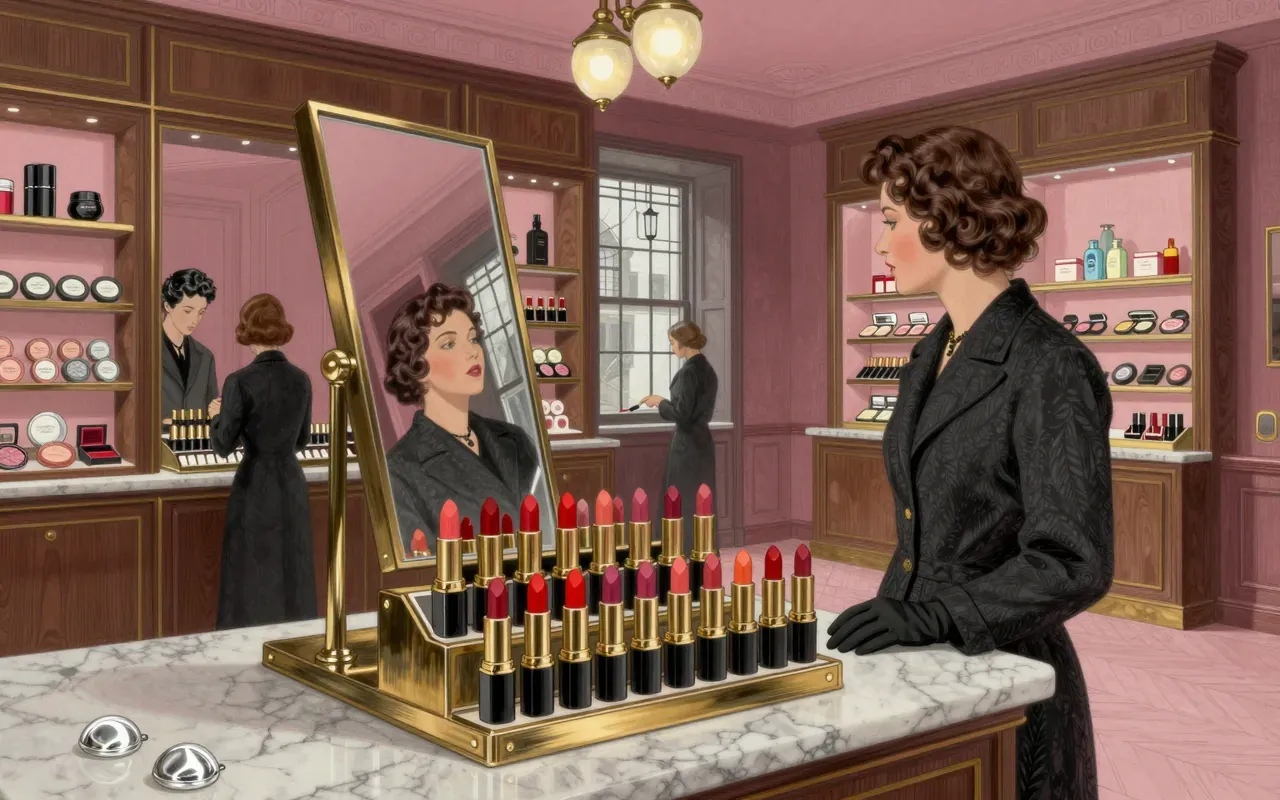
A myth dressed as economics: lipstick sales don’t rise in recessions — they fall, or track celebrity trends.

10:26