culturebriefs
10:36in productionCh. 1 · Not a skirt. A severed skirt./ 10:36 · ceiling 15 min
Fashion · Society

Kilt

1720

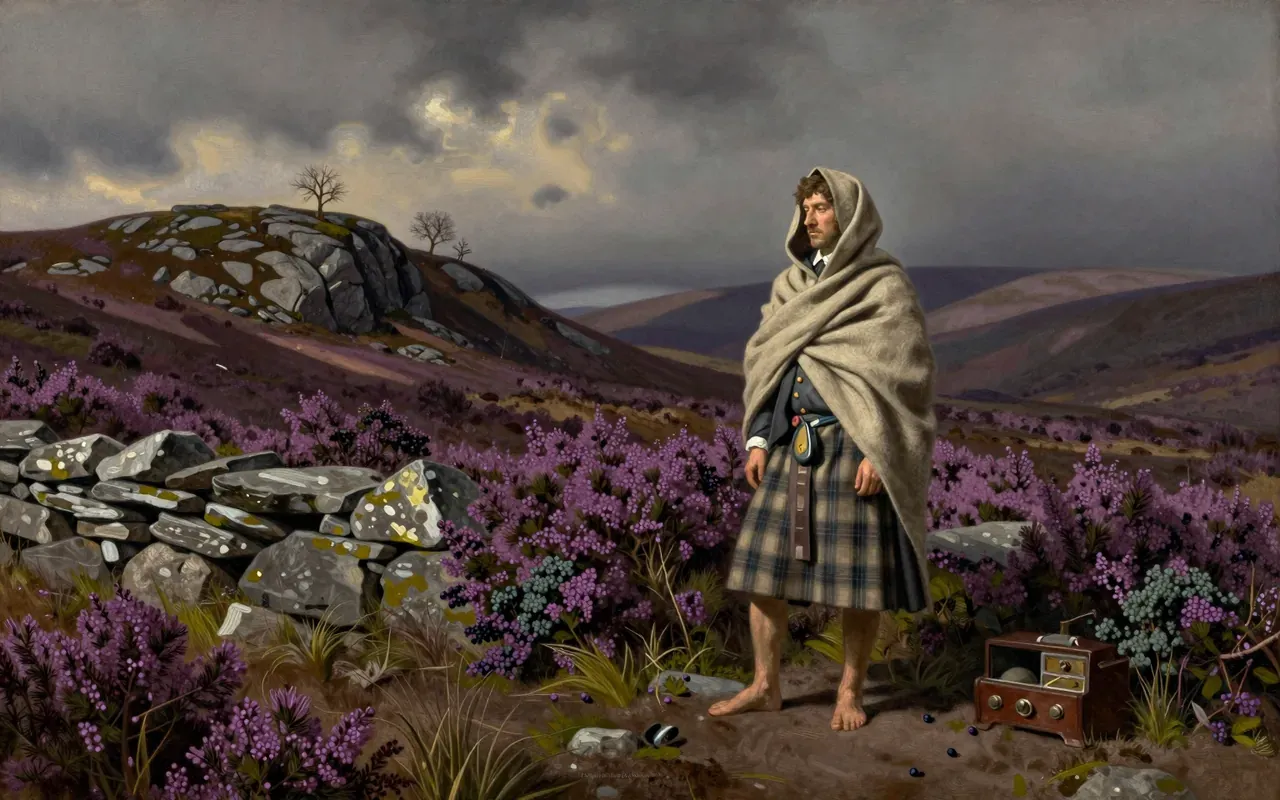
The kilt wasn’t born in Gaelic tradition—it was invented by an English Quaker to speed up Highland timber workers.

The kilt is a functional garment that was rebranded as cultural heritage long after its invention.

Chapters & takeaways6
  1. 0:54
    Not a skirt. A severed skirt.

    The modern kilt is a knee-length, pleated wool skirt—distinct from its full-length ancestor.

  2. 1:59
    The original was two garments in one.

    The great kilt was a versatile, full-length Highland garment—half cloak, half robe.

  3. 3:28
    An English Quaker cut it down.

    Thomas Rawlinson invented the small kilt in the 1720s by cutting and sewing the belted plaid’s lower half.

  4. 4:43
    Pleats were optional until they weren’t.

    Unsewn philibegs existed from the 1690s—but Rawlinson’s version fixed the pleats permanently.

  5. 5:49
    Function first. Identity later.

    Worsted wool, tartan, and pre-sewn pleats made it durable, identifiable, and efficient.

  6. 7:10
    National dress is a 19th-century retrofit.

    It became a symbol of Scottish and Gaelic identity only from the 19th century onward—not in 1720.

Worth your time?

Yes. Study the whole thing.

4/ 5
What works
  • as a case study in how utility becomes emblem
What does not
  • colonialism
  • masculinity
  • nationalism
Study it if
  • historians of material culture
  • designers studying functional adaptation
  • students of symbolic retrofitting
Skip it if
  • those seeking origin myths
  • romantics of Highland tradition
  • fans of unverified lineage claims
The written brief1 min read

What the thing is

A knee-length, pleated, wrap-around wool skirt with tartan patterning.

Where it came from

It emerged from the Scottish Highlands, where the great kilt (recorded from the 16th century) was worn as full-length garment with cloak functionality.

What it gets right

It solved a real problem: the great kilt was cumbersome for industrial work. Rawlinson’s sewn-pleat small kilt was lighter, faster to put on, and easier to move in.

What it gets wrong

It falsely presents itself as a continuous Highland tradition. The 1720s version was an English Quaker’s factory-floor adaptation—not Gaelic design.

Why it matters now

It shows how functional garments get retrofitted with nationalist meaning—decades after their invention, not during.

Is it worth your time

Yes—if you care how practical innovations become political symbols.
Same beat · Fashion4 of 113
11:00
CosplayCosplay is a materially grounded, globally dispersed performance practice rooted in two separate histories—one in US sci-fi fandom, one in Japanese anime culture. Its significance lies in how it turns representation into labour, and character into conduct.
8:18
Grunge (fashion)1980Grunge fashion was an anti-fashion statement rooted in mid-1980s Seattle’s music scene. It used durable, thrift-store clothing worn loosely and androgynously—especially flannel shirts and Doc Martens—to reject 1980s flash. Kurt Cobain’s blend of lumberjack workwear and vintage feminine dresses helped define it. By the mid-1990s, it had been commodified globally—most notably by Marc Jacobs for Perry Ellis in 1993. Its legacy is not authenticity, but the speed with which resistance becomes product.
8:50
GyaruGyaru is a Japanese fashion subculture rooted in the transliteration of 'gal'. It emerged as nonconformist resistance to traditional Japanese gender roles and beauty standards—particularly the expectation that women be housewives with pale skin and dark hair. Early associations included juvenile delinquency and frivolousness among teenage girls. Kogal culture, a defining variant, rose prominently in the Heisei era (1989–2019), peaking in the 1990s and early 2000s. It is currently experiencing a revival in the Reiwa era. The subculture includes a male counterpart, gyaruo. Its core visual ingredients are consistently cited as gaudy fashion, extreme makeup, and dyed hair.
10:21
Levi Strauss & Co.Levi Strauss · 1853Levi Strauss & Co. is a pragmatic infrastructure project disguised as clothing. It began as immigrant commerce, not craft. Its innovations were patents, lot numbers, trademarks — administrative tools that made reproducible, durable workwear. It did not define youth culture, nor did it seek cultural status. It solved problems for people who needed pants to last — and kept doing so, even when the problem changed.
Up next in Culture

Lederhosen

· 9:24

Lederhosen aren’t Bavarian tradition—they’re alpine workwear that got colonised by national myth.

9:24